This learning resource is available in interactive and printable formats. The interactive worksheet can be played online and assigned to students. The Printable PDF version can be downloaded and printed for completion by hand.
This engaging passage explores the history of computers and how they have transformed the way people live, work, and learn in the United States. Students will read about key inventors, important events, and the cause-and-effect relationship between computer inventions and daily life changes. The passage highlights new technology, problem-solving, and teamwork as people built faster and smaller computers. Aligned with the C3 Framework and Common Core ELA standards, this resource includes a detailed glossary, reading comprehension quiz, writing prompts, and a clear timeline of events. Students can also listen to a read-aloud audio and access a full Spanish translation to support language learners. This history reading passage is designed to build literacy skills while teaching students about the impact of computers on society.
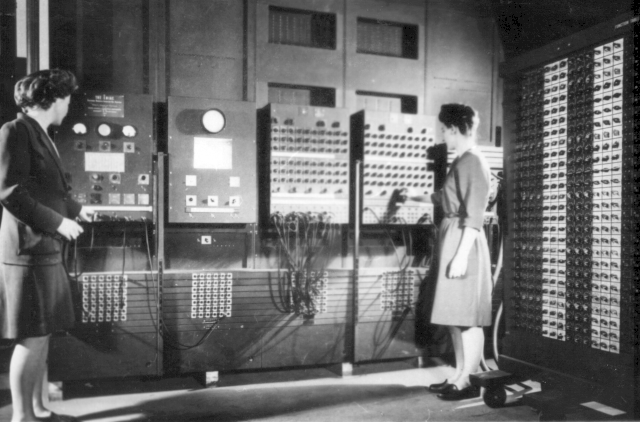
The Computer Revolution changed the way Americans live, work, and learn. In the 1940s, computers were giant machines. They filled entire rooms and were used only by scientists and the government. These early computers could do math quickly, but they were very expensive and hard to use.
In the 1970s, something amazing happened. New inventors and companies started to make computers smaller and cheaper. One important computer was the Altair 8800. It was small enough to fit on a desk. People could buy it and build it at home. Other companies, like Apple and IBM, soon followed. They created personal computers that were easier for everyone to use.
As computers became smaller, they also became more powerful. The invention of the microchip was a key moment. Microchips made computers faster and cheaper to make. This helped computers spread into homes, schools, and offices across America.
With the rise of the Internet in the 1990s, computers connected people around the world. Americans could send emails, find information, and even shop from their homes. Schools started to use computers for research and learning. Workplaces used computers to write documents and keep records.
Today, computers are everywhere. You may use a tablet or a smartphone, which are really small computers. These devices fit in your pocket and help you communicate, learn, and play games. The Computer Revolution made life more efficient and helped people solve problems in new ways.
New innovations keep changing computers. Every year, computers become faster, smaller, and more helpful. The Computer Revolution shows how American creativity and teamwork can change the world.
Interesting Fact: The first computers could only solve math problems. Now, computers can help us talk to people across the world, play music, and even drive cars!
When did computers start to fill rooms?
1940s1990s1970sToday
Who used the first giant computers?
Scientists and governmentFarmersMusiciansAll students
What did the Altair 8800 help start?
Personal computersInternetTabletsTelevisions
Why were microchips important?
Made computers fasterSlowed computersBroke computersTurned off computers
How did the Internet change life?
Connected people worldwideMade computers biggerRemoved emailStopped shopping
What does the passage say about innovation?
It keeps changing computersComputers stay the samePeople dislike itOnly helps scientists
Computers today are small and powerful.
TrueFalse
What does 'efficient' mean?
Works quickly and wellWorks slowlyIs heavyIs broken
Perfect For:
👩🏫 Teachers
• Reading comprehension practice
• Auto-graded assessments
• Literacy skill development
👨👩👧👦 Parents
• Reading practice at home
• Comprehension improvement
• Educational reading time
🏠 Homeschoolers
• Reading curriculum support
• Independent reading practice
• Progress monitoring
Reading Features:
📖
Reading Passage
Engaging fiction or nonfiction text
❓
Comprehension Quiz
Auto-graded questions
📊
Instant Feedback
Immediate results and scoring
📄
Printable Version
Download for offline reading
🔊
Read Aloud
Voice-over with word highlighting
Reviews & Ratings
No reviews yet. Be the first to share your experience!
Related Content
Longhouses of the Eastern Woodlands
This engaging U.S. history reading passage explores the longhouses of the Eastern Woodlands, focusing on the Iroquois an...
D2.HIS.1-6.3-5RI.4.1RI.4.3
Celebrating the Fourth of July
This engaging history reading passage explores the origins and importance of the Fourth of July, known as Independence D...
D2.HIS.1-6.3-5RI.4.1RI.4.3RI.4.4
Stagecoaches and the Pony Express
This engaging U.S. history reading passage introduces students to the exciting era of stagecoaches and the Pony Express ...
D2.HIS.1-6.3-5RI.4.3RI.4.4RI.4.10
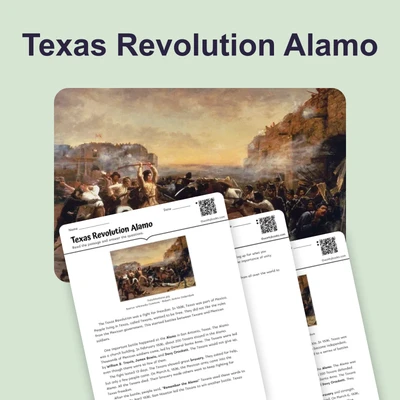
The Texas Revolution and the Alamo
This engaging history reading passage introduces students to the Texas Revolution and the Battle of the Alamo, key momen...
D2.HIS.1-6.3-5RI.4.1RI.4.3W.4.2
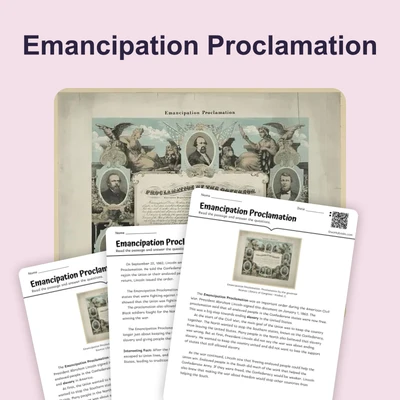
The Emancipation Proclamation
This engaging U.S. history reading passage explores the Emancipation Proclamation, a key event during the American Civil...
D2.HIS.1-6.3-5RI.4.3RI.5.3
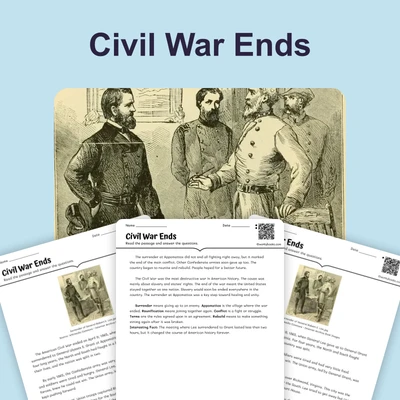
The Civil War Finally Ends
This engaging reading passage explores the end of the Civil War, focusing on the events of 1865 when General Robert E. L...
D2.HIS.1-6.3-5RI.4.3RI.4.4RI.4.10
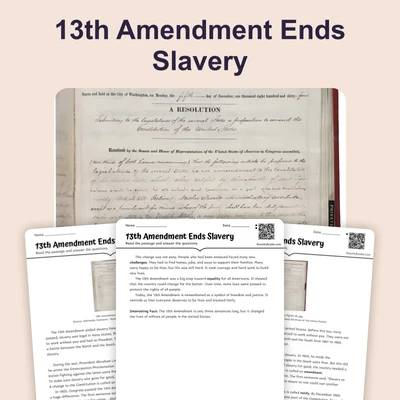
The 13th Amendment Ends Slavery
This passage explores the history and impact of the 13th Amendment, which ended slavery in the United States. Students w...
D2.HIS.1-6.3-5RI.4.1RI.4.3RI.5.1
The Industrial Revolution in America
This engaging history reading passage explores the Industrial Revolution in America, a time of great change and innovati...
D2.HIS.1-6.3-5RI.4.3RI.4.4
Alexander Graham Bell's Telephone
This engaging U.S. history reading passage explores the story of Alexander Graham Bell and his invention of the telephon...
D2.HIS.1-6.3-5RI.4.3RI.5.3
The Wright Brothers Take Flight
This engaging history reading passage explores the inspiring story of the Wright brothers and their journey to make the ...
D2.HIS.1-6.3-5RI.4.3RI.4.4W.4.2
American Soldiers Fight Overseas
This engaging reading passage explores the experiences of American soldiers who fought overseas, focusing on World War I...
D2.HIS.1-6.3-5RI.4.3RI.4.4RI.5.3
Voting Rights for African Americans
This passage explores the important history of voting rights for African Americans in the United States, following a cle...
D2.HIS.1-6.3-5RI.4.1RI.4.3RI.4.4
Informational Text —Healthy Teeth and Gums
RI.4.10RI.4.3RF.4.4RF.4.4.A
Informational Text —Migratory Birds
Engage young minds with this worksheet that delves into the wonders of migratory birds. Learn about their extraordinary ...
RI.4.10RI.4.3RF.4.4RF.4.4.A
Informational Text —All About Dentists
Students read an informational text explaining what dentists do and how they are trained. Aligned to RI.4.3-2
RI.4.10RI.4.3RF.4.4RF.4.4.A
The Role of Pollinators in Nature
Learn about the fascinating world of pollinators and discover their crucial role in the reproductive process of flowerin...
RI.4.2RI.4.3RI.4.4RI.5.1
Pollination: A Crucial Ecosystem Service
Explore the vital role of pollination beyond plant reproduction, as it sustains ecosystems by ensuring food security, pr...
RI.4.2RI.4.3RI.4.4RI.5.1
Seed Dispersal: How Plants Travel
Plants may seem stationary, but their seeds have amazing ways to travel! Explore the fascinating world of seed dispersal...
RI.4.2RI.4.3RI.4.4RI.5.1
The States of Matter: Solid
Discover the differences between solids, liquids and gases by exploring how their particles are arranged and move. This ...