The Civil War Finally Ends — Reading Comprehension
Rate this|
1
Present
Present in classroom. No work saved
Assign
Classroom with student accounts, Track progress
Quick Play
No student accounts, assign with a link
Grades
3
4
5
Standards
D2.HIS.1-6.3-5
RI.4.3
RI.4.4
RI.4.10
W.4.2
PRINT+DIGITAL RESOURCE
This learning resource is available in interactive and printable formats. The interactive worksheet can be played online and assigned to students. The Printable PDF version can be downloaded and printed for completion by hand.
This engaging reading passage explores the end of the Civil War, focusing on the events of 1865 when General Robert E. Lee surrendered to General Ulysses S. Grant at Appomattox Court House. Students will learn about the bravery and unity shown by people at the time and how President Abraham Lincoln guided the country through a difficult period. The passage uses clear, simple language and includes key vocabulary words to help build foundational literacy skills. It ends with a fun historical fact and provides a Spanish translation for greater accessibility. A related timeline, reading comprehension quiz, and writing activities help students deepen their understanding, make connections to the present, and practice analyzing cause and effect. This resource aligns with the C3 Framework and Common Core ELA standards, and also includes a read aloud audio feature. Perfect for building knowledge of important events that shaped the United States.
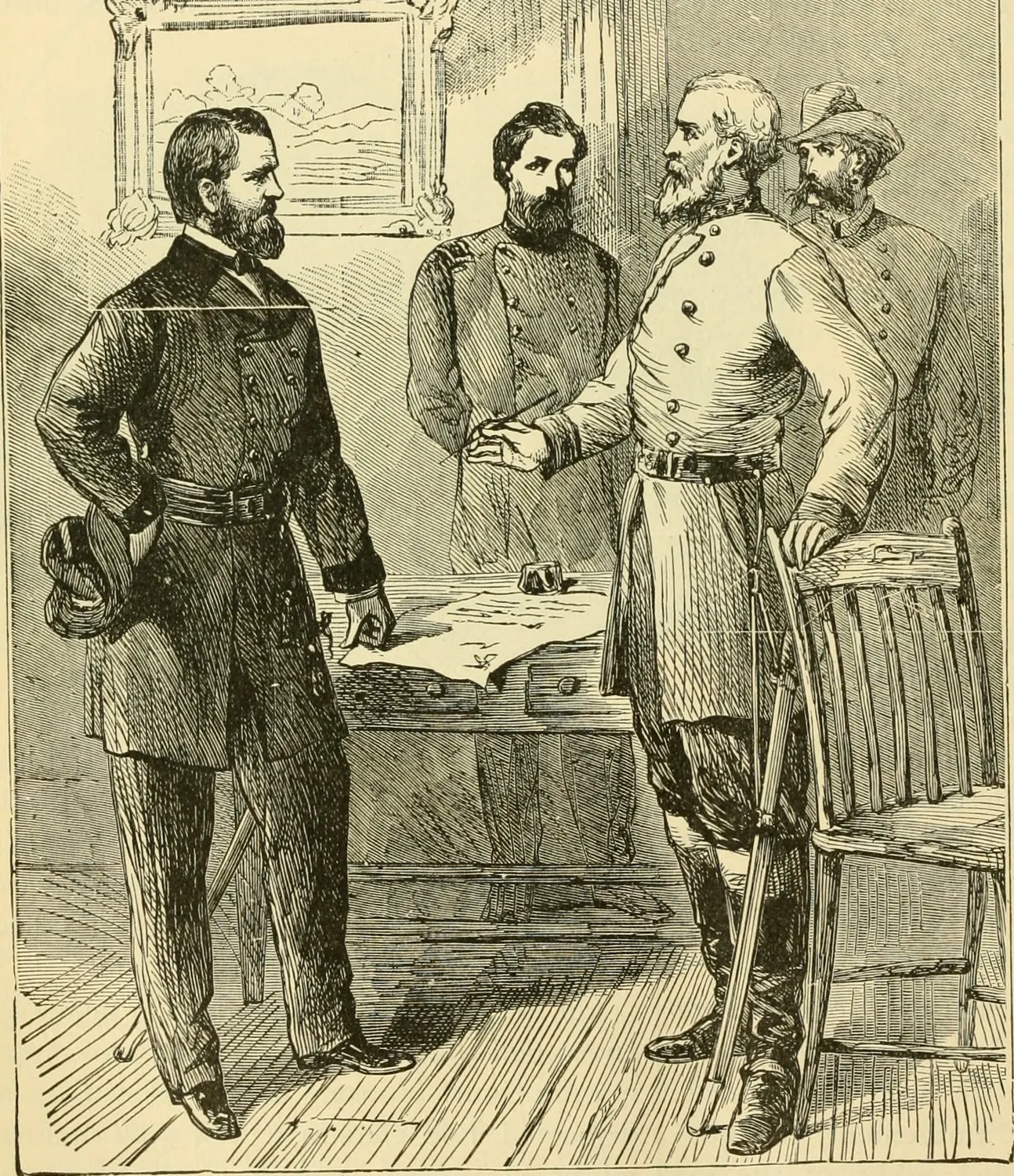
The American Civil War ended on April 9, 1865, when General Robert E. Lee surrendered to General Ulysses S. Grant at Appomattox Court House in Virginia. For four long years, the North and South had fought in a bloody conflict. Many people lost their lives, and the nation was split in two.
By early 1865, the Confederate army was very weak. Supplies were running out, and soldiers were tired and hungry. General Lee, the leader of the Confederate forces, knew he could not win. The Union army, led by General Grant, was strong and kept pushing forward.
On April 3, 1865, Union troops captured Richmond, Virginia, the capital of the Confederacy. This was a big loss for the South. General Lee tried to escape with his army, but the Union soldiers surrounded them near the small village of Appomattox Court House.
Lee realized fighting would only cause more deaths. He met with Grant inside a simple house in the village. General Grant treated Lee with respect. He offered fair terms for surrender. Lee’s men could go home, and they would not be punished. This helped bring peace after years of war.
The surrender at Appomattox did not end all fighting right away, but it marked the end of the main conflict. Other Confederate armies soon gave up too. The country began to reunite and rebuild. People hoped for a better future.
The Civil War was the most destructive war in American history. The cause was mainly about slavery and states’ rights. The end of the war meant the United States stayed together as one nation. Slavery would soon be ended everywhere in the country. The surrender at Appomattox was a key step toward healing and unity.
Surrender means giving up to an enemy. Appomattox is the village where the war ended. Reunification means joining together again. Conflict is a fight or struggle. Terms are the rules agreed upon in an agreement. Rebuild means to make something strong again after it was broken.
Interesting Fact: The meeting where Lee surrendered to Grant lasted less than two hours, but it changed the course of American history forever.
When did the Civil War end?
April 9, 1865July 4, 1776December 25, 1860May 1, 1863
Who surrendered at Appomattox?
General Robert E. LeeGeneral Ulysses S. GrantPresident Abraham LincolnGeneral Sherman
What city did Union troops capture?
Richmond, VirginiaAtlanta, GeorgiaNew York CityBoston, Massachusetts
Why did Lee surrender?
His soldiers were hungry and weakHe wanted more landHe defeated GrantHe wanted to move North
What did Grant offer Lee’s soldiers?
They could go home safelyThey had to fight againThey lost their homesThey were sent to prison
How did the surrender help the nation?
It started reunificationIt made a new countryIt ended slavery everywhere instantlyIt began another war
The Civil War ended in 1865. True or false?
TrueFalse
What does 'reunification' mean?
Coming together againFighting a battleLeaving a placeBuilding a house
Perfect For:
👩🏫 Teachers
• Reading comprehension practice
• Auto-graded assessments
• Literacy skill development
👨👩👧👦 Parents
• Reading practice at home
• Comprehension improvement
• Educational reading time
🏠 Homeschoolers
• Reading curriculum support
• Independent reading practice
• Progress monitoring
Reading Features:
📖
Reading Passage
Engaging fiction or nonfiction text
❓
Comprehension Quiz
Auto-graded questions
📊
Instant Feedback
Immediate results and scoring
📄
Printable Version
Download for offline reading
🔊
Read Aloud
Voice-over with word highlighting
Reviews & Ratings
No reviews yet. Be the first to share your experience!
Related Content
Longhouses of the Eastern Woodlands
This engaging U.S. history reading passage explores the longhouses of the Eastern Woodlands, focusing on the Iroquois an...
D2.HIS.1-6.3-5RI.4.1RI.4.3
Celebrating the Fourth of July
This engaging history reading passage explores the origins and importance of the Fourth of July, known as Independence D...
D2.HIS.1-6.3-5RI.4.1RI.4.3RI.4.4
Stagecoaches and the Pony Express
This engaging U.S. history reading passage introduces students to the exciting era of stagecoaches and the Pony Express ...
D2.HIS.1-6.3-5RI.4.3RI.4.4RI.4.10
The Texas Revolution and the Alamo
This engaging history reading passage introduces students to the Texas Revolution and the Battle of the Alamo, key momen...
D2.HIS.1-6.3-5RI.4.1RI.4.3W.4.2
The Emancipation Proclamation
This engaging U.S. history reading passage explores the Emancipation Proclamation, a key event during the American Civil...
D2.HIS.1-6.3-5RI.4.3RI.5.3
The 13th Amendment Ends Slavery
This passage explores the history and impact of the 13th Amendment, which ended slavery in the United States. Students w...
D2.HIS.1-6.3-5RI.4.1RI.4.3RI.5.1
The Industrial Revolution in America
This engaging history reading passage explores the Industrial Revolution in America, a time of great change and innovati...
D2.HIS.1-6.3-5RI.4.3RI.4.4
Alexander Graham Bell's Telephone
This engaging U.S. history reading passage explores the story of Alexander Graham Bell and his invention of the telephon...
D2.HIS.1-6.3-5RI.4.3RI.5.3
The Wright Brothers Take Flight
This engaging history reading passage explores the inspiring story of the Wright brothers and their journey to make the ...
D2.HIS.1-6.3-5RI.4.3RI.4.4W.4.2
American Soldiers Fight Overseas
This engaging reading passage explores the experiences of American soldiers who fought overseas, focusing on World War I...
D2.HIS.1-6.3-5RI.4.3RI.4.4RI.5.3
Voting Rights for African Americans
This passage explores the important history of voting rights for African Americans in the United States, following a cle...
D2.HIS.1-6.3-5RI.4.1RI.4.3RI.4.4
Computers Change Our Lives
This engaging passage explores the history of computers and how they have transformed the way people live, work, and lea...
D2.HIS.1-6.3-5RI.4.3RI.5.3
Snorkeling & Scuba Diving
RI.2.2RI.2.6RI.2.10RF.2.4.A
Informational Text —Healthy Teeth and Gums
RI.4.10RI.4.3RF.4.4RF.4.4.A
Informational Text —Migratory Birds
Engage young minds with this worksheet that delves into the wonders of migratory birds. Learn about their extraordinary ...
RI.4.10RI.4.3RF.4.4RF.4.4.A
The Rubik's Cube
RI.2.2RI.2.6RI.2.10RF.2.4.A
Informational Text —All About Dentists
Students read an informational text explaining what dentists do and how they are trained. Aligned to RI.4.3-2
RI.4.10RI.4.3RF.4.4RF.4.4.A
Structures on the Ocean Floor
ESS2.B4-ESS2-2RI.4.10RI.4.7
Desert Jerboa
The Desert Jerboa is a small rodent that thrives in the desert environment. It has long back legs that enable it to jump...