Longhouses of the Eastern Woodlands — Reading Comprehension
Rate this|
1
Premium Resource
Present
Present in classroom. No work saved
Assign
Classroom with student accounts, Track progress
Quick Play
No student accounts, assign with a link
Grades
3
4
5
Standards
D2.HIS.1-6.3-5
RI.4.1
RI.4.3
PRINT+DIGITAL RESOURCE
This learning resource is available in interactive and printable formats. The interactive worksheet can be played online and assigned to students. The Printable PDF version can be downloaded and printed for completion by hand.
This engaging U.S. history reading passage explores the longhouses of the Eastern Woodlands, focusing on the Iroquois and other Native American groups who built these remarkable homes. Students will learn about the construction, daily life, and cultural significance of longhouses, as well as their role in uniting families and communities. The passage is written in clear, grade-appropriate language and includes a glossary of key terms, multiple-choice quiz, and writing activities designed to deepen historical understanding. Aligned with the C3 Framework and Common Core ELA standards, this resource also features a timeline to help students sequence key events related to longhouses. A Spanish translation and read aloud audio make the content accessible for diverse learners. Perfect for building foundational knowledge of Native American history and developing literacy skills.
CONTENT PREVIEW
Expand content preview
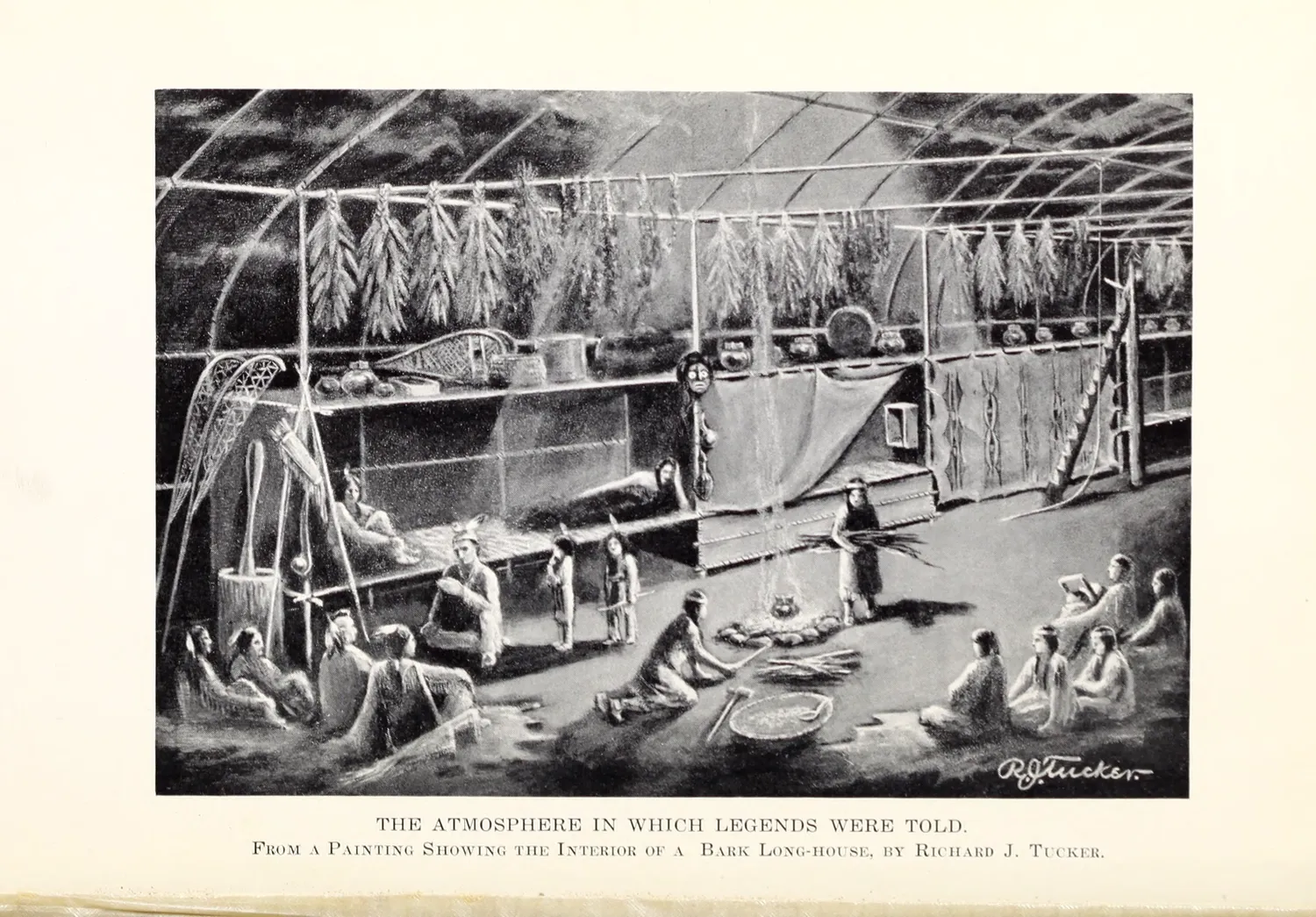
Iroquios Longhouse Source: Wikimedia Commons - Richard J. Tucker
Native American longhouses were large wooden houses used by the Iroquois people in the northeastern United States. These homes were built from wood, bark, and other natural materials found in forests. The Iroquois were a group of Native American tribes who lived together in villages. Their longhouses were truly impressive. Some longhouses were up to 200 feet long—about the length of half a football field.
Building a longhouse took teamwork. Men cut down trees and shaped the wooden frames. Women gathered bark to cover the frame and make the roof. Bark was strong and helped keep rain and snow out. The finished longhouse looked a bit like a giant, rounded shed with doors at both ends. Inside, the space was divided into many small family areas. Each family had its own space along the walls, but everyone shared the long central hallway for cooking and fires.
A single longhouse could fit up to 60 people from the same clan. A clan is a group of families with a common ancestor. Living this way helped everyone work together and care for each other. Grandparents, parents, children, aunts, uncles, and cousins all lived under one roof. The extended family was very important to the Iroquois. By living together, families could share food, tools, and stories.
Daily life in a longhouse was busy. Fires burned in the center of the house for warmth and cooking. Smoke escaped through holes in the roof. People made clothes, cooked meals, and played games inside. Children learned important skills by watching adults. At night, families slept on raised platforms covered with animal skins. The longhouse also protected people from cold winters and wild animals.
Longhouses were more than just homes. They were the heart of the community. Important meetings, celebrations, and ceremonies took place inside. The Iroquois believed that living together made them stronger and safer. Their wooden structure showed how much they valued unity and teamwork.
Tradition was passed down through stories told by elders. The construction of longhouses is still studied today as a sign of the Iroquois’ skill and community spirit.
Interesting Fact: Some Iroquois longhouses were so well made that they lasted for over 20 years, even through harsh winters!
Who built longhouses?
The IroquoisPilgrimsCowboysNavajo
What covered the longhouse frame?
BarkMetalBricksCanvas
About how many people lived in one longhouse?
Up to 60Just one familyOver 200Ten
Why did Iroquois families live together?
To help each otherTo travel farTo build boatsTo hunt alone
What was the center of village life?
The longhouseThe schoolThe riverThe field
What happened in the central hallway?
Fires and cookingSleepingFishingDancing
Longhouses were made from stone. True or false?
TrueFalse
What does 'clan' mean?
A group of familiesA type of treeA kind of foodA game
Perfect For:
👩🏫 Teachers
• Reading comprehension practice
• Auto-graded assessments
• Literacy skill development
👨👩👧👦 Parents
• Reading practice at home
• Comprehension improvement
• Educational reading time
🏠 Homeschoolers
• Reading curriculum support
• Independent reading practice
• Progress monitoring
Reading Features:
📖
Reading Passage
Engaging fiction or nonfiction text
❓
Comprehension Quiz
Auto-graded questions
📊
Instant Feedback
Immediate results and scoring
📄
Printable Version
Download for offline reading
🔊
Read Aloud
Voice-over with word highlighting
Reviews & Ratings
No reviews yet. Be the first to share your experience!
Related Content
Celebrating the Fourth of July
This engaging history reading passage explores the origins and importance of the Fourth of July, known as Independence D...
D2.HIS.1-6.3-5RI.4.1RI.4.3RI.4.4
Stagecoaches and the Pony Express
This engaging U.S. history reading passage introduces students to the exciting era of stagecoaches and the Pony Express ...
D2.HIS.1-6.3-5RI.4.3RI.4.4RI.4.10
The Texas Revolution and the Alamo
This engaging history reading passage introduces students to the Texas Revolution and the Battle of the Alamo, key momen...
D2.HIS.1-6.3-5RI.4.1RI.4.3W.4.2
The Emancipation Proclamation
This engaging U.S. history reading passage explores the Emancipation Proclamation, a key event during the American Civil...
D2.HIS.1-6.3-5RI.4.3RI.5.3
The Civil War Finally Ends
This engaging reading passage explores the end of the Civil War, focusing on the events of 1865 when General Robert E. L...
D2.HIS.1-6.3-5RI.4.3RI.4.4RI.4.10
The 13th Amendment Ends Slavery
This passage explores the history and impact of the 13th Amendment, which ended slavery in the United States. Students w...
D2.HIS.1-6.3-5RI.4.1RI.4.3RI.5.1
The Industrial Revolution in America
This engaging history reading passage explores the Industrial Revolution in America, a time of great change and innovati...
D2.HIS.1-6.3-5RI.4.3RI.4.4
Alexander Graham Bell's Telephone
This engaging U.S. history reading passage explores the story of Alexander Graham Bell and his invention of the telephon...
D2.HIS.1-6.3-5RI.4.3RI.5.3
The Wright Brothers Take Flight
This engaging history reading passage explores the inspiring story of the Wright brothers and their journey to make the ...
D2.HIS.1-6.3-5RI.4.3RI.4.4W.4.2
American Soldiers Fight Overseas
This engaging reading passage explores the experiences of American soldiers who fought overseas, focusing on World War I...
D2.HIS.1-6.3-5RI.4.3RI.4.4RI.5.3
Voting Rights for African Americans
This passage explores the important history of voting rights for African Americans in the United States, following a cle...
D2.HIS.1-6.3-5RI.4.1RI.4.3RI.4.4
Computers Change Our Lives
This engaging passage explores the history of computers and how they have transformed the way people live, work, and lea...
D2.HIS.1-6.3-5RI.4.3RI.5.3
Snorkeling & Scuba Diving
RI.2.2RI.2.6RI.2.10RF.2.4.A
Polar Bears and Climate
This informational text on polar bears is a great way to practice reading comprehension. Students will read the passage ...
RI.4.1W.4.72-LS4-1RF.4.4
Climate and Water Cycle
W.4.2.ARI.4.4RI.4.1
Earthquakes and Infrastructure
Get this worksheet about the effects of earthquakes on infrastructure. The worksheet includes an informational passage t...
W.4.7RI.4.1ESS3B
The Rubik's Cube
RI.2.2RI.2.6RI.2.10RF.2.4.A
Understanding Climate Action Context Clues
Understanding Climate Action" worksheet, aligned with CCS L.4.4.A and NGSS. This resource introduces key concepts such a...
L.4.4.ARI.4.1RI.4.4
Earthquake and buildings
Download this worksheet on the impact of earthquakes on buildings. The informational text included in this worksheet is ...