The Industrial Revolution in America — Reading Comprehension
Rate this
Premium Resource
Present
Present in classroom. No work saved
Assign
Classroom with student accounts, Track progress
Quick Play
No student accounts, assign with a link
Grades
3
4
5
Standards
D2.HIS.1-6.3-5
RI.4.3
RI.4.4
PRINT+DIGITAL RESOURCE
This learning resource is available in interactive and printable formats. The interactive worksheet can be played online and assigned to students. The Printable PDF version can be downloaded and printed for completion by hand.
This engaging history reading passage explores the Industrial Revolution in America, a time of great change and innovation. Students will learn how new machines and inventions, like the cotton gin and steam engine, transformed the way people lived and worked. The passage highlights key figures such as Eli Whitney and describes how factories, cities, and transportation grew quickly. With a focus on cause and effect, students see how these changes shaped American life. Aligned with the C3 Framework and Common Core standards, this resource includes a glossary, timeline, multiple-choice quiz, writing activities, and a Spanish translation. It also features a public domain image and read aloud audio, making it perfect for classroom learning or independent study.
CONTENT PREVIEW
Expand content preview
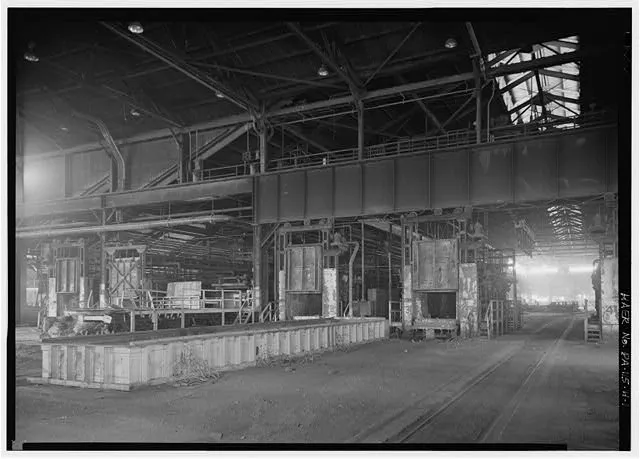
U.S. Steel Duquesne Works, Heat Treatment Plant, Along Monongahela River, Duquesne, Allegheny County, PA Source: Library of Congress - Historic American Engineering Record
The American Industrial Revolution was a time when many new machines, inventions, and ideas changed the United States. This period began in the early 1800s and lasted through the late 1800s. Before this time, most people lived in the country and worked on farms. They made things by hand or with simple tools.
The invention of the steam engine was one of the most important events of this era. Steam engines used steam power to run machines and vehicles. They made it possible to build large factories in cities. In these factories, many workers could use machines to make goods quickly and in large numbers. This process is called mechanization. It made products like cloth, shoes, and tools much cheaper and easier to get.
Factories in cities meant that people started to move away from farms and into towns and cities to find work. This caused many social changes. Cities grew larger, and new neighborhoods were built. Families had to adjust to new ways of living and working. Many children also worked in factories during this time.
New forms of transportation were invented, such as steam trains and steamboats. These inventions helped people and goods move quickly across the country. Farmers could send crops to cities, and factories could send products to faraway places. This helped the economy grow and made life different for everyone.
Many innovators and inventors helped make these changes possible. People like Samuel Slater, who built the first spinning mill, and Eli Whitney, who invented the cotton gin, made work faster and easier. These inventions improved life for some, but also led to new problems. Some workers had to work long hours in unsafe conditions. Reformers began to speak out and ask for better treatment of workers.
The American Industrial Revolution changed the way people lived, worked, and traveled. It helped the United States grow into a modern nation. The new machines and ideas started a wave of progress that shaped the country for years to come.
Interesting Fact: The first public steam railway in the United States, the Baltimore and Ohio Railroad, opened in 1830 and helped connect distant cities.
When did the American Industrial Revolution begin?
Early 1800sEarly 1900sLate 1700sLate 1900s
What did people use before factories?
Hand toolsRobotsFast carsComputers
Who invented the cotton gin?
Eli WhitneySamuel SlaterHenry FordThomas Edison
Why did people move to cities?
Factory jobsBetter farmsMore animalsTo travel
What is mechanization?
Using machinesPlanting cropsWriting lettersBuilding houses
How did steam trains help?
Moved goods fasterBuilt more farmsMade food tastierStopped all work
Factories made life harder for everyone. True or false?
TrueFalse
What is an innovator?
A person with new ideasA bus driverA police officerA store shopper
Perfect For:
👩🏫 Teachers
• Reading comprehension practice
• Auto-graded assessments
• Literacy skill development
👨👩👧👦 Parents
• Reading practice at home
• Comprehension improvement
• Educational reading time
🏠 Homeschoolers
• Reading curriculum support
• Independent reading practice
• Progress monitoring
Reading Features:
📖
Reading Passage
Engaging fiction or nonfiction text
❓
Comprehension Quiz
Auto-graded questions
📊
Instant Feedback
Immediate results and scoring
📄
Printable Version
Download for offline reading
🔊
Read Aloud
Voice-over with word highlighting
Reviews & Ratings
No reviews yet. Be the first to share your experience!
Related Content
Longhouses of the Eastern Woodlands
This engaging U.S. history reading passage explores the longhouses of the Eastern Woodlands, focusing on the Iroquois an...
D2.HIS.1-6.3-5RI.4.1RI.4.3
Celebrating the Fourth of July
This engaging history reading passage explores the origins and importance of the Fourth of July, known as Independence D...
D2.HIS.1-6.3-5RI.4.1RI.4.3RI.4.4
Stagecoaches and the Pony Express
This engaging U.S. history reading passage introduces students to the exciting era of stagecoaches and the Pony Express ...
D2.HIS.1-6.3-5RI.4.3RI.4.4RI.4.10
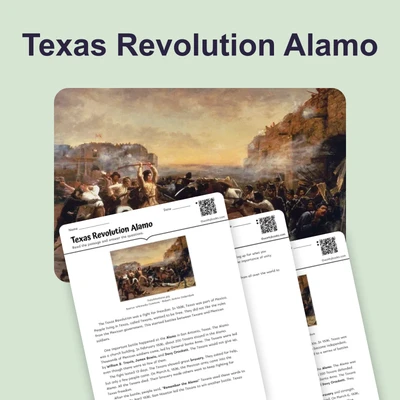
The Texas Revolution and the Alamo
This engaging history reading passage introduces students to the Texas Revolution and the Battle of the Alamo, key momen...
D2.HIS.1-6.3-5RI.4.1RI.4.3W.4.2
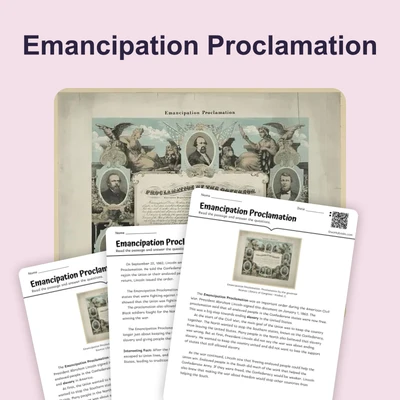
The Emancipation Proclamation
This engaging U.S. history reading passage explores the Emancipation Proclamation, a key event during the American Civil...
D2.HIS.1-6.3-5RI.4.3RI.5.3
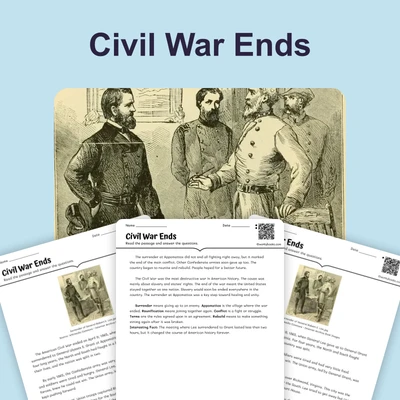
The Civil War Finally Ends
This engaging reading passage explores the end of the Civil War, focusing on the events of 1865 when General Robert E. L...
D2.HIS.1-6.3-5RI.4.3RI.4.4RI.4.10
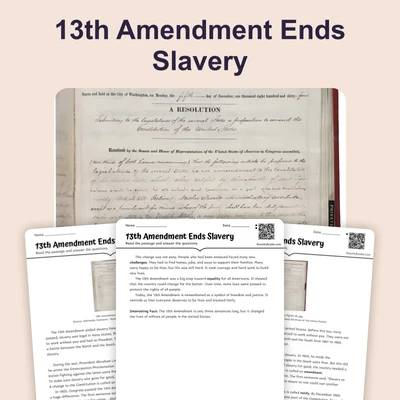
The 13th Amendment Ends Slavery
This passage explores the history and impact of the 13th Amendment, which ended slavery in the United States. Students w...
D2.HIS.1-6.3-5RI.4.1RI.4.3RI.5.1
Alexander Graham Bell's Telephone
This engaging U.S. history reading passage explores the story of Alexander Graham Bell and his invention of the telephon...
D2.HIS.1-6.3-5RI.4.3RI.5.3
The Wright Brothers Take Flight
This engaging history reading passage explores the inspiring story of the Wright brothers and their journey to make the ...
D2.HIS.1-6.3-5RI.4.3RI.4.4W.4.2
American Soldiers Fight Overseas
This engaging reading passage explores the experiences of American soldiers who fought overseas, focusing on World War I...
D2.HIS.1-6.3-5RI.4.3RI.4.4RI.5.3
Voting Rights for African Americans
This passage explores the important history of voting rights for African Americans in the United States, following a cle...
D2.HIS.1-6.3-5RI.4.1RI.4.3RI.4.4
Computers Change Our Lives
This engaging passage explores the history of computers and how they have transformed the way people live, work, and lea...
D2.HIS.1-6.3-5RI.4.3RI.5.3
Informational Text —Healthy Teeth and Gums
RI.4.10RI.4.3RF.4.4RF.4.4.A
Informational Text —Migratory Birds
Engage young minds with this worksheet that delves into the wonders of migratory birds. Learn about their extraordinary ...
RI.4.10RI.4.3RF.4.4RF.4.4.A
Informational Text —All About Dentists
Students read an informational text explaining what dentists do and how they are trained. Aligned to RI.4.3-2
RI.4.10RI.4.3RF.4.4RF.4.4.A
The Role of Pollinators in Nature
Learn about the fascinating world of pollinators and discover their crucial role in the reproductive process of flowerin...
RI.4.2RI.4.3RI.4.4RI.5.1
Pollination: A Crucial Ecosystem Service
Explore the vital role of pollination beyond plant reproduction, as it sustains ecosystems by ensuring food security, pr...
RI.4.2RI.4.3RI.4.4RI.5.1
Seed Dispersal: How Plants Travel
Plants may seem stationary, but their seeds have amazing ways to travel! Explore the fascinating world of seed dispersal...
RI.4.2RI.4.3RI.4.4RI.5.1
The States of Matter: Solid
Discover the differences between solids, liquids and gases by exploring how their particles are arranged and move. This ...