Stagecoaches and the Pony Express — Reading Comprehension
Rate this
Premium Resource
Present
Present in classroom. No work saved
Assign
Classroom with student accounts, Track progress
Quick Play
No student accounts, assign with a link
Grades
3
4
5
Standards
D2.HIS.1-6.3-5
RI.4.3
RI.4.4
RI.4.10
PRINT+DIGITAL RESOURCE
This learning resource is available in interactive and printable formats. The interactive worksheet can be played online and assigned to students. The Printable PDF version can be downloaded and printed for completion by hand.
This engaging U.S. history reading passage introduces students to the exciting era of stagecoaches and the Pony Express and their importance in the expansion of communication across the American West. Students will learn how stagecoaches carried passengers and mail, the unique challenges faced by Pony Express riders, and how new inventions changed the way people connected across great distances. The passage uses clear chronological structure and grade-appropriate vocabulary, supporting both literacy and historical understanding. Activities include a multiple-choice quiz, writing prompts that encourage historical analysis, and a timeline to help students visualize key events. A glossary of important terms is provided, along with a Spanish translation for bilingual support. The passage and activities align with C3 Framework and Common Core standards, and support read aloud audio for accessibility. This resource is perfect for lessons on westward expansion, communication, and innovation in American history.
CONTENT PREVIEW
Expand content preview
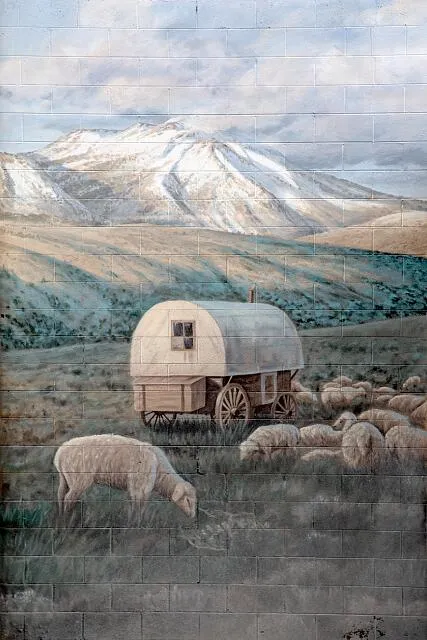
Don and Jared Gray's mural that salutes the lives and work of Basque sheepherders who helped settle Ely, a remote Nevada mountain town that was once a stagecoach stop and Pony Express station near the Utah border Source: Library of Congress - Highsmith, Carol M.,
The Pony Express was a mail delivery service that connected the eastern and western parts of the United States in the 1860s. Before the Pony Express, sending a letter from St. Joseph, Missouri, to Sacramento, California, could take weeks or even months. People needed a faster way to send news and important messages across the country.
In April 1860, the Pony Express began its first ride. Young men, many just teenagers, were hired to be riders. These riders traveled more than 1,900 miles, changing horses every 10 to 15 miles at special stations. They rode through deserts, mountains, and dangerous territory. The job was hard and risky. Riders faced harsh weather, wild animals, and sometimes even attacks from outlaws or hostile groups. Still, they rode as fast as they could, day and night, to deliver the mail.
The Pony Express worked like a relay race. A rider would quickly hand the mailbag to a new rider at each station. This way, the mail never stopped moving. The fastest trip took just under eight days, but most letters arrived in about ten days. This was much faster than any other method at the time.
The Pony Express became famous for its speed and bravery. The service helped people get important news quickly. For example, newspapers used Pony Express riders to spread word of Abraham Lincoln’s election as president. Families could finally hear from loved ones far away in only a few days.
However, the Pony Express only lasted for about 18 months. In October 1861, the first telegraph line was finished across the country. The telegraph sent messages using electric signals, so news could travel in minutes, not days. The Pony Express was no longer needed, but its legend lived on.
The Pony Express showed how brave people worked together to solve problems and connect the country. It was a short chapter in history but proved how important fast communication was for the growing United States.
Interesting Fact: The riders were paid about $100 a month, which was a lot of money at that time!
When did the Pony Express start?
April 1860March 1850October 1861July 1800
How far did riders travel?
About 1,900 miles100 miles500 miles10,000 miles
Who used the Pony Express to send news?
NewspapersFarmersBankersTeachers
Why did the Pony Express end?
Telegraph was inventedNo more horsesNo more ridersIt got too slow
What made the job risky for riders?
Bad weather and outlawsToo much foodToo many horsesShort distances
How did the relay system work?
Mail passed to new riderMail thrown in riverMail buried undergroundMail sent by balloon
The Pony Express lasted over 10 years. True or false?
FalseTrue
What does 'communication' mean?
Sharing news or informationRiding fastFeeding horsesBuilding stations
Perfect For:
👩🏫 Teachers
• Reading comprehension practice
• Auto-graded assessments
• Literacy skill development
👨👩👧👦 Parents
• Reading practice at home
• Comprehension improvement
• Educational reading time
🏠 Homeschoolers
• Reading curriculum support
• Independent reading practice
• Progress monitoring
Reading Features:
📖
Reading Passage
Engaging fiction or nonfiction text
❓
Comprehension Quiz
Auto-graded questions
📊
Instant Feedback
Immediate results and scoring
📄
Printable Version
Download for offline reading
🔊
Read Aloud
Voice-over with word highlighting
Reviews & Ratings
No reviews yet. Be the first to share your experience!
Related Content
Longhouses of the Eastern Woodlands
This engaging U.S. history reading passage explores the longhouses of the Eastern Woodlands, focusing on the Iroquois an...
D2.HIS.1-6.3-5RI.4.1RI.4.3
Celebrating the Fourth of July
This engaging history reading passage explores the origins and importance of the Fourth of July, known as Independence D...
D2.HIS.1-6.3-5RI.4.1RI.4.3RI.4.4
The Texas Revolution and the Alamo
This engaging history reading passage introduces students to the Texas Revolution and the Battle of the Alamo, key momen...
D2.HIS.1-6.3-5RI.4.1RI.4.3W.4.2
The Emancipation Proclamation
This engaging U.S. history reading passage explores the Emancipation Proclamation, a key event during the American Civil...
D2.HIS.1-6.3-5RI.4.3RI.5.3
The Civil War Finally Ends
This engaging reading passage explores the end of the Civil War, focusing on the events of 1865 when General Robert E. L...
D2.HIS.1-6.3-5RI.4.3RI.4.4RI.4.10
The 13th Amendment Ends Slavery
This passage explores the history and impact of the 13th Amendment, which ended slavery in the United States. Students w...
D2.HIS.1-6.3-5RI.4.1RI.4.3RI.5.1
The Industrial Revolution in America
This engaging history reading passage explores the Industrial Revolution in America, a time of great change and innovati...
D2.HIS.1-6.3-5RI.4.3RI.4.4
Alexander Graham Bell's Telephone
This engaging U.S. history reading passage explores the story of Alexander Graham Bell and his invention of the telephon...
D2.HIS.1-6.3-5RI.4.3RI.5.3
The Wright Brothers Take Flight
This engaging history reading passage explores the inspiring story of the Wright brothers and their journey to make the ...
D2.HIS.1-6.3-5RI.4.3RI.4.4W.4.2
American Soldiers Fight Overseas
This engaging reading passage explores the experiences of American soldiers who fought overseas, focusing on World War I...
D2.HIS.1-6.3-5RI.4.3RI.4.4RI.5.3
Voting Rights for African Americans
This passage explores the important history of voting rights for African Americans in the United States, following a cle...
D2.HIS.1-6.3-5RI.4.1RI.4.3RI.4.4
Computers Change Our Lives
This engaging passage explores the history of computers and how they have transformed the way people live, work, and lea...
D2.HIS.1-6.3-5RI.4.3RI.5.3
Snorkeling & Scuba Diving
RI.2.2RI.2.6RI.2.10RF.2.4.A
Informational Text —Healthy Teeth and Gums
RI.4.10RI.4.3RF.4.4RF.4.4.A
Informational Text —Migratory Birds
Engage young minds with this worksheet that delves into the wonders of migratory birds. Learn about their extraordinary ...
RI.4.10RI.4.3RF.4.4RF.4.4.A
The Rubik's Cube
RI.2.2RI.2.6RI.2.10RF.2.4.A
Informational Text —All About Dentists
Students read an informational text explaining what dentists do and how they are trained. Aligned to RI.4.3-2
RI.4.10RI.4.3RF.4.4RF.4.4.A
Structures on the Ocean Floor
ESS2.B4-ESS2-2RI.4.10RI.4.7
Desert Jerboa
The Desert Jerboa is a small rodent that thrives in the desert environment. It has long back legs that enable it to jump...