This educational reading passage explores Cesar Chavez and the struggle for farm workers' rights in U.S. history. Students will learn about the harsh conditions faced by migrant farm workers, the leadership of Cesar Chavez, and the important role of the United Farm Workers union. The passage highlights key events such as strikes, boycotts, and the famous motto 'Sí se puede.' Activities include a comprehension quiz, writing prompts, and graphic organizers to support critical thinking. The resource, designed for history and literacy learning, includes a Spanish translation and read aloud audio. It aligns with history standard HSS 5.10.5 and Common Core RI.4.2, providing students with a strong understanding of civil rights and labor movements. Keywords like Cesar Chavez, labor rights, and civil rights ensure the content is relevant and engaging for students learning about American history.
Written by Workybooks TeamPublished by Workybooks
Preview
Sample passage and quiz content
CONTENT PREVIEW
Expand content preview
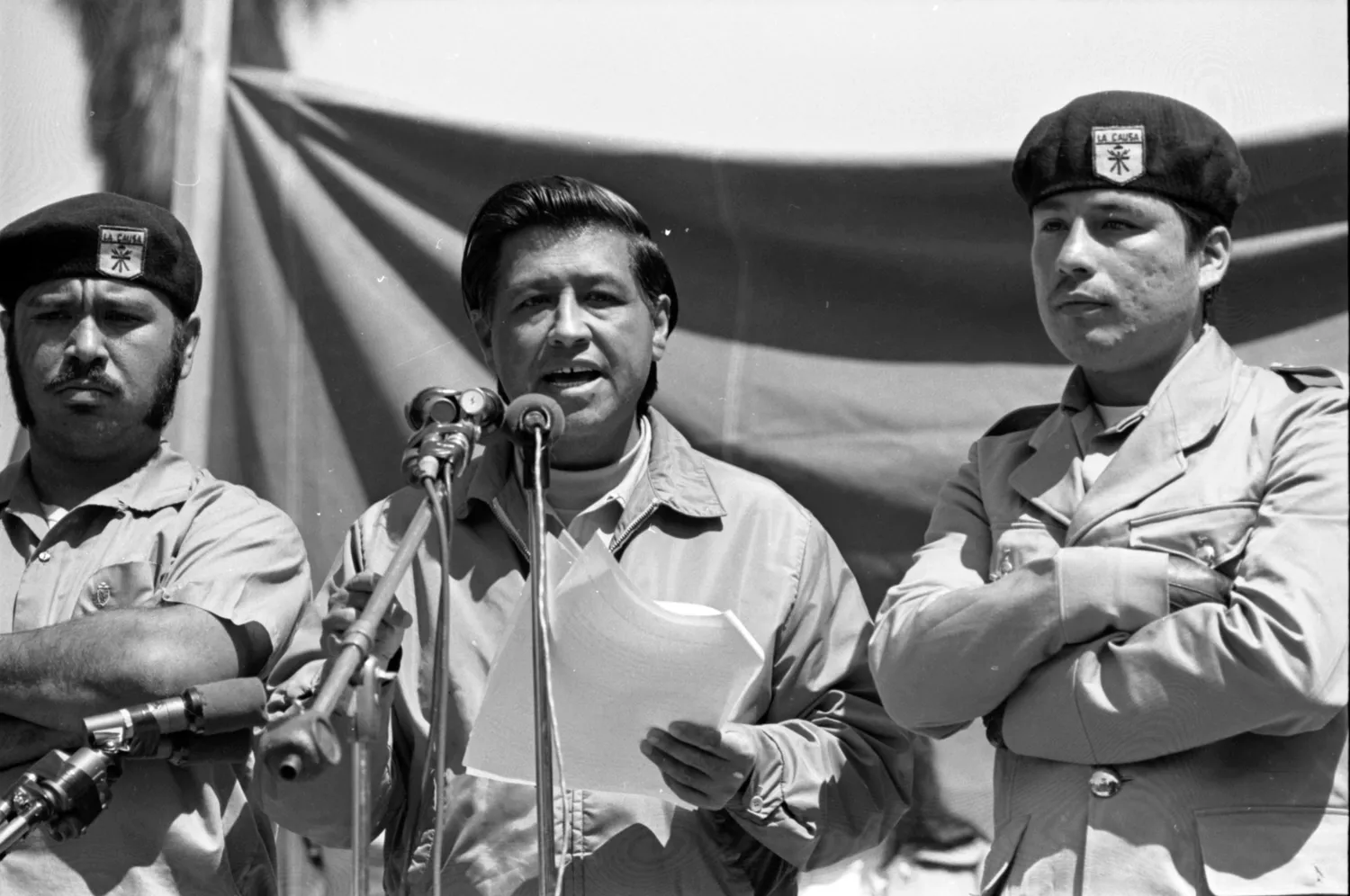
Cesar Chavez and Brown Berets at peace rally.jpg Source: Wikimedia Commons - Los Angeles Times
Cesar Chavez was a leader who worked to help farm workers in the United States. Many farm workers did not have safe places to work or enough pay to support their families. Most of them picked fruits and vegetables in the hot sun for many hours each day. Their jobs were hard, and their living conditions were poor.
Cesar Chavez grew up in a family of farm workers. He saw how unfairly people in the fields were treated. When he became an adult, he decided to help these workers. In 1962, he started a group called the United Farm Workers (UFW). This group wanted to improve the lives of farm workers and protect their rights.
Chavez and the UFW believed in nonviolent protest. They led peaceful strikes, where workers stopped working to show they wanted better conditions. They also organized boycotts. A boycott is when people stop buying something to show they want change. For example, many families stopped buying grapes to support the farm workers. This hurt the companies that owned the farms.
One of the most important tools Chavez used was the motto, "Sí se puede." In Spanish, this means "Yes, it can be done." This message gave farm workers hope and made them feel strong. It helped them stay united during hard times.
Because of Chavez and the UFW, farm workers won better pay and safer working conditions. They gained contracts that protected their health and gave them breaks and clean water. Today, Cesar Chavez is remembered as a hero who showed that people working together can create big changes.
Interesting Fact: The motto "Sí se puede" is still used today in many movements for justice and equality.
Who started the United Farm Workers?
Cesar ChavezMartin Luther King Jr.Rosa ParksDolores Huerta
What did farm workers pick?
Fruits and vegetablesCottonCorn onlyTobacco
What year did Chavez start the UFW?
1962195519701982
Why did families boycott grapes?
To support farm workersTo save moneyThey disliked fruitThey wanted new jobs
"Sí se puede" means:
Yes, it can be doneNo more workFarmers uniteWork is hard
What was one effect of the strikes?
Better payLonger hoursLess waterMore travel
Cesar Chavez used violence to protest.
TrueFalse
A boycott is:
Not buying somethingWorking moreJoining a clubChanging jobs
Curriculum
Common Core standards covered
RI.4.2
Determine the main idea of a text and explain how it is supported by key details; summarize the text.
Who it's for
Perfect for the way you teach
Teachers
Build comprehension skills
Auto-graded quiz
Differentiated reading
Parents
Read together at home
Improve fluency
Quiet reading time
Homeschoolers
Reading curriculum support
Independent practice
Track Lexile growth
Topics
Cesar Chavezfarm workersUnited Farm Workerslabor rightsboycottscivil rightsHSS 5.10.5RI.4.2
Reviews & Ratings
No reviews yet. Be the first to share your experience!
More reading you might love
19 more
Rosa Parks and Bus Boycott
This reading passage offers a detailed look at the Rosa Parks Bus Boycott, an important moment in U.S. history and the C...
HSS 5.10.5RI.4.4
Identify Main Idea Graphic Organizer
This graphic organizer on main idea includes space to write the main idea and three supporting details.
RI.1.2RI.2.2RI.3.2RI.4.2
Main Idea and Suporting Details Graphic Organizer
This graphic organizer on main idea includes space to write the main idea and three supporting details.
RI.1.2RI.2.2RI.3.2RI.4.2
Snorkeling & Scuba Diving
RI.2.2RI.2.6RI.2.10RF.2.4.A
Main Idea and Details Graphic Organizer
This graphic organizer on main idea includes space to write the main idea and three supporting details.
RI.1.2RI.2.2RI.3.2RI.4.2
The Space Needle
Students read a passage about the history and features of Seattle's Space Needle, then answer comprehension questions to...
RI.4.2
The Rubik's Cube
RI.2.2RI.2.6RI.2.10RF.2.4.A
Graphic Organizer for Main Idea
This graphic organizer on main idea includes space to write the main idea and three supporting details.
RI.1.2RI.2.2RI.3.2RI.4.2
Pollination: A Crucial Ecosystem Service
Explore the vital role of pollination beyond plant reproduction, as it sustains ecosystems by ensuring food security, pr...
RI.4.2RI.4.3RI.4.4RI.5.1
The States of Matter: Solid
Discover the differences between solids, liquids and gases by exploring how their particles are arranged and move. This ...
RI.4.2RI.4.3RI.4.4RI.5.1
What is a Simple Machine
Discover the power of simple machines! This informational text explores how basic tools like levers, pulleys and incline...
RI.4.2RI.4.3RI.4.4RI.5.1
How Do Scientists Study Past Climates?
Students will analyze how tools like ice cores and tree rings provide scientific evidence about Earth’s historical clima...
RI.4.1RI.4.2RI.4.3.4.RI.4.74-ESS2-2
The Role of Pollinators in Nature
Learn about the fascinating world of pollinators and discover their crucial role in the reproductive process of flowerin...
RI.4.2RI.4.3RI.4.4RI.5.1
Seed Dispersal: How Plants Travel
Plants may seem stationary, but their seeds have amazing ways to travel! Explore the fascinating world of seed dispersal...
RI.4.2RI.4.3RI.4.4RI.5.1
Earth Day and Types of Pollution
Earth Day is coming! Get ready to learn about pollution and test your knowledge. Click for a free reading passage and qu...
RI.4.1RI.4.2ESS3.CESS3.A
Earth Day and Green Initiatives
Celebrate Earth Day with this fun and educational activity! Students will begin by reading a short passage that explains...
RI.4.1RI.4.2ESS3.CESS3.A
Exploring Space: Rockets and Spacecraft
Space exploration has been one of humanity's greatest achievements, made possible by rockets and spacecraft. Rockets act...
RI.4.4RI.4.2
The Water Cycle
The water cycle describes how water continuously moves through our planet via evaporation, condensation, precipitation, ...
RI.4.4RI.4.2
The Nitrogen Cycle
The nitrogen cycle describes how nitrogen moves through the air, soil, and living organisms. It involves processes like ...