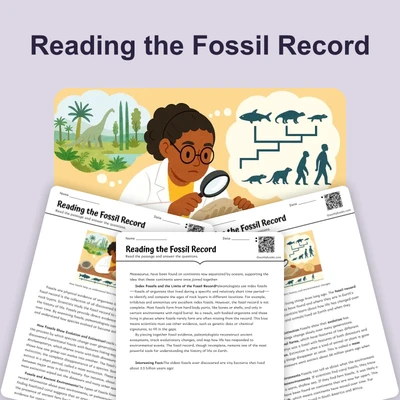
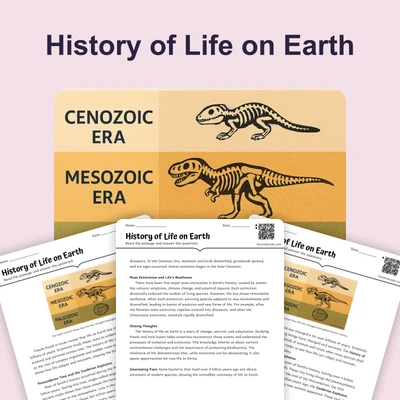
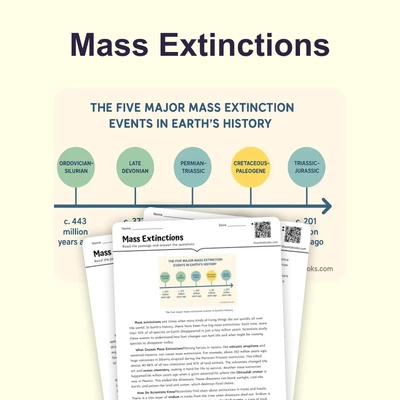
How Do Fossils Show Evolution
Interactive passage with audio narration, comprehension questions, and printable PDF.
By completing this purchase you agree to our Terms of Use and Privacy Policy. Your subscription renews automatically until you cancel. You can cancel anytime from your account settings. All sales are final and non-refundable. Digital content is available for download in your account immediately upon purchase.
What's included
How Do Fossils Show Evolution preview and details
About this printable How Do Fossils Show Evolution science reading passage, NGSS-aligned (Grades 5-8)
Sample passage and quiz from How Do Fossils Show Evolution
Reading passage and comprehension quiz preview
Evidence for Evolution: The Fossil Record
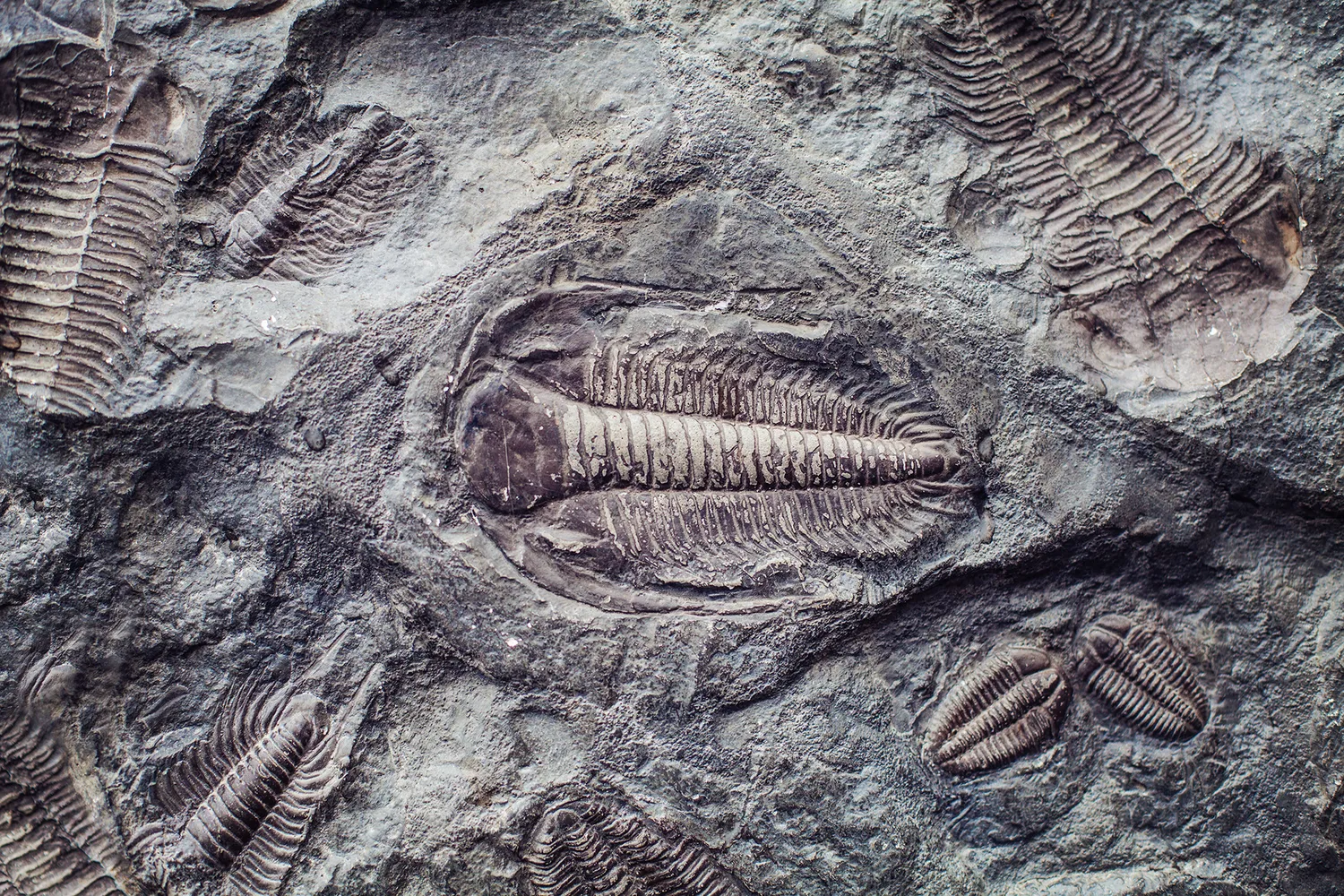
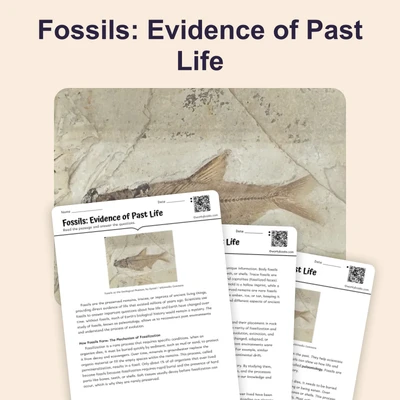
Fossils are preserved remains or traces of ancient organisms that provide strong evidence for how life has changed over time on Earth. The study of fossils helps scientists answer important questions about evolution, including which species lived in the past, how they changed, and when they went extinct. The fossil record serves as a timeline of life, revealing patterns of gradual change, sudden extinction, and the appearance of new forms. By examining fossils, scientists can reconstruct evolutionary relationships and trace how species have adapted to changing environments.
How Fossils Form and What They Show
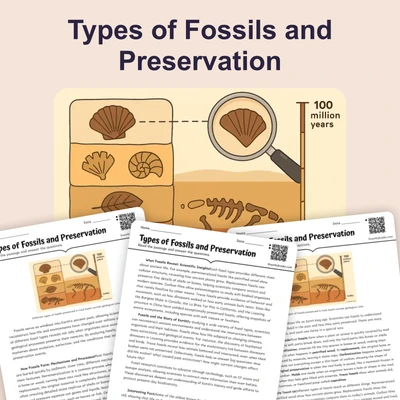
Most fossils form when an organism dies and is quickly buried by sediment, like mud or sand. Over time, minerals seep into the remains, a process called mineralization, turning bones or shells into rock. In some rare cases, organisms are preserved in ice, amber (fossilized tree resin), or tar pits, protecting even soft tissues. These different preservation methods help create a record of life that spans over 3.5 billion years. However, fossilization is rare: less than 1% of all species that have ever lived are preserved as fossils. This means the fossil record has gaps, but it still provides enough evidence to see major trends in evolution.
Transitional Fossils and Evolutionary Evidence
Certain fossils, called transitional forms, show features that are intermediate between two different groups. For example, Tiktaalik is a 375-million-year-old fossil that has both fish-like fins and limb bones similar to those of early tetrapods (four-limbed animals). This suggests how fish evolved into animals that could live on land. Archaeopteryx is another famous transitional fossil—about 150 million years old, it has both dinosaur features (teeth, claws, tail) and bird features (feathers, wishbone). Other fossil series, such as the whale evolution from land mammals to modern whales, and changes in horse evolution, show gradual adaptation to new environments over millions of years. These examples support the theory of evolution by natural selection.
Dating Fossils and Understanding Change
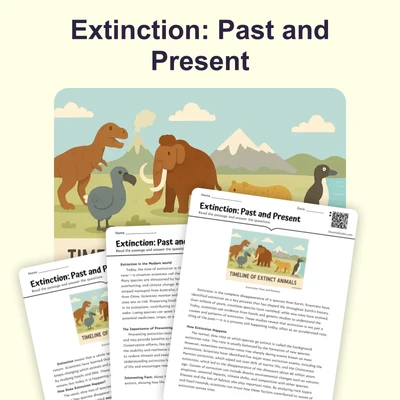
To determine the age of fossils, scientists use two main methods: relative dating and absolute dating. Relative dating observes the position of rock layers; deeper layers are usually older. Absolute dating uses radioactive isotopes to measure the actual age of rocks in years. By combining these methods, scientists create a detailed timeline of life’s history. The fossil record shows that more than 99% of all species that ever lived are now extinct, and new species have evolved to fill new ecological roles. This ongoing process explains the diversity of life we see today and helps scientists understand how living things respond to environmental changes.
Although there are gaps in the fossil record because fossilization is rare and conditions must be just right, the overall evidence supports the idea that life has evolved over time. Fossils connect different groups of organisms and show a sequence of changes, allowing scientists to reconstruct the tree of life and understand how evolution works on a large scale.
Interesting Fact:
The oldest known fossils are 3.5-billion-year-old bacteria found in ancient rocks from Australia, showing that life began on Earth very early in its history.
Comprehension quiz (10 questions)
1. What is the main purpose of the fossil record?
2. How does mineralization help create fossils?
3. Which of the following is a transitional fossil between fish and land animals?
4. What do scientists learn from Archaeopteryx?
5. Why are there gaps in the fossil record?
6. What does 'extinct' mean in the passage?
7. What is absolute dating used for?
8. Why do scientists use both relative and absolute dating?
9. True or False: More than 99% of all species that ever lived are now extinct.
10. True or False: Fossils can only form in tar pits.
Perfect for the way you teach
- Build comprehension skills
- Auto-graded quiz
- Differentiated reading
- Read together at home
- Improve fluency
- Quiet reading time
- Reading curriculum support
- Independent practice
- Track Lexile growth