This learning resource is available in interactive and printable formats. The interactive worksheet can be played online and assigned to students. The Printable PDF version can be downloaded and printed for completion by hand.
This middle school science passage explains the scientific evidence for human evolution, aligning with NGSS standards MS-LS4-1 and MS-LS4-2. Students will learn about the fossil record of hominids such as Australopithecus, Homo habilis, Homo erectus, Neanderthals, and Homo sapiens. The passage describes key evolutionary changes like bipedalism, increased brain size, the development of tool use, and the origins of language. It also covers the 'Out of Africa' hypothesis and compares human DNA with that of other primates, emphasizing that humans share a common ancestor with chimpanzees rather than having evolved directly from them. This resource provides vocabulary support, comprehension activities, and graphic organizers to help students analyze evidence and understand scientific processes. Audio integration supports diverse learners. Ideal for grades 6-8, this passage fosters critical thinking about how humans continue to evolve and adapt to changing environments.
CONTENT PREVIEW
Expand content preview
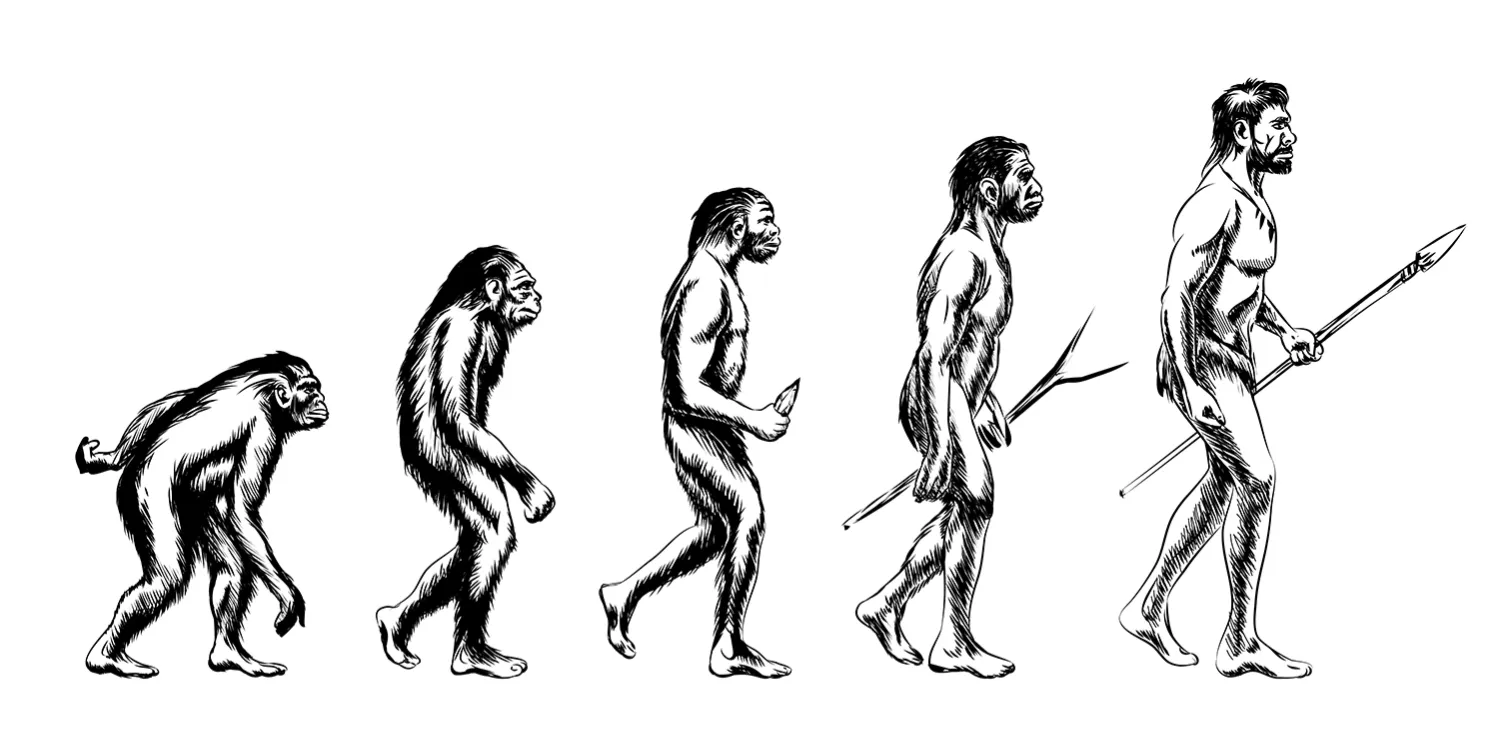
Representation of human evolution
Human evolution is the process by which modern humans developed from ancient ancestors over millions of years. Scientists study fossils, DNA, and tools to understand this history. Human evolution helps explain how traits like walking upright, using complex language, and advanced problem-solving developed. It also shows how humans share common features with other primates, such as chimpanzees and gorillas.
Fossil Evidence: Tracing Our Ancestors
The fossil record provides strong evidence for human evolution. Some of the earliest known human relatives include Australopithecus, which lived about 4 million years ago and walked on two legs. Later species, such as Homo habilis (about 2.4 million years ago), showed increased brain size and used simple stone tools. Homo erectus appeared around 1.9 million years ago, with an even larger brain and evidence of fire use. Neanderthals, a close relative of modern humans, lived in Europe and Asia until about 40,000 years ago. Finally, Homo sapiens—modern humans—emerged in Africa about 200,000 years ago.
Key Evolutionary Changes
Several important adaptations mark human evolution. Bipedalism, or walking on two legs, freed the hands for making and using tools. Increased brain size allowed for complex thinking, problem-solving, and the development of language. The invention of tools led to new ways to hunt, gather, and survive in different environments. These changes occurred gradually, often over hundreds of thousands of years, as populations responded to environmental pressures.
Out of Africa and DNA Evidence
The 'Out of Africa' hypothesis states that all modern humans originated in Africa and migrated to other continents. DNA studies support this, showing that genetic diversity is greatest among African populations. Modern humans share about 98-99% of their DNA with chimpanzees, but we did not evolve from chimpanzees. Instead, humans and chimpanzees share a common ancestor that lived about 6-7 million years ago. Molecular evidence, such as DNA comparisons, helps scientists trace evolutionary relationships and estimate when different species diverged.
Ongoing Evolution and Misconceptions
Humans are still evolving today. For example, some populations have developed resistance to diseases or the ability to digest certain foods, such as lactose in milk. A common misconception is that humans evolved directly from chimpanzees. In reality, both species have evolved separately from a shared ancestor. Understanding human evolution helps us appreciate the complexity of life and how adaptation continues to shape our species in a changing world.
Interesting Fact: Scientists have discovered over 20 different species of ancient human relatives, and new fossils are still being found today, adding to our understanding of human origins.
What is the primary source of evidence for tracing human evolution over time?
FossilsWeather patternsOcean currentsPlant seeds
Which species is considered the direct ancestor of modern humans?
Homo sapiensNeanderthalsAustralopithecusGorillas
What adaptation allowed early humans to use their hands for making tools?
BipedalismSwimmingTree climbingGliding
What does the 'Out of Africa' hypothesis state?
Modern humans started in Africa and migrated to other continentsHumans evolved from chimpanzees in AsiaDinosaurs lived in Africa before humansAll primates originated in North America
Humans share what percentage of their DNA with chimpanzees, according to the passage?
98-99%50%75%100%
What is the meaning of the word 'bipedalism' as used in the passage?
Walking on two legsUsing languageMaking fireBuilding houses
Which of the following best describes why brain size increased during human evolution?
It allowed for complex thinking and problem-solvingIt made humans tallerIt helped humans swim fasterIt made humans immune to disease
Why is it a misconception to say humans evolved directly from chimpanzees?
Humans and chimpanzees share a common ancestor but evolved separatelyChimpanzees are not primatesHumans are much older than chimpanzeesChimpanzees lived only in Europe
True or False: Homo habilis was the first human ancestor to use stone tools.
TrueFalse
True or False: Humans are still evolving today.
TrueFalse
Perfect For:
👩🏫 Teachers
• Reading comprehension practice
• Auto-graded assessments
• Literacy skill development
👨👩👧👦 Parents
• Reading practice at home
• Comprehension improvement
• Educational reading time
🏠 Homeschoolers
• Reading curriculum support
• Independent reading practice
• Progress monitoring
Reading Features:
📖
Reading Passage
Engaging fiction or nonfiction text
❓
Comprehension Quiz
Auto-graded questions
📊
Instant Feedback
Immediate results and scoring
📄
Printable Version
Download for offline reading
🔊
Read Aloud
Voice-over with word highlighting
Reviews & Ratings
No reviews yet. Be the first to share your experience!
Related Content
Extinction: Past and Present
This comprehensive reading passage for grades 6-8 explores the concept of extinction, its causes, and its impact on life...
MS-LS4-1MS-LS2-5
Endangered Species and the Sixth Extinction
This engaging science reading passage for grades 6-8 explores the current biodiversity crisis, known as the 'Sixth Extin...
MS-LS4-1MS-LS2-5
Extinction and Biodiversity
This comprehensive middle school science passage explores the concepts of extinction and biodiversity, aligned to NGSS s...
MS-LS4-1MS-LS4-4
Evidence for Evolution: The Fossil Record
This middle school science passage explains the importance of fossils as preserved evidence of ancient life and their ro...
MS-LS4-1
Theory of Evolution
This middle school science passage explains the theory of evolution and the concept of common ancestry, aligning with NG...
MS-LS4-1MS-LS4-2
Fossils: Evidence of Past Life
This comprehensive informational passage introduces middle school students to the fascinating world of fossils, in align...
MS-ESS1-4MS-LS4-1
Types of Fossils and Preservation
This engaging informational passage for grades 6-8 explores the different types of fossils and the natural processes tha...
MS-ESS1-4MS-LS4-1
Reading the Fossil Record
This engaging middle school science passage explores how scientists interpret the fossil record to reveal Earth's histor...
MS-ESS1-4MS-LS4-1MS-ESS2-3
History of Life on Earth
This comprehensive middle school science reading passage provides an engaging overview of the history of life on Earth, ...
MS-ESS1-4MS-LS4-1
Mass Extinctions
This comprehensive science passage introduces middle school students to the topic of mass extinctions, aligning with NGS...
MS-ESS1-4MS-LS4-1
Vertebrates: Fishes
This middle school science reading passage offers an in-depth look at fishes, a major group of vertebrates. It covers fi...
MS-LS4-2MS-LS4-4
Vertebrates: Amphibians
This comprehensive middle school science passage dives into the fascinating world of amphibians, a group of vertebrates ...
MS-LS4-2MS-LS4-4
Vertebrates: Reptiles
This comprehensive science passage for grades 6-8 introduces students to reptiles, a fascinating class of vertebrates. A...
MS-LS4-2MS-LS4-4
Vertebrates: Birds
This middle school science passage explores birds as vertebrates, focusing on their unique adaptations such as feathers,...
MS-LS4-2MS-LS4-4
Vertebrates: Mammals
This comprehensive passage introduces middle school students to the class Mammalia and their defining characteristics, i...
MS-LS4-2MS-LS4-4
Invertebrates: Sponges and Cnidarians
This passage explores two of the simplest animal phyla: Porifera (sponges) and Cnidaria (jellyfish, corals, and sea anem...
MS-LS4-2
Invertebrates: Worms
This comprehensive passage introduces middle school students to the fascinating world of invertebrate worms, focusing on...
MS-LS4-2
Invertebrates: Arthropods
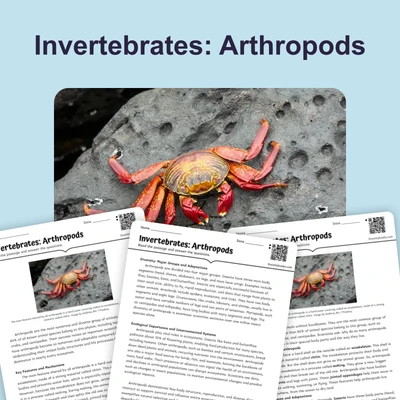
This comprehensive science passage introduces middle school students to the phylum Arthropoda, the largest and most dive...
MS-LS4-2MS-LS4-4
Invertebrates: Mollusks
This middle school science passage introduces students to the phylum Mollusca, focusing on their body structure, main cl...