Reading the Fossil Record
Interactive passage with audio narration, comprehension questions, and printable PDF.
By completing this purchase you agree to our Terms of Use and Privacy Policy. Your subscription renews automatically until you cancel. You can cancel anytime from your account settings. All sales are final and non-refundable. Digital content is available for download in your account immediately upon purchase.
What's included
Reading the Fossil Record preview and details
About this printable Reading the Fossil Record science reading passage, NGSS-aligned (Grades 5-8)
Sample passage and quiz from Reading the Fossil Record
Reading passage and comprehension quiz preview
Reading the Fossil Record
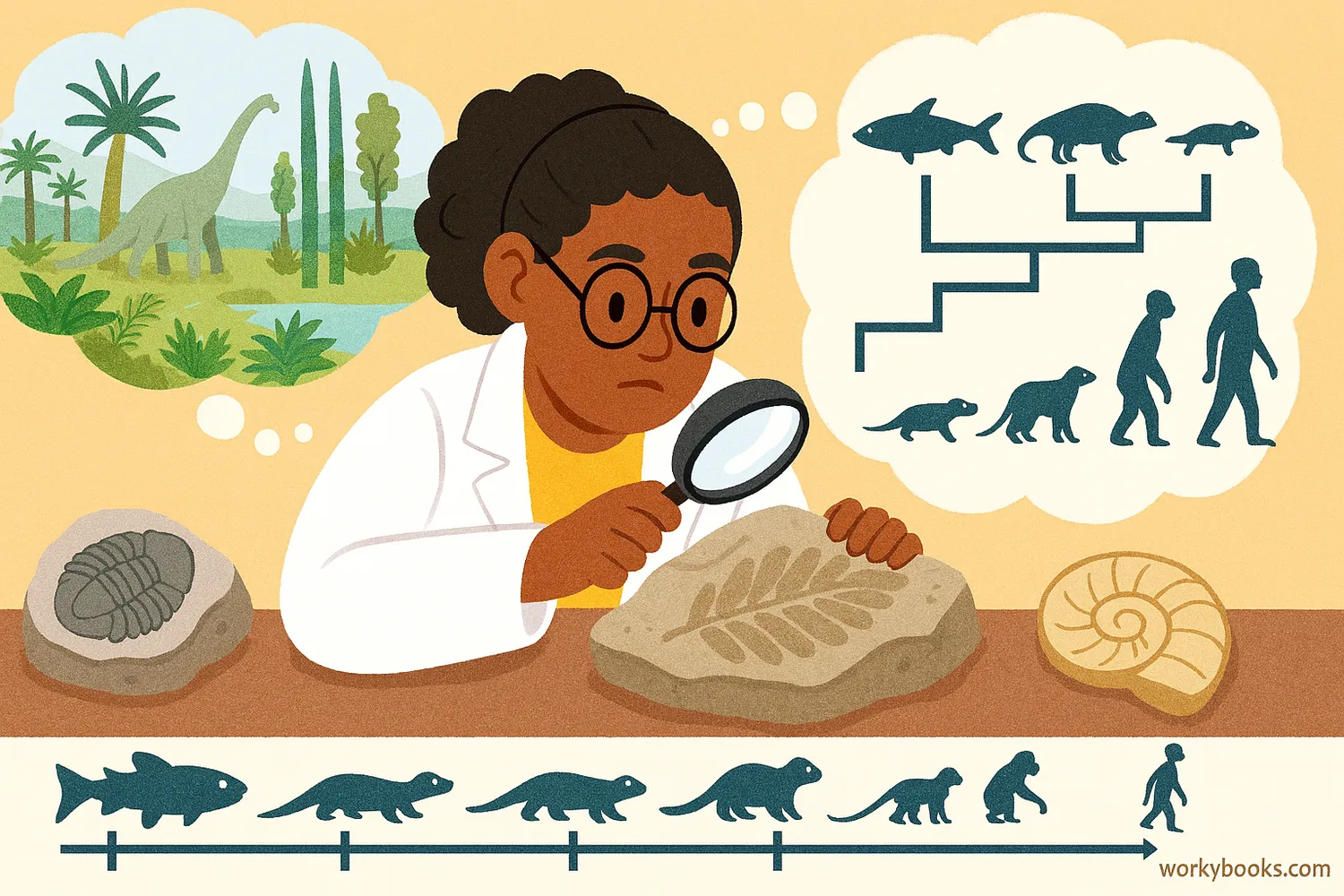
Fossils are physical evidence of organisms that lived millions of years ago. The fossil record is the collection of all discovered fossils and their placement in Earth’s rock layers. Scientists study the fossil record to answer important questions about the history of life. Fossils provide direct evidence that life on Earth has changed over time. By examining fossils, paleontologists can reconstruct ancient ecosystems and understand how species evolved or became extinct.
How Fossils Show Evolution and Extinction
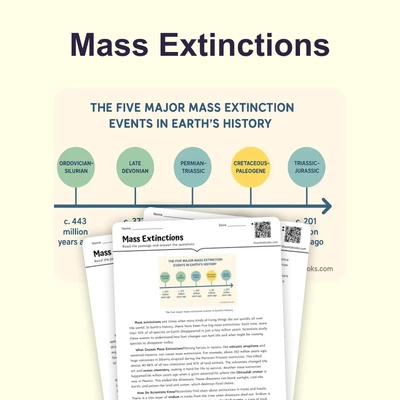
Fossils reveal patterns of evolution—the process by which species change over generations. For example, scientists have discovered transitional fossils with features linking major groups, such as the fossil Archaeopteryx, which shares traits with both dinosaurs and birds. This evidence shows how one group can evolve into another. The fossil record also documents extinction, the complete disappearance of a species. Sometimes, many species go extinct in a short period, called a mass extinction. These events mark the boundaries between major eras in Earth’s history. For instance, about 66 million years ago, a mass extinction wiped out the dinosaurs and many other species.
Fossils and Ancient Environments
The types of fossils found in a rock layer can reveal information about past environments, or paleoenvironments. For example, finding fossilized coral suggests that an area was once a warm, shallow sea, while the presence of ancient fern fossils indicates a humid climate. Fossils also provide evidence for continental drift. Identical fossils, such as the extinct reptile Mesosaurus, have been found on continents now separated by oceans, supporting the idea that these continents were once joined together.
Index Fossils and the Limits of the Fossil Record
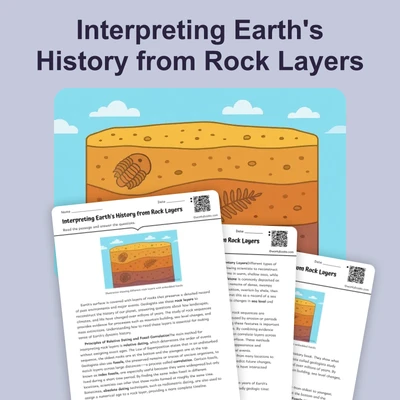
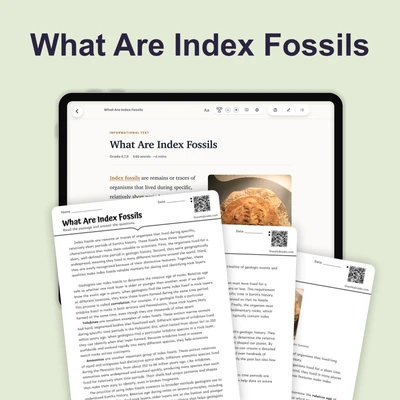
Paleontologists use index fossils—fossils of organisms that lived during a specific and relatively short time period—to identify and compare the ages of rock layers in different locations. For example, trilobites and ammonites are excellent index fossils. However, the fossil record is not complete. Most fossils form from hard body parts, like bones or shells, and only in certain environments with rapid burial. As a result, soft-bodied organisms and those living in places where fossils rarely form are often missing from the record. This bias means scientists must use other evidence, such as genetic data or chemical signatures, to fill in the gaps.
By piecing together fossil evidence, paleontologists reconstruct ancient ecosystems, track evolutionary changes, and map how life has responded to environmental events. The fossil record, though incomplete, remains one of the most powerful tools for understanding the history of life on Earth.
Interesting Fact:
The oldest fossils ever discovered are tiny bacteria that lived about 3.5 billion years ago!
Comprehension quiz (10 questions)
1. What is the fossil record?
2. Which of the following is an example of a transitional fossil mentioned in the passage?
3. What does extinction mean?
4. What does the passage say about mass extinction events?
5. Which word means 'fossils from species that lived during a specific time period, used to date rock layers'?
6. What does the word 'paleoenvironments' mean as used in the passage?
7. Why is the fossil record considered incomplete?
8. If identical fossils are found on different continents, what does this support?
9. True or False: Trilobites and ammonites are examples of index fossils.
10. True or False: All organisms have an equal chance of becoming fossils.
Perfect for the way you teach
- Build comprehension skills
- Auto-graded quiz
- Differentiated reading
- Read together at home
- Improve fluency
- Quiet reading time
- Reading curriculum support
- Independent practice
- Track Lexile growth