History of Life on Earth
Interactive passage with audio narration, comprehension questions, and printable PDF.
By completing this purchase you agree to our Terms of Use and Privacy Policy. Your subscription renews automatically until you cancel. You can cancel anytime from your account settings. All sales are final and non-refundable. Digital content is available for download in your account immediately upon purchase.
What's included
History of Life on Earth preview and details
About this printable History of Life on Earth science reading passage, NGSS-aligned (Grades 5-8)
Sample passage and quiz from History of Life on Earth
Reading passage and comprehension quiz preview
History of Life on Earth
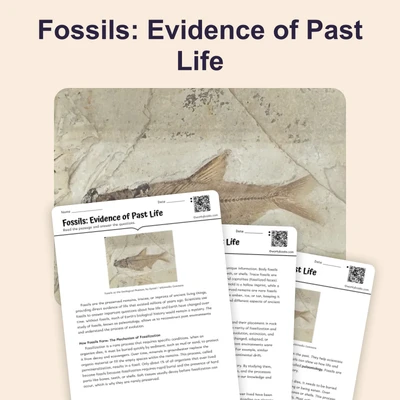
Fossils found in rocks reveal that life on Earth has changed dramatically over billions of years. Scientists study these clues to understand how living things have evolved and survived across time. The history of life is marked by major events, such as the rise of complex organisms and sudden mass extinctions. Exploring these events shows how life adapts and recovers, shaping the biodiversity we see today.
Precambrian Time and the Cambrian Explosion
Most of Earth's history occurred during the Precambrian, lasting more than 4 billion years. During this time, single-celled organisms dominated. Evidence from ancient rocks shows that these simple life forms performed photosynthesis, slowly adding oxygen to the atmosphere. Late in the Precambrian, the first multicellular organisms appeared. About 541 million years ago, the Cambrian Explosion began. This period, lasting around 20 million years, saw a rapid increase in animal diversity. Many new body plans evolved, including the ancestors of most modern animal groups.
Paleozoic, Mesozoic, and Cenozoic Eras
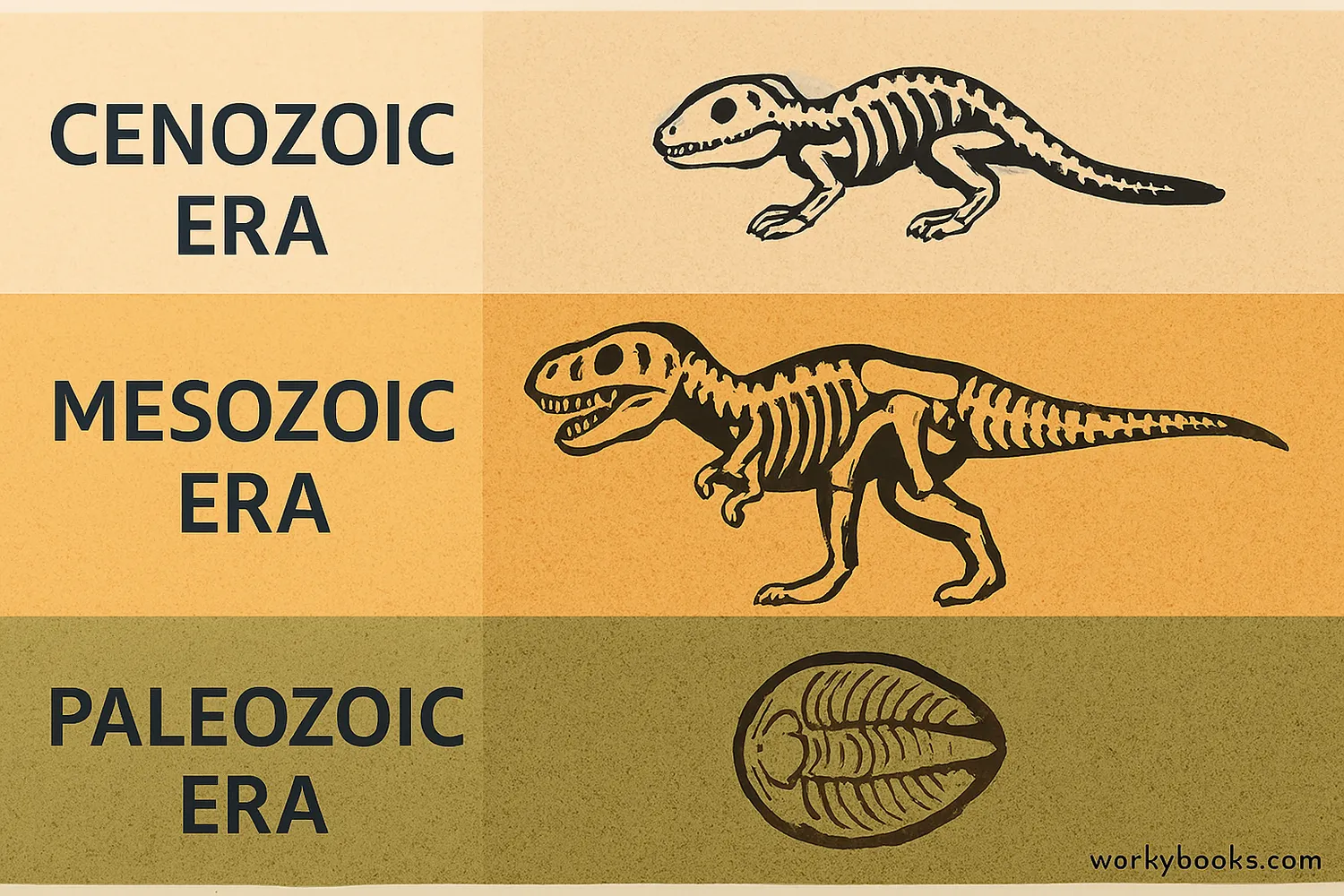
The Paleozoic Era brought major changes: fish, amphibians, and reptiles evolved; forests and insects appeared. The era ended about 252 million years ago with the largest known mass extinction, wiping out nearly 90% of species. The Mesozoic Era followed, known as the age of dinosaurs. During this time, the first mammals and birds evolved, and flowering plants appeared. The Mesozoic ended 66 million years ago when an asteroid impact caused another mass extinction, including the dinosaurs. In the Cenozoic Era, mammals and birds diversified, grasslands spread, and ice ages occurred. Human evolution began in the later Cenozoic.
Mass Extinctions and Life’s Resilience
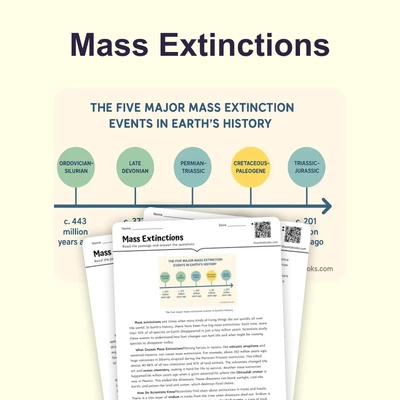
There have been five major mass extinctions in Earth's history, caused by events like volcanic eruptions, climate change, and asteroid impacts. Each extinction drastically reduced the number of living species. However, life has shown remarkable resilience. After each extinction, surviving species adapted to new environments and diversified, leading to bursts of evolution and new forms of life. For example, after the Permian mass extinction, reptiles evolved into dinosaurs, and after the Cretaceous extinction, mammals rapidly diversified.
Closing Thoughts
The history of life on Earth is a story of change, survival, and adaptation. Studying fossils and rock layers helps scientists reconstruct these events and understand the processes of evolution and extinction. This knowledge informs us about current environmental challenges and the importance of protecting biodiversity. The resilience of life demonstrates that, while extinction can be devastating, it also opens opportunities for new life to thrive.
Interesting Fact: Some bacteria that lived over 3 billion years ago are direct ancestors of modern species, showing the incredible continuity of life on Earth.
Comprehension quiz (10 questions)
1. What do fossils found in rocks help scientists learn about?
2. Which era is known as the 'age of dinosaurs'?
3. What was the major event at the end of the Paleozoic Era?
4. What does 'biodiversity' mean as used in the passage?
5. What is the Precambrian?
6. After each mass extinction, what usually happened?
7. Why do scientists study fossils and rock layers?
8. True or False: The Cenozoic Era is when humans first appeared.
9. True or False: The Mesozoic Era ended because of an asteroid impact.
10. Which of the following BEST describes the resilience of life mentioned in the passage?
Perfect for the way you teach
- Build comprehension skills
- Auto-graded quiz
- Differentiated reading
- Read together at home
- Improve fluency
- Quiet reading time
- Reading curriculum support
- Independent practice
- Track Lexile growth