Mass Extinctions
Interactive passage with audio narration, comprehension questions, and printable PDF.
By completing this purchase you agree to our Terms of Use and Privacy Policy. Your subscription renews automatically until you cancel. You can cancel anytime from your account settings. All sales are final and non-refundable. Digital content is available for download in your account immediately upon purchase.
What's included
Mass Extinctions preview and details
About this printable Mass Extinctions science reading passage, NGSS-aligned (Grades 5-8)
Sample passage and quiz from Mass Extinctions
Reading passage and comprehension quiz preview
Mass Extinctions
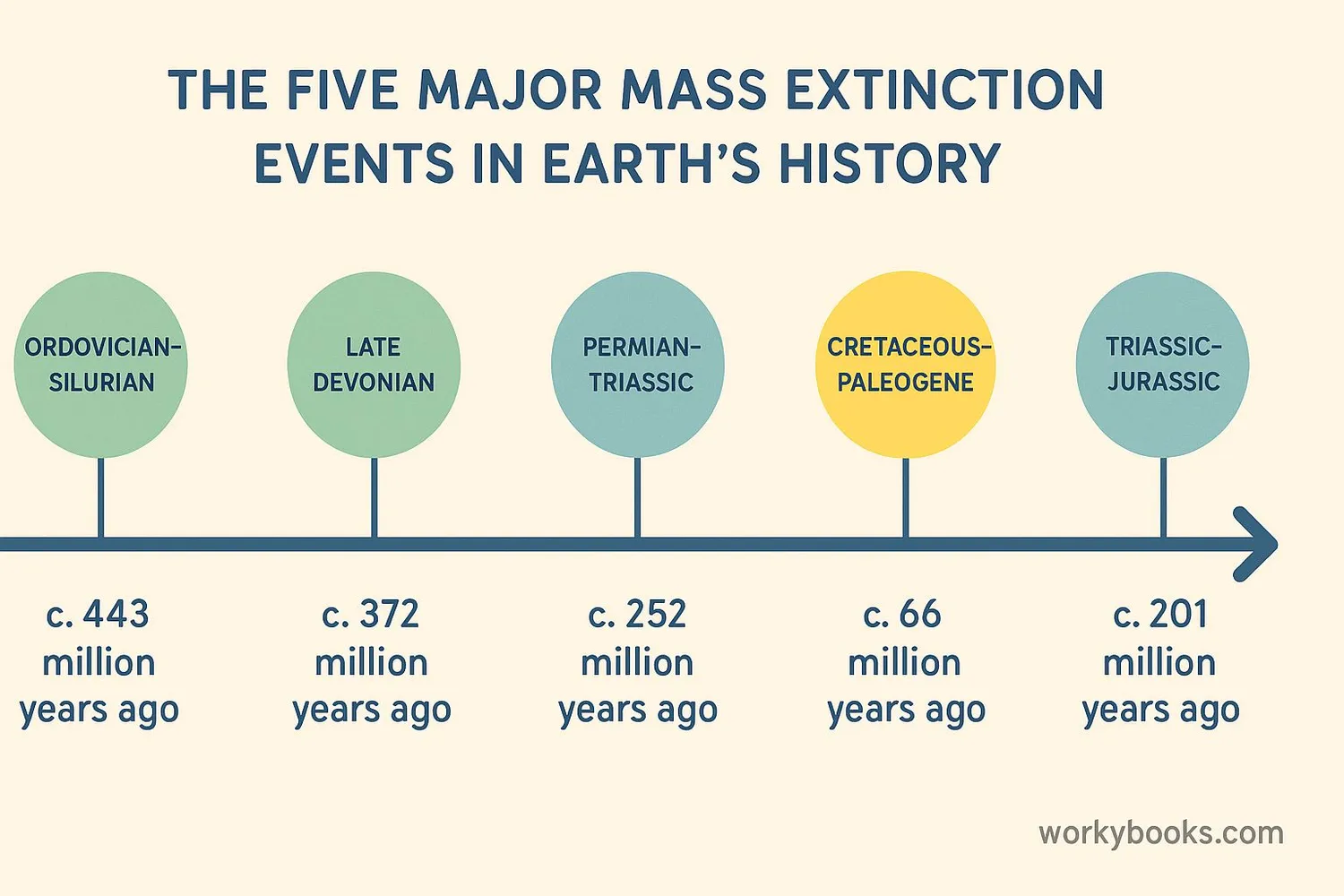
Mass extinctions are periods in Earth's history when a significant portion of living species disappears in a geologically short time. These catastrophic events have dramatically altered the course of life on our planet. Scientists have identified five major mass extinctions, each causing the loss of at least 75% of all species within a few million years. Understanding these events helps us learn how ecosystems respond to rapid changes and what might threaten biodiversity today.
The Mechanisms Behind Mass Extinctions
Mass extinctions occur due to powerful forces that disrupt Earth's ecosystems. For example, the Permian-Triassic extinction, the most severe, wiped out 90-96% of marine species and 70% of land species about 252 million years ago. Huge volcanic eruptions in the Siberian Traps released enormous amounts of gases, leading to climate change and changes in ocean chemistry. Another cause is asteroid impact. The Chicxulub crater in Mexico marks where an asteroid struck Earth 66 million years ago, triggering the Cretaceous-Paleogene extinction that ended the age of dinosaurs. Both volcanic activity and impacts can block sunlight, cool temperatures, and poison the environment, setting off a chain reaction that collapses food webs.
Evidence and Recovery After Extinction
Scientists use several lines of evidence to study mass extinctions. One clue is a thin layer of iridium—a rare element from asteroids—found worldwide in rocks from the time of the dinosaur extinction. Another is the presence of shocked quartz, which forms under the intense pressure of an impact. The fossil record shows sudden gaps or changes in species diversity after these events. After a mass extinction, recovery takes millions of years. Surviving lineages slowly diversify, leading to the evolution of new species and reshaped ecosystems. For example, mammals became the dominant land animals after the dinosaurs disappeared.
The Ongoing Biodiversity Crisis
Today, scientists warn that we may be living through a sixth mass extinction, driven by human activities. Habitat destruction, pollution, climate change, and overhunting are causing species to vanish at rates much faster than the normal background rate. This rapid loss of biodiversity threatens the stability of ecosystems and the services they provide, including clean air, water, and food. Understanding past mass extinctions may help us prevent future losses and protect Earth's living systems.
Interesting Fact:
After the Permian-Triassic extinction, it took about 10 million years for Earth's biodiversity to recover to pre-extinction levels.
Comprehension quiz (10 questions)
1. What is a mass extinction?
2. How many major mass extinctions have occurred in Earth's history?
3. What is one main cause of the Permian-Triassic extinction?
4. What evidence supports the asteroid impact theory for the dinosaur extinction?
5. What does 'biodiversity' mean as used in the passage?
6. What is the 'fossil record'?
7. How did volcanic eruptions contribute to mass extinctions?
8. Which group became dominant after the dinosaur extinction?
9. True or False: Mass extinctions always happen because of human activity.
10. True or False: Scientists warn that we may be experiencing a sixth mass extinction today.
Perfect for the way you teach
- Build comprehension skills
- Auto-graded quiz
- Differentiated reading
- Read together at home
- Improve fluency
- Quiet reading time
- Reading curriculum support
- Independent practice
- Track Lexile growth