Extinction and Biodiversity
Interactive passage with audio narration, comprehension questions, and printable PDF.
What's included
Extinction and Biodiversity preview and details
About this printable Extinction and Biodiversity science reading passage, NGSS-aligned (Grades 5-8)
Sample passage and quiz from Extinction and Biodiversity
Reading passage and comprehension quiz preview
Extinction and Biodiversity
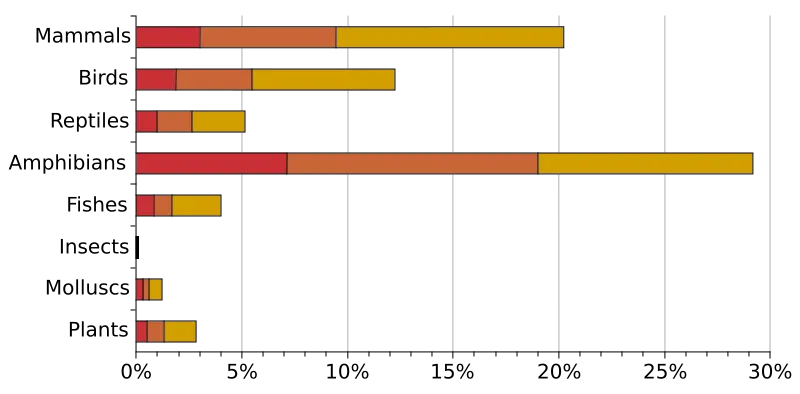
Percentage of species listed on the IUCN Red List, by group. Vectorization by B. Jankuloski
Wikimedia Commons (Public domain).
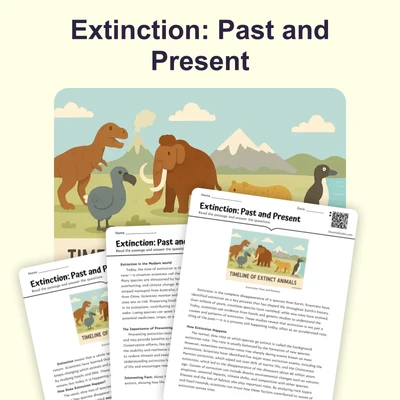
Extinction occurs when a species disappears completely from Earth. Throughout history, many species have become extinct, changing the planet’s biodiversity. Biodiversity is the variety of life at all levels, from genes to species to entire ecosystems. Scientists study extinction and biodiversity to understand how life on Earth changes over time and why protecting this diversity is important for all living things.
Mechanisms of Extinction: Background and Mass Events
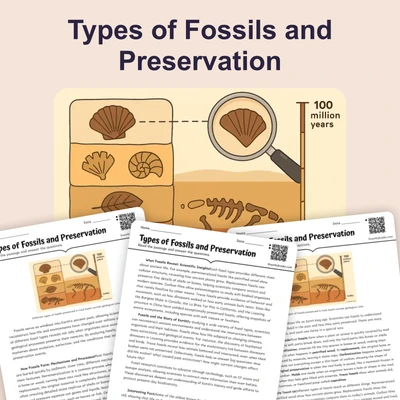
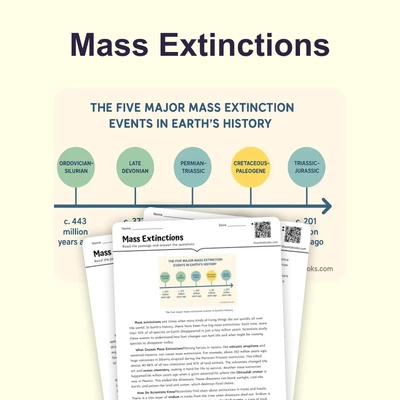
Earth’s history shows two main types of extinction: background extinction and mass extinction. Background extinction happens at a slow, steady rate as species fail to adapt to environmental changes, competition, or disease. For example, about 0.1-1 species per million go extinct each year under normal conditions. In contrast, mass extinctions are rare events when a large number of species—sometimes over 75%—vanish in a short period. The Permian mass extinction, about 252 million years ago, wiped out around 90% of marine species. The Cretaceous mass extinction, about 66 million years ago, led to the end of the dinosaurs. Scientists use fossil records to identify these events and study their causes, such as volcanic eruptions, asteroid impacts, or rapid climate changes.
Causes and Interactions: Human Impact and Biodiversity Crisis
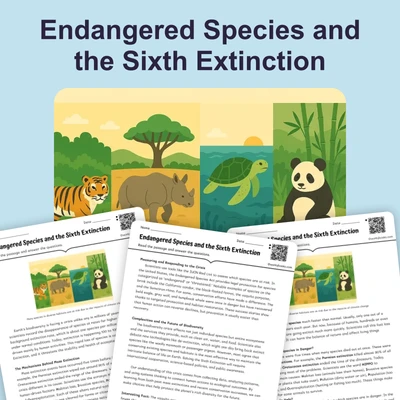
Today, scientists warn of a possible "sixth mass extinction," mainly driven by human activity. Human actions like habitat destruction, pollution, overhunting, and introducing invasive species are causing species to disappear at rates 100 to 1,000 times faster than normal background extinction. This rapid loss reduces biodiversity, which affects ecosystem stability and the ability of nature to recover from disturbances. For example, the extinction of pollinating insects can disrupt food production for both wildlife and humans. Biodiversity loss also limits sources for new medicines and food, and decreases the natural beauty and inspiration that ecosystems provide.
Conservation and the Importance of Biodiversity
Conservation efforts aim to protect biodiversity and prevent further extinctions. Scientists and conservationists create protected areas, restore damaged habitats, and work to save endangered species. Biodiversity increases resilience in ecosystems, helping them withstand environmental changes. It also supports ecosystem services—like clean water, fertile soil, and climate regulation—that humans depend on. By understanding the causes of extinction and the value of biodiversity, society can make choices that protect life on Earth for future generations.
Interesting Fact:
Over 99% of all species that have ever lived on Earth are now extinct, but new species continue to evolve, keeping our planet full of life.
Comprehension quiz (10 questions)
1. What is extinction?
2. What does biodiversity include?
3. Which is an example of a mass extinction?
4. What evidence do scientists use to study past extinctions?
5. What is the main cause of the current biodiversity crisis?
6. What is meant by 'ecosystem stability'?
7. How can biodiversity loss affect humans?
8. Which of the following is TRUE based on the passage?
9. Conservation efforts can help prevent extinction. True or False?
10. Most species that have ever lived on Earth are now extinct. True or False?
Perfect for the way you teach
- Build comprehension skills
- Auto-graded quiz
- Differentiated reading
- Read together at home
- Improve fluency
- Quiet reading time
- Reading curriculum support
- Independent practice
- Track Lexile growth