Fossils: Evidence of Past Life
Interactive passage with audio narration, comprehension questions, and printable PDF.
By completing this purchase you agree to our Terms of Use and Privacy Policy. Your subscription renews automatically until you cancel. You can cancel anytime from your account settings. All sales are final and non-refundable. Digital content is available for download in your account immediately upon purchase.
What's included
Fossils: Evidence of Past Life preview and details
About this printable Fossils: Evidence of Past Life science reading passage, NGSS-aligned (Grades 5-8)
Sample passage and quiz from Fossils: Evidence of Past Life
Reading passage and comprehension quiz preview
Fossils: Evidence of Past Life
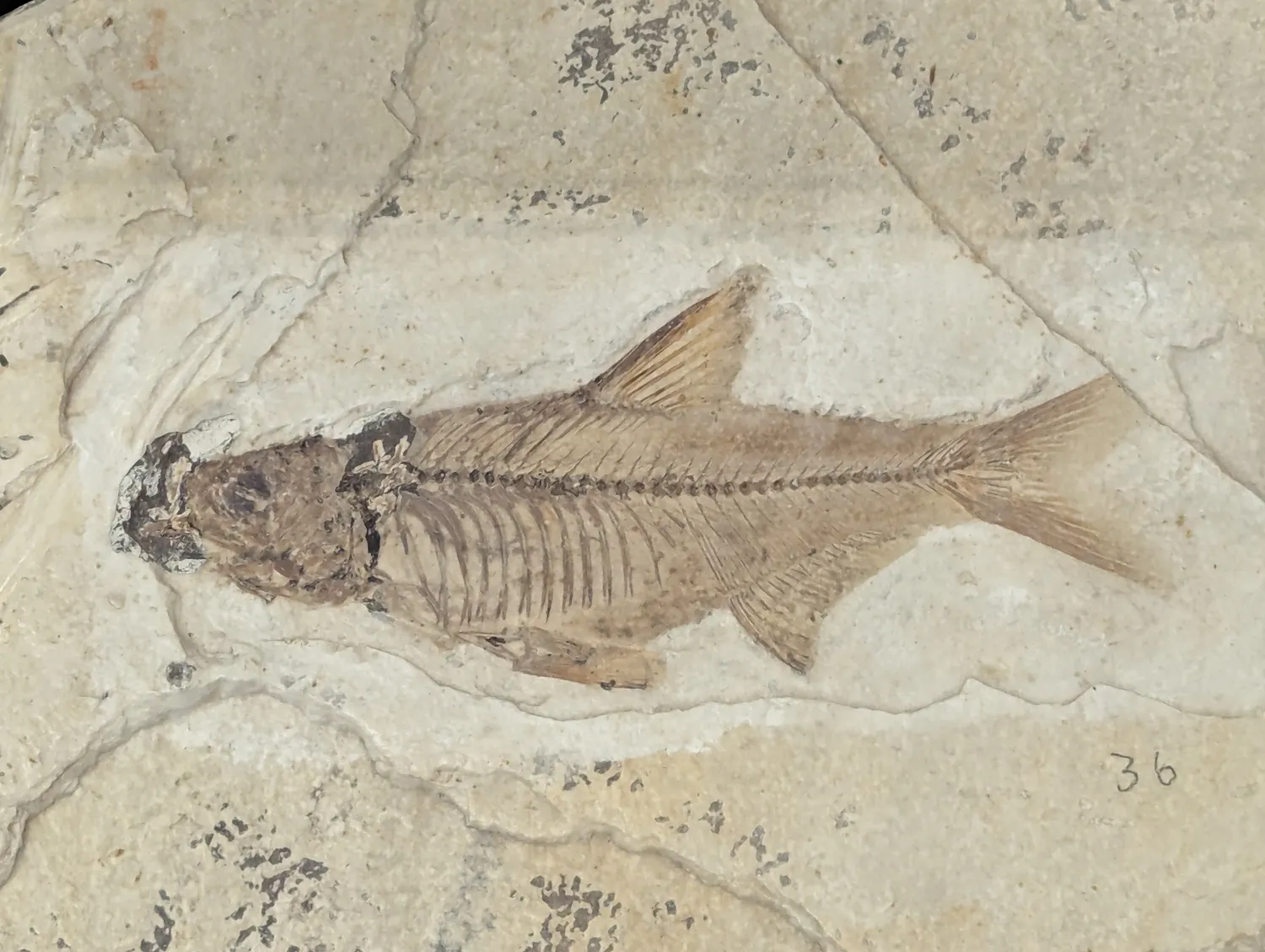
Fossils at the Geological Museum, by Syced / Wikimedia Commons
Fossils are the preserved remains, traces, or imprints of ancient living things, providing direct evidence of life that existed millions of years ago. Scientists use fossils to answer important questions about how life and Earth have changed over time. Without fossils, much of Earth's biological history would remain a mystery. The study of fossils, known as paleontology, allows us to reconstruct past environments and understand the process of evolution.
How Fossils Form: The Mechanism of Fossilization
Fossilization is a rare process that requires specific conditions. When an organism dies, it must be buried quickly by sediment, such as mud or sand, to protect it from decay and scavengers. Over time, minerals in groundwater replace the organic material or fill the empty spaces within the remains. This process, called permineralization, results in a fossil. Only about 1% of all organisms that ever lived become fossils because fossilization requires rapid burial and the presence of hard parts like bones, teeth, or shells. Soft tissues usually decay before fossilization can occur, which is why they are rarely preserved.
Types of Fossils and Their Significance
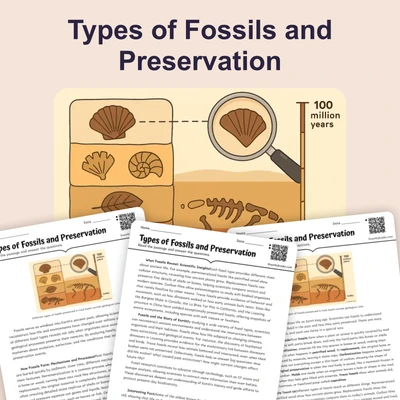
There are several types of fossils, each offering unique information. Body fossils are preserved parts of organisms, such as bones, teeth, or shells. Trace fossils are indirect signs of life, including footprints, burrows, and coprolites (fossilized feces). Molds and casts are impressions left by organisms; a mold is a hollow imprint, while a cast forms when the mold is filled with minerals. Preserved remains are rare fossils where the whole organism is trapped in substances like amber, ice, or tar, keeping it almost unchanged. Each type helps scientists understand different aspects of ancient life, from anatomy to behavior.
The Fossil Record: Insights and Limitations
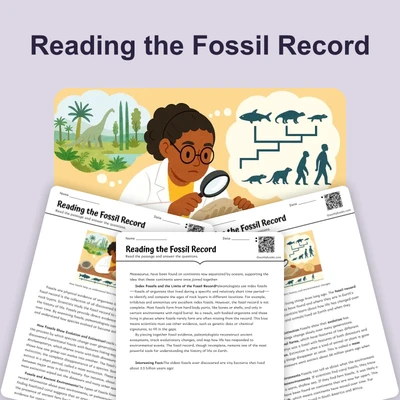
The fossil record is the collection of all known fossils and their placement in rock layers. Although the fossil record is incomplete due to the rarity of fossilization and geological changes, it still provides powerful evidence of evolution, extinction, and patterns of life on Earth. Fossils reveal how species have changed, adapted, or disappeared over millions of years. They show us what ancient environments were like, how climates shifted, and even how continents moved. For example, similar fossils found on different continents support the theory of continental drift.
Overall, fossils are crucial for understanding Earth's history. By studying them, scientists can trace the origins of life, environmental changes, and the processes driving evolution. New fossil discoveries continue to fill gaps in our knowledge and inspire new scientific questions.
Interesting Fact:
Less than one percent of all organisms that ever lived have been preserved as fossils, making each discovery valuable for understanding our planet's past.
Comprehension quiz (10 questions)
1. What is a fossil?
2. Which field of science studies fossils?
3. What is the first step in the fossilization process described in the passage?
4. What is a trace fossil?
5. In the passage, what does 'permineralization' mean?
6. Which of the following best describes why fossilization is rare?
7. What can fossils tell scientists about Earth's history?
8. True or False: All organisms that ever lived have become fossils.
9. True or False: Preserved remains are fossils where the whole organism is trapped in amber, ice, or tar.
10. How does the fossil record help support the theory of continental drift?
Perfect for the way you teach
- Build comprehension skills
- Auto-graded quiz
- Differentiated reading
- Read together at home
- Improve fluency
- Quiet reading time
- Reading curriculum support
- Independent practice
- Track Lexile growth