Reading Passage

Icecap Climate

Interactive passage with audio narration, comprehension questions, and printable PDF.

No ratings yet
Grades 5–8ScienceElaEnglish · SpanishInteractive · Printable

What's included

Reading passage
Audio narration
Comprehension quiz
Writing activity
Glossary & flashcards
Differentiated version
Spanish translation

Icecap Climate preview and details

About this printable Icecap Climate science reading passage, NGSS-aligned (Grades 5-8)

This science passage, aligned to NGSS standards, introduces students in grades 6-8 to the fascinating world of icecap climates. Students will explore what makes these regions unique, how icecaps form, and the adaptations of living things that survive in such extreme cold. The passage explains key terms like permafrost, precipitation, and adaptation, providing clear definitions and real-world examples. Activities include a reading comprehension quiz, writing prompts, and a glossary to reinforce vocabulary. This resource is ideal for students studying climate science or general science, and is designed for easy integration into classrooms, including audio-enabled learning for accessibility. By connecting science concepts to everyday life and encouraging analytical thinking, this passage helps students build a deeper understanding of Earth's coldest environments.
Written by Workybooks TeamPublished by Workybooks
Preview

Sample passage and quiz from Icecap Climate

Reading passage and comprehension quiz preview

Icecap Climate
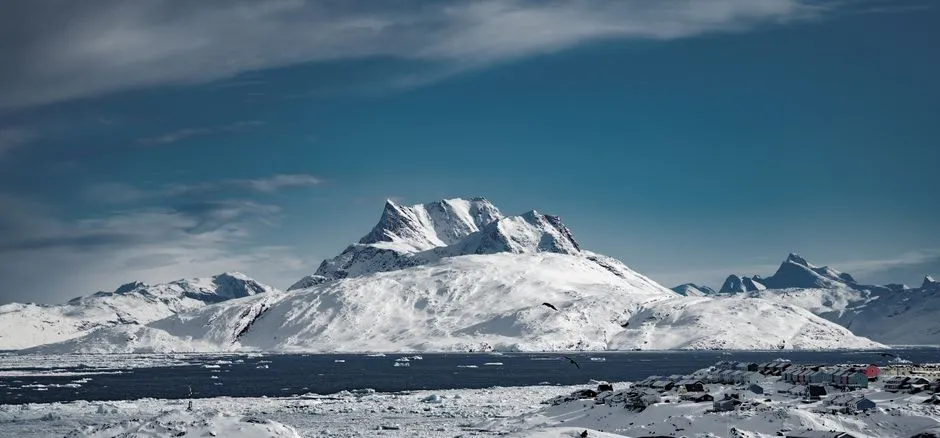
Breathtaking view of snowy mountains in Nuuk, Greenland surrounded by icy waters and clear blue skies.

"Breathtaking view of snowy mountains in Nuuk, Greenland surrounded by icy waters and clear blue skies." by Peter Platou / Pexels.

The icecap climate is found in some of the coldest places on Earth. These regions cover the North and South Poles, including Antarctica and Greenland. An icecap climate is known for its extremely low temperatures, heavy ice, and very little precipitation.

In an icecap climate, the average temperature is always below 0°C (32°F), which means water is always frozen. Snow and ice cover the ground all year round. The sun shines for long periods in summer and barely rises in winter, creating long polar days and nights.

There is very little precipitation in icecap regions. Most of it falls as snow because the air is too cold for rain. Over time, layers of snow are pressed together to form thick glaciers. A glacier is a large, slow-moving mass of ice.

The ground in these areas is called permafrost. Permafrost is soil that stays frozen all year. Only a thin top layer may melt in the summer, but underneath it stays icy and hard.

Plants and animals must be specially adapted to survive in an icecap climate. Few plants grow here because the soil is frozen and there is little sunlight in winter. Mosses and lichens are some of the only plants that can survive. Animals like the polar bear, penguin, and Arctic fox have thick fur or fat to keep warm. Some animals, such as the emperor penguin, huddle together to share body heat.

Icecap climates are important for the Earth. The ice and snow reflect sunlight, helping to keep the planet cool. However, climate change is causing icecaps to melt faster than before. This can raise sea levels and affect weather patterns all over the world.

Scientists study these regions to understand Earth's climate system and how it is changing. They use satellites and weather stations to measure temperatures, ice thickness, and other data.

Interesting Fact: The coldest temperature ever recorded on Earth was -89.2°C (-128.6°F) at the Vostok Station in Antarctica!

Comprehension quiz (8 questions)

1. Where are icecap climates found?

North and South Poles
Rainforests
Deserts
Mountains

2. What covers the ground year-round?

Snow and ice
Grass
Sand
Water

3. What is permafrost?

Frozen soil all year
Melted ice
Rainy weather
Rocky ground

4. Why do emperor penguins huddle together?

Share body heat
Look bigger
Find food
Escape predators

5. What effect does climate change have on icecaps?

Melts ice faster
Makes ice thicker
Adds more snow
No effect

6. How do glaciers form?

Snow pressed together
Rain freezes
Wind blows snow
Sun melts ice

7. The sun shines all day in polar summer.

True
False

8. Which word means "change to survive"?

Adaptation
Precipitation
Glacier
Permafrost
Who it's for

Perfect for the way you teach

Teachers
  • Build comprehension skills
  • Auto-graded quiz
  • Differentiated reading
Parents
  • Read together at home
  • Improve fluency
  • Quiet reading time
Homeschoolers
  • Reading curriculum support
  • Independent practice
  • Track Lexile growth
Topics

Reviews & Ratings

No reviews yet. Be the first to share your experience!

More reading you might love

20 more
Worksheet
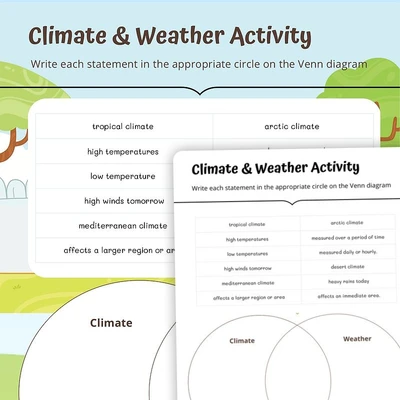
Climate and weather activity - worksheet educational content

Climate and weather activity

Worksheet

$1.50
Interactive
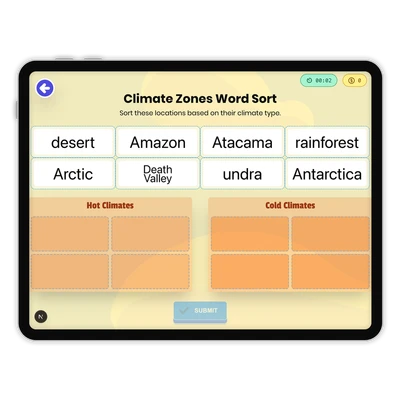
Climate Zones Word Sort - game educational content

Climate Zones Word Sort

Game

$1.50
Passage
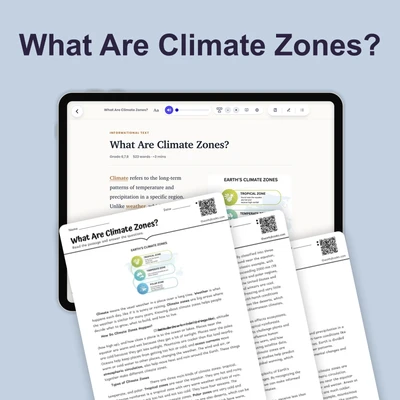
What Are Climate Zones - reading educational content

What Are Climate Zones

Reading Passage · MS-ESS2-6

$1.50
Passage
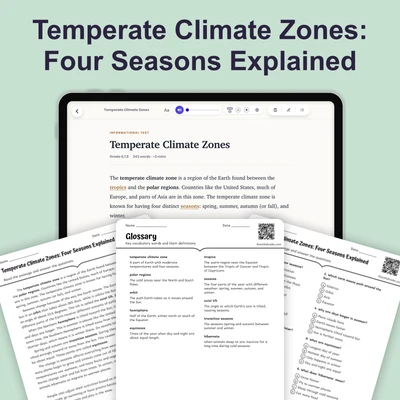
Temperate Climate Zones - reading educational content

Temperate Climate Zones

Reading Passage

$1.50
Worksheet
Climate and Weather — Distinguishing Characterstics - worksheet educational content

Climate and Weather — Distinguishing Characterstics

Worksheet

Free
Passage
How Latitude Affects Climate Zones - reading educational content

How Latitude Affects Climate Zones

Reading Passage

$1.50
Passage
How is Climate Different from Weather? - reading educational content

How is Climate Different from Weather?

Reading Passage · RI.3.1

Free
Passage
Polar Climate Zones: Arctic and Antarctic - reading educational content

Polar Climate Zones: Arctic and Antarctic

Reading Passage

$1.50
Passage
What Is Climate - reading educational content

What Is Climate

Reading Passage · MS-ESS2-6

$1.50
Passage
Understanding the Koppen Climate Classification System - reading educational content

Understanding the Koppen Climate Classification System

Reading Passage · MS-ESS2-6

$1.50
Worksheet
Comparing Weather and Climate Texts - worksheet educational content

Comparing Weather and Climate Texts

Worksheet · RI.5.9

Free
Interactive
Climate Characteristics Word Sort - game educational content

Climate Characteristics Word Sort

Game

$1.50
Passage
Antarctica Climate - reading educational content

Antarctica Climate

Reading Passage

$1.50
Passage
Mountains, Elevation, and Climate - reading educational content

Mountains, Elevation, and Climate

Reading Passage · MS-ESS2-6

$1.50
Passage
How Do Highland Climates Differ from Polar Climates? - reading educational content

How Do Highland Climates Differ from Polar Climates?

Reading Passage · MS-ESS2-6

$1.50
Passage
The Role of Ocean Currents in Climate Patterns - reading educational content

The Role of Ocean Currents in Climate Patterns

Reading Passage

$1.50
Worksheet
Color the Climate Zones - worksheet educational content

Color the Climate Zones

Worksheet · NGSS 3-ESS2-2

$1.50
Passage
Coastal vs. Inland Climate - reading educational content

Coastal vs. Inland Climate

Reading Passage

$1.50
Passage
Humid Continental Climate Countries - reading educational content

Humid Continental Climate Countries

Reading Passage · MS-ESS2-6

Free
Passage
Oceans and Climate Patterns - reading educational content

Oceans and Climate Patterns

Reading Passage · MS-ESS2-6

$1.50
Copyright © 2026 Workybooks. Made with ♥ in California.