What Are Climate Zones
Interactive passage with audio narration, comprehension questions, and printable PDF.
By completing this purchase you agree to our Terms of Use and Privacy Policy. Your subscription renews automatically until you cancel. You can cancel anytime from your account settings. All sales are final and non-refundable. Digital content is available for download in your account immediately upon purchase.
What's included
What Are Climate Zones preview and details
About this printable What Are Climate Zones science reading passage, NGSS-aligned (Grades 5-8)
Sample passage and quiz from What Are Climate Zones
Reading passage and comprehension quiz preview
What Are Climate Zones?
Climate refers to the long-term patterns of temperature and precipitation in a specific region. Unlike weather, which describes daily or short-term conditions like rain or sunshine, climate is measured over decades or centuries. Earth is divided into several climate zones that share similar long-term weather patterns. Understanding these zones is essential for predicting environmental changes and planning for agriculture, housing, and resource management.
How Climate Zones Form
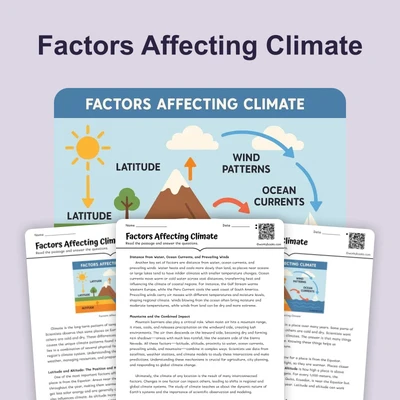
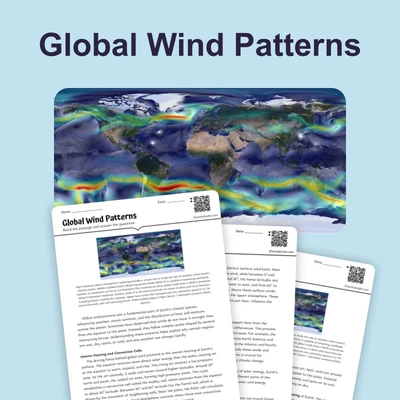
The main factors that determine climate zones are latitude, altitude, distance from bodies of water, and atmospheric circulation. Latitude measures how far a place is from the equator. Regions near the equator receive more direct sunlight year-round, making them warmer and wetter. Areas at higher latitudes, closer to the poles, receive less sunlight and are much colder. Altitude, or height above sea level, also affects climate. For example, mountainous areas tend to be cooler than nearby lowlands. Large bodies of water, like oceans, moderate temperatures and increase humidity, while ocean currents can carry warm or cold water across vast distances, influencing coastal climates. The movement of air, or atmospheric circulation, distributes heat and moisture around the globe, creating patterns of wind and precipitation that shape climate zones.
Examples of Climate Zones
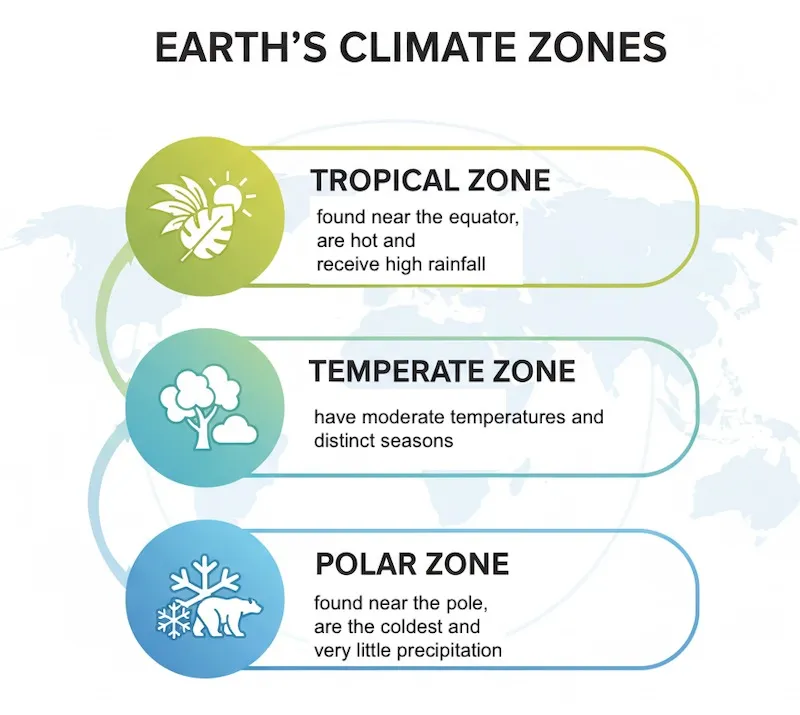
Earth's climate zones are usually classified into three main types: tropical, temperate, and polar. Tropical zones, found near the equator, are hot and receive high rainfall. The Amazon rainforest is a classic example, with average yearly temperatures above 25°C (77°F) and rainfall exceeding 2000 mm (79 inches) per year. Temperate zones, located between the tropics and polar regions, have moderate temperatures and distinct seasons. Much of the United States and Europe are in temperate zones, where summers are warm and winters are cool. Polar zones are the coldest, with temperatures often below freezing and very little precipitation. Antarctica and the Arctic are polar regions, with harsh conditions that limit plant and animal life. There are also specialized zones like deserts, which can be hot or cold but always have low precipitation, and Mediterranean climates, known for mild, wet winters and hot, dry summers.
Why Climate Zones Matter
The distribution of climate zones affects ecosystems, biodiversity, agriculture, and human society. For example, tropical rainforests support more species than any other ecosystem, while deserts challenge plants and animals to survive with very little water. Climate zones also influence human activities, including what crops can be grown, what clothes are worn, and how buildings are constructed. Scientists study climate patterns using satellite data, weather stations, and historical records to understand how climate zones are changing due to natural processes and human activities. These studies help predict future changes, such as the shifting of climate zones due to global warming, which can impact food security and natural habitats.
Understanding climate zones helps us appreciate the complexity of Earth's systems and prepares us to respond to environmental challenges. By recognizing the interactions between sunlight, atmosphere, water, and land, we can make informed decisions about how to care for our planet and its diverse climates.
Interesting Fact:
Some deserts, like the Atacama in South America, receive less than 1 millimeter of rainfall per year, making them the driest places on Earth!
Comprehension quiz (10 questions)
1. What is the main difference between climate and weather?
2. Which factor is NOT mentioned as influencing climate zones?
3. Which climate zone is the Amazon rainforest located in?
4. What is atmospheric circulation?
5. What does precipitation mean, according to the passage?
6. Which of these is an example of a polar climate zone?
7. If a city is located at a high altitude, what is its likely climate compared to nearby regions at sea level?
8. Why do scientists study climate zones using satellite data and weather stations?
9. Polar zones usually have temperatures above 25°C all year. (True/False)
10. Deserts can be either hot or cold, but they always have low precipitation. (True/False)
Perfect for the way you teach
- Build comprehension skills
- Auto-graded quiz
- Differentiated reading
- Read together at home
- Improve fluency
- Quiet reading time
- Reading curriculum support
- Independent practice
- Track Lexile growth