Polar Climate Zones: Arctic and Antarctic — Reading Comprehension
Rate this
Premium Resource
Present
Present in classroom. No work saved
Assign
Classroom with student accounts, Track progress
Quick Play
No student accounts, assign with a link
Grades
5
6
7
8
PRINT+DIGITAL RESOURCE
This learning resource is available in interactive and printable formats. The interactive worksheet can be played online and assigned to students. The Printable PDF version can be downloaded and printed for completion by hand.
This engaging science passage introduces students in Grades 6-8 to the polar climate zones of the Arctic and Antarctic, following NGSS standards. Students will learn about the unique features, temperatures, and ecosystems of each pole, as well as how animals and plants adapt to these extreme conditions. The passage defines key science vocabulary in context, offers real-world examples, and highlights the importance of these regions for the planet’s climate. It includes a glossary, a Spanish translation, an 8-question multiple-choice quiz, and three open-ended writing activities that encourage deeper thinking and connections to everyday life. The resource is audio integrated for greater accessibility, making it an excellent tool for classrooms and home study alike.
CONTENT PREVIEW
Expand content preview
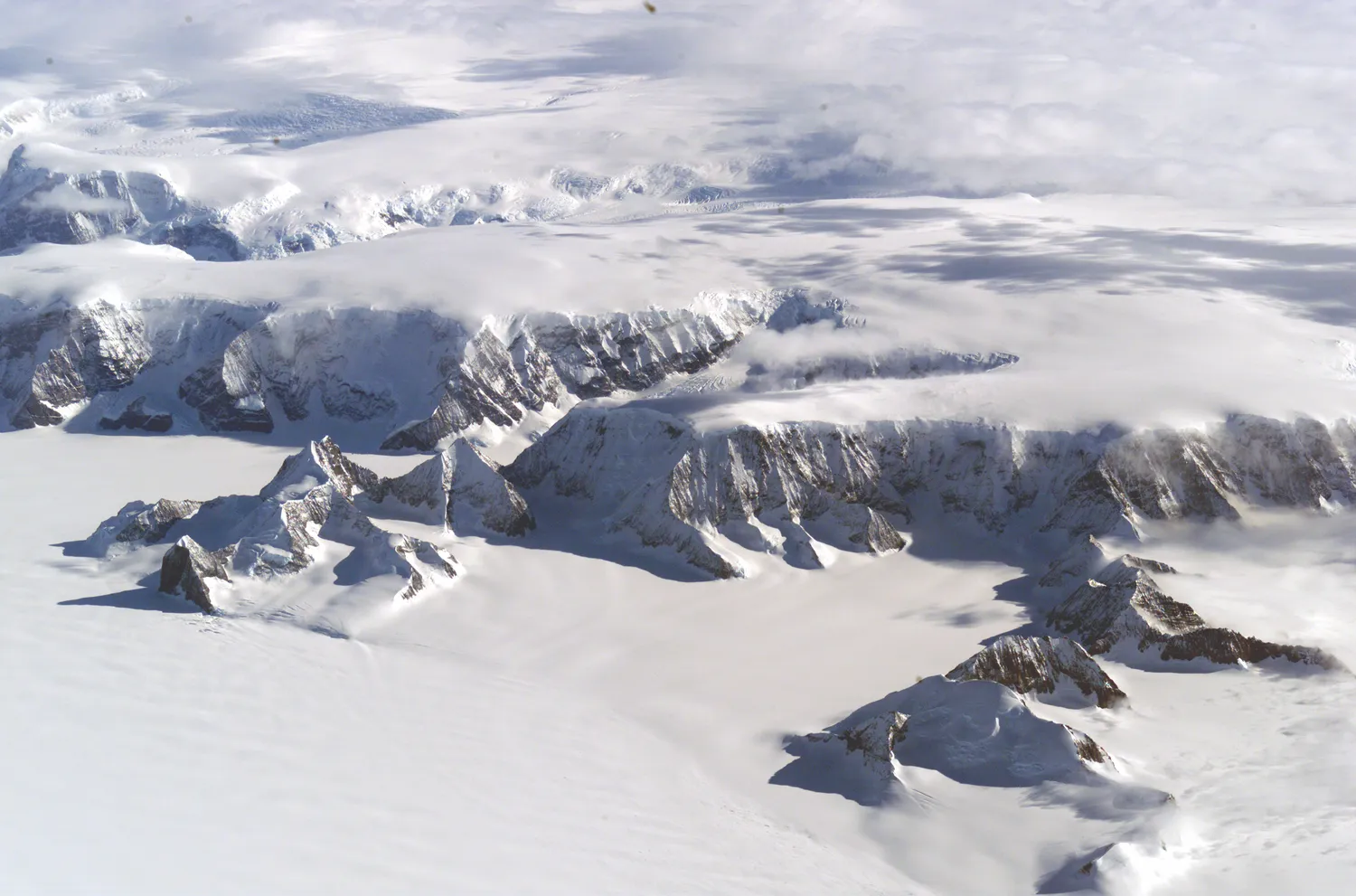
Larsen Ice Shelf in Antarctica Wikimedia Commons
The polar climate zones are found at the very top and bottom of the Earth, in the Arctic and Antarctic regions. These areas are some of the coldest places on our planet. The Arctic is located around the North Pole, while the Antarctic surrounds the South Pole. Both zones have unique ecosystems and weather patterns, but there are important differences between them.
The Arctic is mostly made up of frozen ocean, called sea ice, which is surrounded by continents like North America, Europe, and Asia. In contrast, the Antarctic is a continent covered by a thick layer of ice, surrounded by the Southern Ocean. The average temperature in the Arctic ranges from -40°C in winter to around 0°C in summer. The Antarctic is even colder, with winter temperatures dropping below -60°C and summer rarely going above -20°C.
One reason these zones are so cold is because of the tilt of Earth's axis. The sun's rays hit the poles at a low angle, meaning less energy reaches the surface. In winter, each pole can be in darkness for months, a time known as polar night. In summer, they can have 24 hours of daylight, called midnight sun.
Both the Arctic and Antarctic have amazing adaptations to help plants and animals survive. In the Arctic, animals like polar bears, arctic foxes, and seals have thick fur or blubber to keep them warm. Some plants, like mosses and lichens, grow low to the ground to avoid cold winds. The Antarctic is home to penguins, seals, and only a few types of plants, such as mosses. Penguins have layers of feathers and fat to protect them from the icy temperatures.
The ecosystems of these regions are very sensitive to changes in temperature. Melting ice caused by climate change is a big problem, as it affects animal habitats and the entire food web. For example, polar bears rely on sea ice to hunt for seals, and when the ice melts, it becomes harder for them to survive. Scientists use the polar regions to study how the Earth’s climate is changing and to predict what might happen in the future.
Interesting Fact: In the Antarctic, the largest animal is the blue whale, which visits during the summer to feed on tiny shrimp-like creatures called krill!
Where is the Arctic located?
Around the North PoleAround the South PoleNear the equatorIn South America
What covers the Antarctic region?
A thick layer of iceRainforestsDesert sandMountains only
Which animal lives in the Arctic?
Polar bearPenguinCamelKangaroo
Why are polar zones so cold?
Sun’s rays hit at a low angleToo many volcanoesLots of rainIt is always night
What is midnight sun?
24 hours of daylightA total eclipseNight with no starsA type of storm
What happens if ice melts in the Arctic?
Polar bears struggle to huntMore plants growIt becomes a desertMore fish appear
Penguins live in the Antarctic. (True/False)
TrueFalse
What is blubber?
Thick fat under animal skinA type of iceA plantA snowstorm
Perfect For:
👩🏫 Teachers
• Reading comprehension practice
• Auto-graded assessments
• Literacy skill development
👨👩👧👦 Parents
• Reading practice at home
• Comprehension improvement
• Educational reading time
🏠 Homeschoolers
• Reading curriculum support
• Independent reading practice
• Progress monitoring
Reading Features:
📖
Reading Passage
Engaging fiction or nonfiction text
❓
Comprehension Quiz
Auto-graded questions
📊
Instant Feedback
Immediate results and scoring
📄
Printable Version
Download for offline reading
🔊
Read Aloud
Voice-over with word highlighting
Reviews & Ratings
No reviews yet. Be the first to share your experience!
Related Content
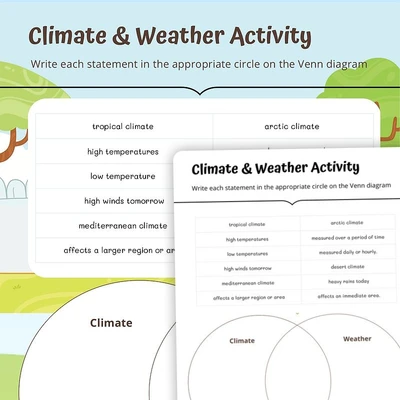
Climate and weather activity
This worksheet is perfect for understanding the differences between climate and weather. Students will read the phrases ...
Climate and Weather — Distinguishing Characterstics
This worksheet highlights the differences between climate and weather. The chart format makes comparing and contrasting ...
Comparing Weather and Climate Texts
This reading comprehension worksheet has 5th graders read two informational texts about Weather and Climate. Students th...
RI.5.9
Tools and Technology in Earth Science
This middle school science reading passage explores the wide range of tools and technologies used in Earth science, from...
MS-ESS2-2MS-ESS3-2MS-ETS1-1MS-PS4-3
What Is Earth Science?
This engaging middle school science passage introduces students to the field of Earth science, aligning with NGSS standa...
MS-ESS1MS-ESS2MS-ESS3SEP
What Is Space Weather and How Does It Affect the Earth?
This NGSS-aligned science passage for middle school explains what space weather is and how it affects Earth. Students le...
MS-ESS2-2
Extreme Weather and Climate Change
This Grade 6-8 science passage, aligned to NGSS standards, explores the impact of climate change on extreme weather even...
What Is The Difference Between Climate Model And Weather Model?
This reading passage delves into the fundamental differences between weather models and climate models, explaining their...
Scientific Inquiry in Earth Science
This passage explores scientific inquiry in Earth science for grades 6-8, aligned with NGSS standards MS-ESS1-4, MS-ESS2...
MS-ESS1-4MS-ESS2-1MS-ESS3-5SEP
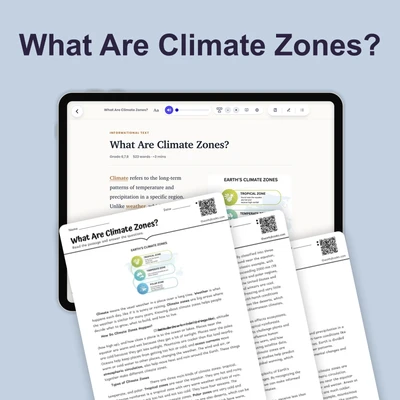
Earth's Major Climate Zones Explained
This engaging science passage for grades 6-8 explains Earth's major climate zones, including tropical, temperate, and po...
Climate Through Earth's History
This engaging passage for grades 6-8 explores how Earth's climate has naturally changed over millions of years, highligh...
MS-ESS1-4MS-ESS2-6
Earth: Our Home in Space
This engaging Grade 4-5 science passage, aligned to NGSS, introduces students to Earth's special place in the solar syst...
Weather vs. Climate
This comprehensive passage for grades 6-8 explores the difference between weather and climate, aligning with NGSS standa...
MS-ESS2-6
Air Masses and Weather
This audio-integrated passage, "Air Masses and Weather," is designed for 6th-grade students to understand how the moveme...
How is Climate Different from Weather?
This passage distinguishes climate from weather for young readers. It defines climate as the usual weather patterns over...
RI.3.1RI.4.14.ESS2.D
Antarctica Climate
This engaging science passage for grades 6-8 explores Antarctica, the coldest climate zone on Earth. Students will learn...
How Climate Change Affects Weather
This middle school science passage explores how and why weather patterns are changing globally. Students will learn abou...
MS-ESS3-5
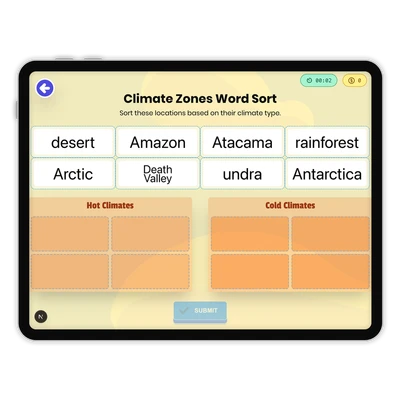
Climate Zones Word Sort
This word sort activity helps students understand different climate zones through real-world locations. Students classif...
Escape Velocity and Space Travel
This middle school science passage introduces students to the concept of escape velocity—the minimum speed required to b...
MS-ESS1-2MS-PS2-4
Weather Tools & Measurements Word Sort
This word sort activity connects weather measurement tools with their corresponding measurements. Students match 12 weat...