How Latitude Creates Climate Zones
Interactive passage with audio narration, comprehension questions, and printable PDF.
By completing this purchase you agree to our Terms of Use and Privacy Policy. Your subscription renews automatically until you cancel. You can cancel anytime from your account settings. All sales are final and non-refundable. Digital content is available for download in your account immediately upon purchase.
What's included
How Latitude Creates Climate Zones preview and details
About this printable How Latitude Creates Climate Zones science reading passage, NGSS-aligned (Grades 5-8)
Sample passage and quiz from How Latitude Creates Climate Zones
Reading passage and comprehension quiz preview
How Latitude Creates Climate Zones
Why is the equator hot while the poles are cold? The answer lies in how sunlight reaches different parts of Earth. Latitude measures how far north or south a location is from the equator. This measurement determines how much solar energy a region receives, which creates distinct climate zones across the planet.
Near the equator, sunlight strikes Earth almost straight on. This direct angle concentrates the sun's energy on a small area. The concentrated energy heats the surface strongly. Scientists explain that this creates warm temperatures year-round in tropical regions. Near the poles, the same amount of sunlight arrives at a slant. The angled rays spread thinly across a larger surface area. This spreading reduces the concentration of energy, so less heating occurs. You can observe this effect with a simple flashlight experiment. Aim the flashlight straight down at a surface, and you see a small, bright circle. Tilt the flashlight at an angle, and the light spreads into a larger, dimmer oval. The same amount of light now covers more space, making it less intense.
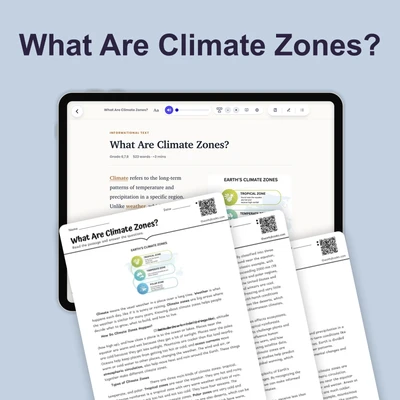
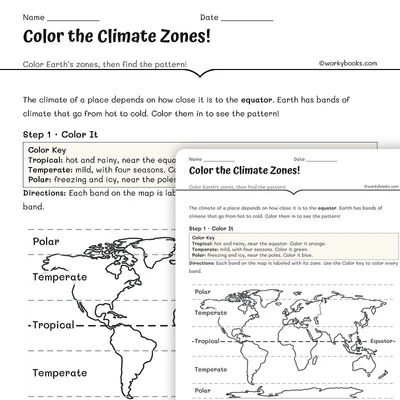
Evidence shows that Earth has three broad climate zones based on latitude. The tropical zone near the equator stays warm throughout the year. The temperate zones in the middle latitudes experience moderate temperatures with distinct seasons. The polar regions at the top and bottom of Earth remain cold year-round. For example, Singapore sits near the equator at 1° latitude and has average temperatures around 27°C (81°F) all year. Meanwhile, Barrow, Alaska, located at 71° latitude near the Arctic, has average winter temperatures around -20°C (-4°F). This temperature difference results directly from the angle at which sunlight reaches each location.
Understanding how latitude creates climate zones matters because this uneven heating drives Earth's major systems. Warm air rises near the equator while cold air sinks at the poles. This movement creates global wind patterns. Temperature differences between regions also drive ocean currents. These winds and currents distribute heat and moisture around the planet. They affect weather patterns, precipitation, and the types of plants and animals that can survive in each zone. The latitude-climate connection shapes life on Earth in fundamental ways.
Interesting Fact: During summer at the North Pole, the sun never sets for six months, yet temperatures still stay near freezing because the sunlight arrives at such a low angle that it cannot heat the surface effectively.
Comprehension quiz (10 questions)
1. What does latitude measure?
2. Why is the equator warmer than the poles?
3. What happens when sunlight hits Earth at a slant near the poles?
4. In the passage, what does the word 'concentration' mean?
5. What are the three broad climate zones on Earth?
6. Based on the passage, what can you infer about Singapore's climate?
7. How does uneven heating by latitude affect Earth's systems?
8. If you wanted to study a region with moderate temperatures and distinct seasons, which climate zone would you visit?
9. True or False: The poles receive the same amount of solar energy as the equator, but at a different angle.
10. True or False: During summer at the North Pole, the sun sets every night just like at the equator.
Perfect for the way you teach
- Build comprehension skills
- Auto-graded quiz
- Differentiated reading
- Read together at home
- Improve fluency
- Quiet reading time
- Reading curriculum support
- Independent practice
- Track Lexile growth