Chromoplast: Nature's Color Palette — Reading Comprehension
Rate this
Premium Resource
Present
Present in classroom. No work saved
Assign
Classroom with student accounts, Track progress
Quick Play
No student accounts, assign with a link
Grades
5
6
7
8
Standards
MS-LS1-1
MS-LS1-2
MS-LS1-6
LS1.C
PRINT+DIGITAL RESOURCE
This learning resource is available in interactive and printable formats. The interactive worksheet can be played online and assigned to students. The Printable PDF version can be downloaded and printed for completion by hand.
This passage details chromoplast functions in pigment production, ecological signaling, and nutrition. Aligned with NGSS MS-LS1-2 (Cell Organelles), it highlights real-world examples like tomato ripening and saffron production. The content emphasizes the biological and agricultural significance of these colorful structures, linking cellular biology to observable plant traits.
CONTENT PREVIEW
Expand content preview
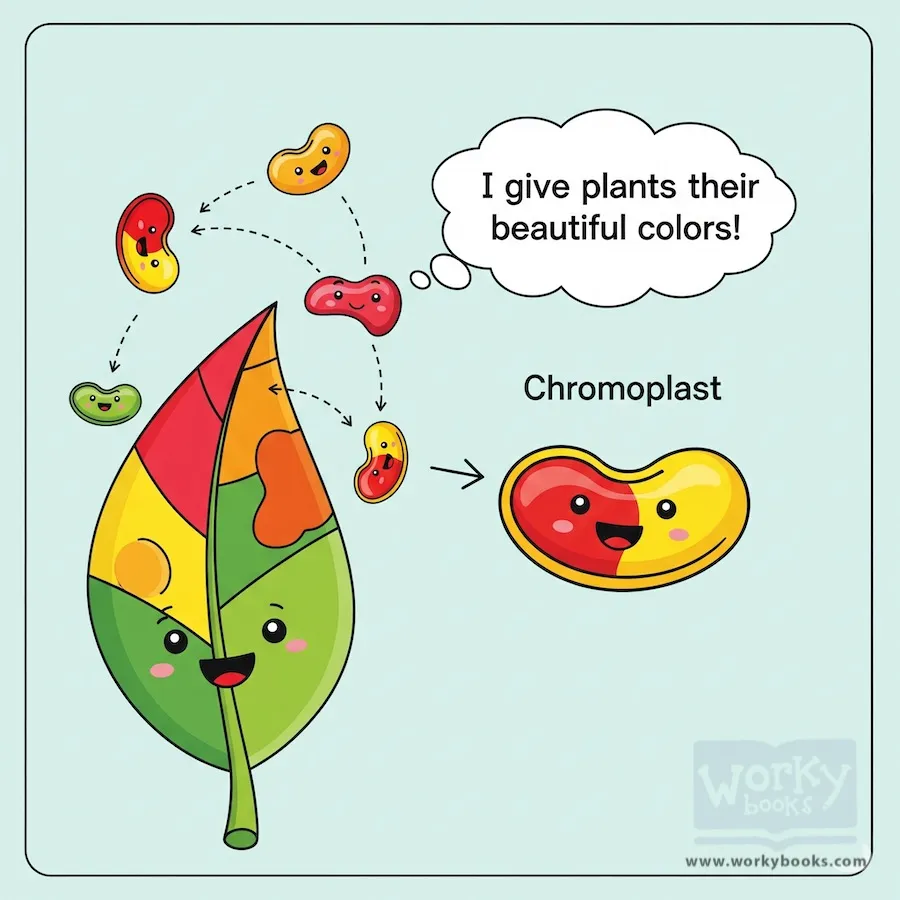
Chromoplasts are specialized plant organelles responsible for producing and storing pigments that give fruits, flowers, and some vegetables their vibrant colors. Unlike chloroplasts, which focus on photosynthesis, chromoplasts develop from existing plastids to serve as biological "paint factories," creating visual signals to attract pollinators and seed dispersers.
Key Functions
● Pigment Synthesis & Storage:
Chromoplasts synthesize and store carotenoids (orange/yellow) and other pigments like lycopene (red in tomatoes) and xanthophylls (yellow in peppers). These pigments are packed into crystals, globules, or fibrils for stability.
● Ecological Signaling:
Bright colors attract animals for pollination (flowers) and seed dispersal (fruits). For example, the red of strawberries signals ripeness to birds.
● Nutritional Value: Many chromoplast pigments act as antioxidants (e.g., beta-carotene in carrots converts to vitamin A).
Development & Transformation
● Chloroplasts often transform into chromoplasts during fruit ripening (e.g., green tomatoes → red).
● This change involves dismantling chlorophyll and activating pigment biosynthesis pathways.
Agricultural Importance
● Food Crops: Breeders select for chromoplast traits to enhance color and nutrition.
● Floriculture: Flower color manipulation relies on chromoplast pigments.
Fun Fact: The world’s most expensive spice, saffron, gets its golden color from crocin pigments stored in crocus flower chromoplasts!
What is the main function of chromoplasts?
PhotosynthesisPigment production and storageWater storageProtein synthesis
Which pigment makes tomatoes red?
ChlorophyllLycopeneAnthocyaninMelanin
How do chromoplasts benefit plants ecologically?
Attract pollinators and seed dispersersProduce oxygenAbsorb sunlightFix nitrogen
What happens when chloroplasts become chromoplasts?
Chlorophyll breaks down, pigments accumulateThey start movingThey divide rapidlyThey lose all color
Which vitamin derives from chromoplast pigments?
Vitamin CVitamin A (from beta-carotene)Vitamin DVitamin K
What makes saffron so colorful?
Crocin pigments in chromoplastsArtificial dyesReflective crystalsBacterial symbionts
Why might farmers select for chromoplast traits?
To improve fruit color and nutritionTo increase leaf sizeTo reduce root growthTo prevent flowering
Which structure transforms into chromoplasts during ripening?
MitochondriaChloroplastsNucleiVacuoles
Perfect For:
👩🏫 Teachers
• Reading comprehension practice
• Auto-graded assessments
• Literacy skill development
👨👩👧👦 Parents
• Reading practice at home
• Comprehension improvement
• Educational reading time
🏠 Homeschoolers
• Reading curriculum support
• Independent reading practice
• Progress monitoring
Reading Features:
📖
Reading Passage
Engaging fiction or nonfiction text
❓
Comprehension Quiz
Auto-graded questions
📊
Instant Feedback
Immediate results and scoring
📄
Printable Version
Download for offline reading
🔊
Read Aloud
Voice-over with word highlighting
Reviews & Ratings
No reviews yet. Be the first to share your experience!
Related Content
Antonie van Leeuwenhoek and the Discovery of Animalcules
This NGSS-aligned science passage explores the groundbreaking work of Antonie van Leeuwenhoek, a pioneer in microscopic ...
MS-LS1-1MS-LS1-2
Robert Hooke and the Naming of 'Cells'
This NGSS-aligned reading passage introduces middle school students to Robert Hooke's discovery and naming of 'cells' in...
MS-LS1-1MS-LS1-2
Rudolf Virchow and His Contribution to Cell Theory
This NGSS-aligned science reading passage introduces students to Rudolf Virchow, a key historical figure in cell biology...
MS-LS1-1MS-LS1-2
Matthias Schleiden and the Discovery That Plants Are Made of Cells
This NGSS-aligned science passage explains how Matthias Schleiden, a German scientist in the 1830s, discovered that all ...
MS-LS1-1MS-LS1-2
When Was the Microscope Invented?
This NGSS-aligned reading passage introduces students to the invention of the microscope, an essential scientific tool. ...
MS-LS1-1MS-LS1-2
What are Prokaryotic Cells?
This NGSS-aligned science reading passage explains prokaryotic cells, the simplest type of cells found in single-celled ...
MS-LS1-1MS-LS1-2
What are Eukaryotic Cells?
This NGSS-aligned reading passage introduces middle school students to eukaryotic cells, which are complex cells found i...
MS-LS1-1MS-LS1-2
Prokaryotic vs. Eukaryotic Cells
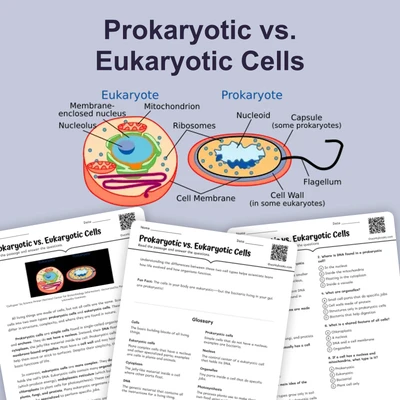
This NGSS-aligned reading passage helps middle school students compare prokaryotic and eukaryotic cells. Supporting stan...
MS-LS1-1MS-LS1-2
What is an Organelle?
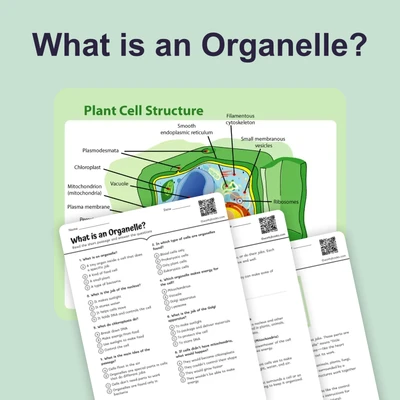
This NGSS-aligned reading passage introduces middle school students to the concept of organelles. Supporting MS-LS1-
MS-LS1-1MS-LS1-2
Parts of the Cell
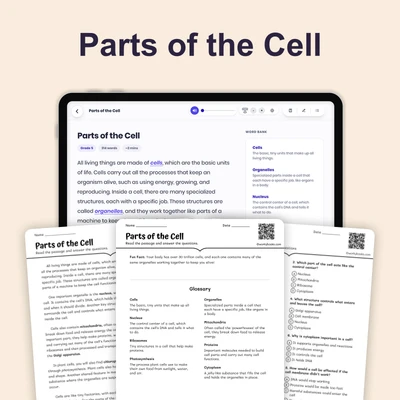
This informational science passage, aligned with NGSS standard MS-LS1-1, introduces students to the parts of the cell an...
MS-LS1-1MS-LS1-2
The Nucleolus and Its Function
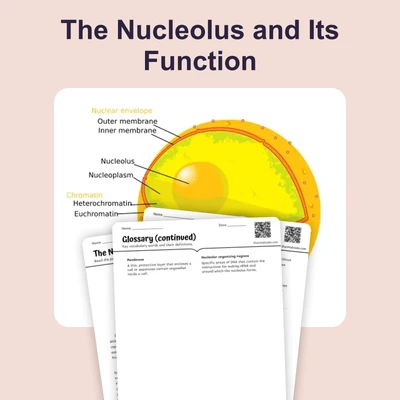
This NGSS-aligned reading passage focuses on the nucleolus, a key structure inside the cell’s nucleus responsible for ma...
MS-LS1-1MS-LS1-2
What Is Vapor Pressure?
This NGSS-aligned science passage explains the concept of vapor pressure in an age-appropriate, engaging way for middle ...
MS-PS1-4MS-LS1-2
Golgi Apparatus and Its Function
This NGSS-aligned reading passage introduces middle school students to the structure and function of the Golgi apparatus...
MS-LS1-1
Is a Platypus a Mammal?
This interactive science reading passage, titled "Is a Platypus a Mammal? The Monotreme Mystery!", delves into the uniqu...
MS-LS1-1
Where Do Platypus Live?
This engaging science reading passage, titled "Where Do Platypus Live? Finding Australia's Elusive Swimmer," explores th...
MS-LS1-1
The Amazing Red Panda
This engaging science reading passage, titled "The Amazing Red Panda: A Fluffy Tree Dweller," introduces students to one...
MS-LS1-1MS-LS4-D
Where Do Red Pandas Live?
This science reading passage, titled "Where Do Red Pandas Live? In the Mountain Forests," explores the specific habitat ...
MS-LS1-1
Przewalski's Horse
This engaging science reading passage, titled "Przewalski's Horse: A Wild Comeback Story," introduces students to the tr...
MS-LS4-DMS-LS1-1
The Quokka
This engaging science reading passage, titled "The Quokka: The Happiest Animal on Earth?", introduces students to one of...