Life as a Continental Soldier — Reading Comprehension
Rate this|
1
Premium Resource
Present
Present in classroom. No work saved
Assign
Classroom with student accounts, Track progress
Quick Play
No student accounts, assign with a link
Grades
3
4
5
Standards
D2.HIS.1.3-5
RI.4.1
RI.4.3
PRINT+DIGITAL RESOURCE
This learning resource is available in interactive and printable formats. The interactive worksheet can be played online and assigned to students. The Printable PDF version can be downloaded and printed for completion by hand.
This passage explores the daily life of a Continental Soldier during the American Revolutionary War, highlighting challenges, bravery, and teamwork. Students will learn about George Washington’s leadership, the hardships at Valley Forge, and the unity that helped win independence. The passage includes grade-appropriate vocabulary, a glossary, and a Spanish translation. A timeline outlines key events, while comprehension and writing activities support literacy and critical thinking skills. Aligned with the C3 Framework and Common Core standards, this resource offers read aloud audio and is designed for social studies classrooms. Key themes include sacrifice, problem-solving, and the significance of the Continental Army in U.S. history.
CONTENT PREVIEW
Expand content preview
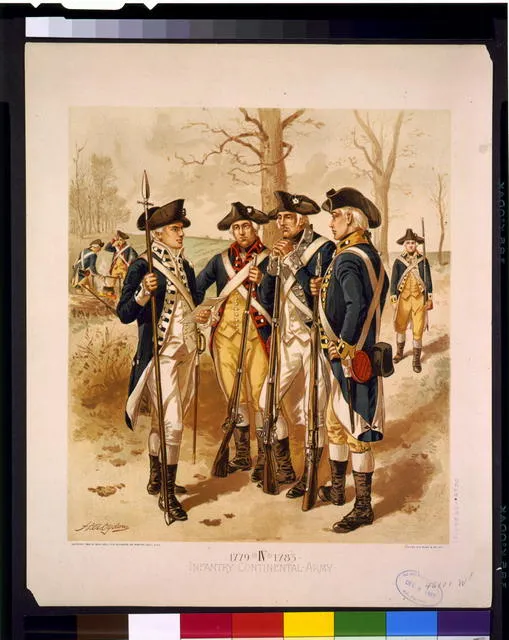
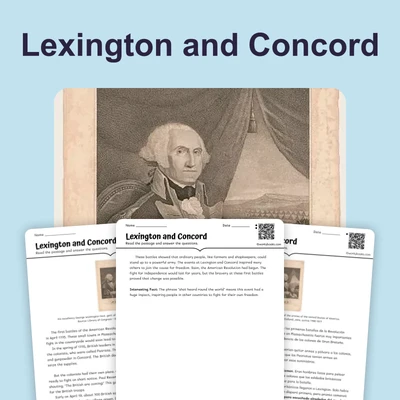
Infantry: Continental Army, 1779-1783, IV. Source: Library of Congress - Ogden, Henry Alexander, 1856-1936
The life of a Continental soldier during the American Revolution was very hard. These patriot soldiers were mostly ordinary men. Many were farmers, blacksmiths, and shopkeepers. They left their homes to fight for freedom from British rule.
Every day, soldiers faced hardship. Food was often scarce. Many soldiers survived on small amounts of bread or soup. Sometimes, there was no food at all. They wore thin, ragged uniforms, which could not keep them warm in the cold. Many had no shoes and walked barefoot through snow and mud.
Soldiers did not get regular pay. Most went months without money. Some sent letters home, asking their families for help. Even though they suffered, these soldiers stayed with the army. They had strong determination to win their country’s freedom.
The Continental Army was led by General George Washington. He cared about his men and tried to help them. Still, the British army was stronger and had better supplies. The patriot soldiers had to be resourceful. They built shelters from branches and cloth. They shared food and helped each other stay alive.
At Valley Forge during the winter of 1777-1778, conditions were terrible. Many soldiers became sick. Diseases spread quickly. But the men did not give up. They trained hard to become better fighters. Their sacrifice and teamwork made the army stronger.
Ordinary people became heroes through their bravery and unity. They fought in battles, marched in the rain, and never lost hope. Their actions helped America win its independence. The hardship they faced showed how much they believed in liberty.
Interesting Fact: The first official American flag was raised by Continental soldiers on January 1, 1776, at Prospect Hill, near Boston.
Who led the Continental Army?
George WashingtonPaul RevereThomas JeffersonKing George
Where did soldiers suffer in winter 1777-1778?
Valley ForgeBostonPhiladelphiaYorktown
What did many soldiers eat?
Bread or soupSteakFruitRice
Why was it hard for soldiers to stay warm?
Ragged uniformsToo many firesHeavy armorNo blankets
Why did soldiers keep fighting?
Determination for freedomFor goldFor adventureTo travel
How did soldiers solve problems with little food?
Shared foodAte grassStole suppliesLeft the army
The British army had more supplies. True or false?
TrueFalse
What does 'bravery' mean?
CourageTirednessAngerHunger
Perfect For:
👩🏫 Teachers
• Reading comprehension practice
• Auto-graded assessments
• Literacy skill development
👨👩👧👦 Parents
• Reading practice at home
• Comprehension improvement
• Educational reading time
🏠 Homeschoolers
• Reading curriculum support
• Independent reading practice
• Progress monitoring
Reading Features:
📖
Reading Passage
Engaging fiction or nonfiction text
❓
Comprehension Quiz
Auto-graded questions
📊
Instant Feedback
Immediate results and scoring
📄
Printable Version
Download for offline reading
🔊
Read Aloud
Voice-over with word highlighting
Reviews & Ratings
No reviews yet. Be the first to share your experience!
Related Content
Native American Tribes Across America
This engaging history reading passage introduces students to Native American tribes across America, focusing on their da...
D2.HIS.1.3-5D2.HIS.2.3-5RI.4.1RI.4.2
The Sioux: Warriors and Tribal Leaders
This history reading passage explores the Sioux Nation, focusing on their roles as warriors and tribal leaders. Students...
D2.HIS.1.3-5D2.HIS.2.3-5RI.4.1RI.4.3
Jamestown: The First Permanent English Colony
This engaging history passage explores the founding of Jamestown, the first permanent English colony in America. Aligned...
D2.HIS.1.3-5D2.HIS.2.3-5RI.4.3RI.4.4
Pocahontas and the Powhatan People
This engaging reading passage explores the life of Pocahontas and the Powhatan people and their important role in early ...
D2.HIS.1.3-5D2.HIS.2.3-5RI.4.1RI.4.3
Colonial Games and Entertainment
This engaging history reading passage explores the types of games and entertainment enjoyed by children and families in ...
D2.HIS.1.3-5RI.4.3RI.4.4
Colonial Towns and Village Life
This engaging history reading passage explores the daily life, work, and unity found in colonial towns and villages. Ali...
D2.HIS.1.3-5D2.HIS.2.3-5RI.4.3RI.4.4
George Washington Leads the Army
This engaging history reading passage explores how George Washington bravely led the Continental Army during the America...
D2.HIS.1.3-5D2.HIS.2.3-5RI.4.3RI.4.4
The Battle of Yorktown Ends War
This engaging U.S. history reading passage explores the Battle of Yorktown, a key event that ended the American Revoluti...
D2.HIS.1.3-5D2.HIS.2.3-5RI.4.1RI.4.3
Loyalists vs. Patriots: Divided Families
This engaging U.S. history reading passage explores the division between Loyalists and Patriots during the American Revo...
D2.HIS.1.3-5D2.HIS.2.3-5RI.4.3RI.4.4
Manifest Destiny: Coast to Coast
This engaging U.S. history reading passage explores Manifest Destiny and the westward expansion of the United States. St...
D2.HIS.1.3-5D2.HIS.2.3-5RI.4.3RI.4.4
Abraham Lincoln Becomes President
This engaging U.S. history reading passage introduces students to the story of Abraham Lincoln’s rise to the presidency....
D2.HIS.1.3-5D2.HIS.2.3-5RI.4.3RI.4.4
The Southern States Leave the Union
This engaging reading passage explores the key events leading up to the Southern states leaving the Union before the Civ...
D2.HIS.1.3-5D2.HIS.2.3-5RI.4.3RI.4.4
Lincoln Assassinated at Ford's Theatre
This history reading passage explores the events of President Abraham Lincoln's assassination at Ford's Theatre in 1865....
D2.HIS.1.3-5D2.HIS.2.3-5RI.4.3RI.4.4
Juan Cabrillo Explores California
This engaging U.S. history reading passage introduces students to Juan Cabrillo, the first European explorer to reach Ca...
D2.HIS.1.3-5D2.HIS.2.3-5D2.HIS.3.3-5RI.4.3
California's Early Spanish Settlements
This engaging U.S. history reading passage explores life during the early Spanish settlements in America, highlighting t...
D2.HIS.1.3-5D2.HIS.2.3-5D2.HIS.3.3-5RI.4.1
Discovery of Gold in 1848 by James Marshall
This engaging U.S. History passage introduces students to the discovery of gold in 1848 by James Marshall and the beginn...
D2.HIS.1.3-5D2.HIS.2.3-5D2.HIS.3.3-5RI.4.1
The Gold Rush Changes California Forever
This engaging U.S. History reading passage explores how the Gold Rush changed California forever. Students will learn ab...
D2.HIS.1.3-5D2.HIS.2.3-5D2.HIS.16.3-5RI.4.3
The Golden Spike: Connecting California to the Nation
This engaging U.S. history reading passage teaches students about the Golden Spike and how the first transcontinental ra...
D2.HIS.1.3-5D2.HIS.2.3-5D2.HIS.14.3-5RI.4.3
Farms, Factories, and Growing Cities
This engaging U.S. history reading passage explores the dramatic changes in America during the Progressive Era, focusing...