George Washington Leads the Army — Reading Comprehension
Rate this|
2
Premium Resource
Present
Present in classroom. No work saved
Assign
Classroom with student accounts, Track progress
Quick Play
No student accounts, assign with a link
Grades
3
4
5
Standards
D2.HIS.1.3-5
D2.HIS.2.3-5
RI.4.3
RI.4.4
PRINT+DIGITAL RESOURCE
This learning resource is available in interactive and printable formats. The interactive worksheet can be played online and assigned to students. The Printable PDF version can be downloaded and printed for completion by hand.
This engaging history reading passage explores how George Washington bravely led the Continental Army during the American Revolution. Students will discover the sequence of events that led to Washington's appointment as commander, the challenges the army faced, and how Washington's leadership inspired unity and hope. The passage uses grade-appropriate vocabulary and HTML formatting for easy reading. A glossary helps students understand key terms, while a timeline outlines important events in Washington's command. The passage is paired with comprehension questions, a writing activity, and a multiple-choice quiz to deepen understanding. Spanish translation and read aloud audio are included, making the resource accessible to diverse learners. This lesson aligns with the C3 Framework for Social Studies and Common Core ELA standards, ensuring students build both historical and literacy skills. Keywords like George Washington, American Revolution, and Continental Army are emphasized to strengthen student vocabulary and historical knowledge.
CONTENT PREVIEW
Expand content preview
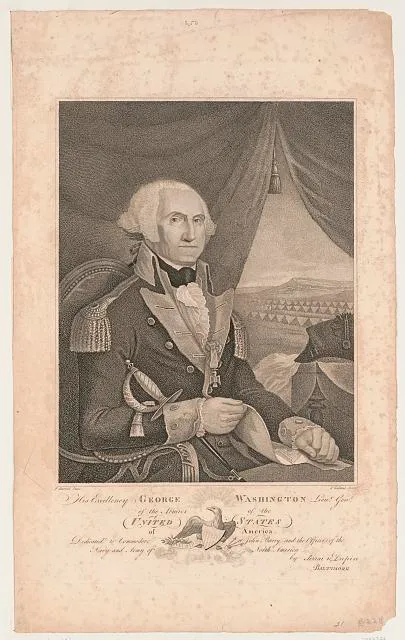
His excellency George Washington lieut. genl. of the armies of the United States of America. Source: Library of Congress - Galland, John, active 1796-1817
The first battles of the American Revolution happened at Lexington and Concord in April 1775. These small towns in Massachusetts became famous overnight. A simple fight in the countryside would soon lead to a war for independence from Britain.
In the spring of 1775, British leaders in Boston wanted to take away weapons from the colonists, who were called Patriots. They heard that the Patriots had stored guns and gunpowder in Concord. The British decided to march their soldiers there and seize the supplies.
But the colonists had their own plans. Groups of men called minutemen were ready to fight on short notice. Paul Revere and other riders warned the countryside, shouting, "The British are coming!" This gave the colonists time to gather and prepare for the British troops.
Early on April 19, about 700 British soldiers reached Lexington. There, around 70 minutemen waited on the village green. Both sides faced each other in silence. Suddenly, a shot rang out. No one knows who fired first, but it became known as the "shot heard round the world." This shot started a battle that changed history.
The British soldiers quickly defeated the minutemen at Lexington and marched on to Concord. However, the colonists fought back fiercely. At Concord's North Bridge, the minutemen forced the British to retreat. As the British marched back to Boston, colonists fired at them from behind trees and stone walls. The British suffered many losses, while the colonists gained hope and courage.
These battles showed that ordinary people, like farmers and shopkeepers, could stand up to a powerful army. The events at Lexington and Concord inspired many others to join the cause for freedom. Soon, the American Revolution had begun. The fight for independence would last for years, but the bravery at these first battles proved that change was possible.
Interesting Fact: The phrase "shot heard round the world" means this event had a huge impact, inspiring people in other countries to fight for their own freedom.
Where did the first battle take place?
LexingtonBostonPhiladelphiaYorktown
Who warned the colonists?
Paul RevereGeorge WashingtonThomas JeffersonBenjamin Franklin
What did the British want to take?
Guns and gunpowderFoodGoldMaps
Why did the colonists fight back?
To protect their suppliesTo find treasureTo help the BritishFor fun
What was the result at Concord?
Colonists forced British to retreatBritish captured all suppliesColonists surrenderedNo one fought
Why is the 'shot heard round the world' important?
It started the RevolutionIt ended the warIt was very loudIt scared animals
The colonists were called Patriots. True or false?
TrueFalse
What does 'retreat' mean?
Move backMove forwardHideCelebrate
Perfect For:
👩🏫 Teachers
• Reading comprehension practice
• Auto-graded assessments
• Literacy skill development
👨👩👧👦 Parents
• Reading practice at home
• Comprehension improvement
• Educational reading time
🏠 Homeschoolers
• Reading curriculum support
• Independent reading practice
• Progress monitoring
Reading Features:
📖
Reading Passage
Engaging fiction or nonfiction text
❓
Comprehension Quiz
Auto-graded questions
📊
Instant Feedback
Immediate results and scoring
📄
Printable Version
Download for offline reading
🔊
Read Aloud
Voice-over with word highlighting
Reviews & Ratings
No reviews yet. Be the first to share your experience!
Related Content
Native American Tribes Across America
This engaging history reading passage introduces students to Native American tribes across America, focusing on their da...
D2.HIS.1.3-5D2.HIS.2.3-5RI.4.1RI.4.2
The Sioux: Warriors and Tribal Leaders
This history reading passage explores the Sioux Nation, focusing on their roles as warriors and tribal leaders. Students...
D2.HIS.1.3-5D2.HIS.2.3-5RI.4.1RI.4.3
Jamestown: The First Permanent English Colony
This engaging history passage explores the founding of Jamestown, the first permanent English colony in America. Aligned...
D2.HIS.1.3-5D2.HIS.2.3-5RI.4.3RI.4.4
Pocahontas and the Powhatan People
This engaging reading passage explores the life of Pocahontas and the Powhatan people and their important role in early ...
D2.HIS.1.3-5D2.HIS.2.3-5RI.4.1RI.4.3
Colonial Games and Entertainment
This engaging history reading passage explores the types of games and entertainment enjoyed by children and families in ...
D2.HIS.1.3-5RI.4.3RI.4.4
Colonial Towns and Village Life
This engaging history reading passage explores the daily life, work, and unity found in colonial towns and villages. Ali...
D2.HIS.1.3-5D2.HIS.2.3-5RI.4.3RI.4.4
The Battle of Yorktown Ends War
This engaging U.S. history reading passage explores the Battle of Yorktown, a key event that ended the American Revoluti...
D2.HIS.1.3-5D2.HIS.2.3-5RI.4.1RI.4.3
Life as a Continental Soldier
This passage explores the daily life of a Continental Soldier during the American Revolutionary War, highlighting challe...
D2.HIS.1.3-5RI.4.1RI.4.3
Loyalists vs. Patriots: Divided Families
This engaging U.S. history reading passage explores the division between Loyalists and Patriots during the American Revo...
D2.HIS.1.3-5D2.HIS.2.3-5RI.4.3RI.4.4
Manifest Destiny: Coast to Coast
This engaging U.S. history reading passage explores Manifest Destiny and the westward expansion of the United States. St...
D2.HIS.1.3-5D2.HIS.2.3-5RI.4.3RI.4.4
Abraham Lincoln Becomes President
This engaging U.S. history reading passage introduces students to the story of Abraham Lincoln’s rise to the presidency....
D2.HIS.1.3-5D2.HIS.2.3-5RI.4.3RI.4.4
The Southern States Leave the Union
This engaging reading passage explores the key events leading up to the Southern states leaving the Union before the Civ...
D2.HIS.1.3-5D2.HIS.2.3-5RI.4.3RI.4.4
Lincoln Assassinated at Ford's Theatre
This history reading passage explores the events of President Abraham Lincoln's assassination at Ford's Theatre in 1865....
D2.HIS.1.3-5D2.HIS.2.3-5RI.4.3RI.4.4
Juan Cabrillo Explores California
This engaging U.S. history reading passage introduces students to Juan Cabrillo, the first European explorer to reach Ca...
D2.HIS.1.3-5D2.HIS.2.3-5D2.HIS.3.3-5RI.4.3
California's Early Spanish Settlements
This engaging U.S. history reading passage explores life during the early Spanish settlements in America, highlighting t...
D2.HIS.1.3-5D2.HIS.2.3-5D2.HIS.3.3-5RI.4.1
Discovery of Gold in 1848 by James Marshall
This engaging U.S. History passage introduces students to the discovery of gold in 1848 by James Marshall and the beginn...
D2.HIS.1.3-5D2.HIS.2.3-5D2.HIS.3.3-5RI.4.1
The Gold Rush Changes California Forever
This engaging U.S. History reading passage explores how the Gold Rush changed California forever. Students will learn ab...
D2.HIS.1.3-5D2.HIS.2.3-5D2.HIS.16.3-5RI.4.3
The Golden Spike: Connecting California to the Nation
This engaging U.S. history reading passage teaches students about the Golden Spike and how the first transcontinental ra...
D2.HIS.1.3-5D2.HIS.2.3-5D2.HIS.14.3-5RI.4.3
Farms, Factories, and Growing Cities
This engaging U.S. history reading passage explores the dramatic changes in America during the Progressive Era, focusing...