Mission Control: The Team Behind the Moon Landing
Interactive passage with audio narration, comprehension questions, and printable PDF.
By completing this purchase you agree to our Terms of Use and Privacy Policy. Your subscription renews automatically until you cancel. You can cancel anytime from your account settings. All sales are final and non-refundable. Digital content is available for download in your account immediately upon purchase.
What's included
Mission Control: The Team Behind the Moon Landing preview and details
About this printable Mission Control: The Team Behind the Moon Landing reading passage (Grades 5-8)
Sample passage and quiz from Mission Control: The Team Behind the Moon Landing
Reading passage and comprehension quiz preview
Mission Control: The Team Behind the Moon Landing
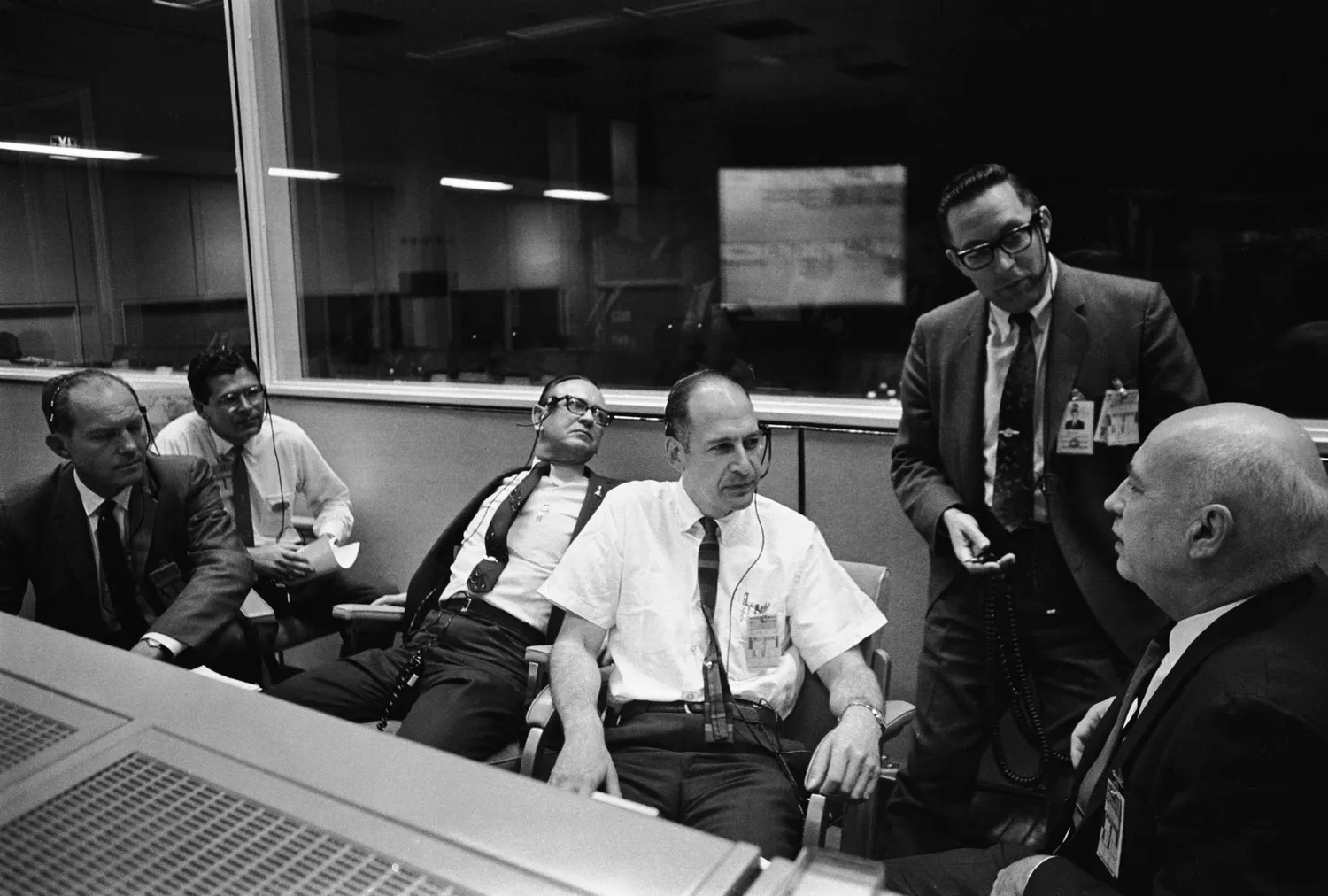
"Apollo 9 Mission Control" by NASA / Wikimedia Commons (Public domain).
The Apollo 11 moon landing in July 1969 was a giant leap for humanity, but it was not achieved by astronauts alone. Behind the scenes in Houston, Texas, hundreds of people worked together at NASA’s Mission Control Center to guide the mission, solve problems, and make history. This team included engineers, scientists, and specialized flight controllers who made crucial decisions in real time.
Mission Control was a high-tech operations center filled with computer screens, communication systems, and rows of experts. Every person had a specific responsibility, from monitoring the spacecraft’s fuel to tracking the astronauts’ health. Gene Kranz, the chief flight director, led the team during Apollo 11. He and his colleagues used detailed procedures and checklists to keep the mission on track. According to original transcripts, Mission Control staff communicated constantly with the astronauts, giving instructions and support. For example, when a computer alarm sounded just minutes before landing, flight controllers quickly analyzed the problem and told Neil Armstrong it was safe to continue.
The team’s ability to adapt to unexpected challenges was critical. During the descent, the lunar module was heading toward a dangerous area filled with rocks. Armstrong had to take manual control, while Mission Control provided data on fuel and altitude. Real-time problem-solving was essential. Primary sources, such as audio recordings from July 20, 1969, show the tense moments as controllers calmly relayed vital information. The team’s calmness and expertise allowed Armstrong and Buzz Aldrin to land safely and become the first humans on the Moon.
Mission Control’s work extended beyond just the landing. They managed the return journey, keeping a close watch on every system. Their collaboration meant that if one group faced a challenge, others would help solve it. This teamwork was built on months of practice and simulation. The Mission Control Center’s location in Houston also highlights the importance of geography; being close to NASA’s Johnson Space Center allowed rapid communication and resource sharing. Over time, the procedures and technologies developed for Apollo missions influenced future space exploration, showing both change and continuity in NASA’s approach.
The success of Apollo 11 demonstrates how large historic events depend on the hard work of many people, not just a few famous individuals. Mission Control’s dedication and quick thinking ensured the astronauts’ safety and inspired future generations. Their actions remind us that behind every major achievement, there are teams working together to solve problems and make history.
This story links to broader themes in world history, such as technological advancement, collaboration, and the importance of geography in shaping human events.
Interesting Fact: The famous words, “Houston, Tranquility Base here. The Eagle has landed,” were first heard by the Mission Control team, making Houston a key part of space history.
Comprehension quiz (8 questions)
1. Where was Mission Control located?
2. Who led the Mission Control team during Apollo 11?
3. What did Mission Control use to keep the mission on track?
4. Why did Armstrong have to take manual control during landing?
5. How did Mission Control help solve problems during the mission?
6. What was an important result of Mission Control’s teamwork?
7. Mission Control only helped with the landing. True or false?
8. What does 'collaboration' mean in the passage?
Perfect for the way you teach
- Build comprehension skills
- Auto-graded quiz
- Differentiated reading
- Read together at home
- Improve fluency
- Quiet reading time
- Reading curriculum support
- Independent practice
- Track Lexile growth