Medieval Words in English
Interactive passage with audio narration, comprehension questions, and printable PDF.
By completing this purchase you agree to our Terms of Use and Privacy Policy. Your subscription renews automatically until you cancel. You can cancel anytime from your account settings. All sales are final and non-refundable. Digital content is available for download in your account immediately upon purchase.
What's included
Medieval Words in English preview and details
About this printable Medieval Words in English reading passage (Grades 5-8)
Sample passage and quiz from Medieval Words in English
Reading passage and comprehension quiz preview
Medieval Words in English
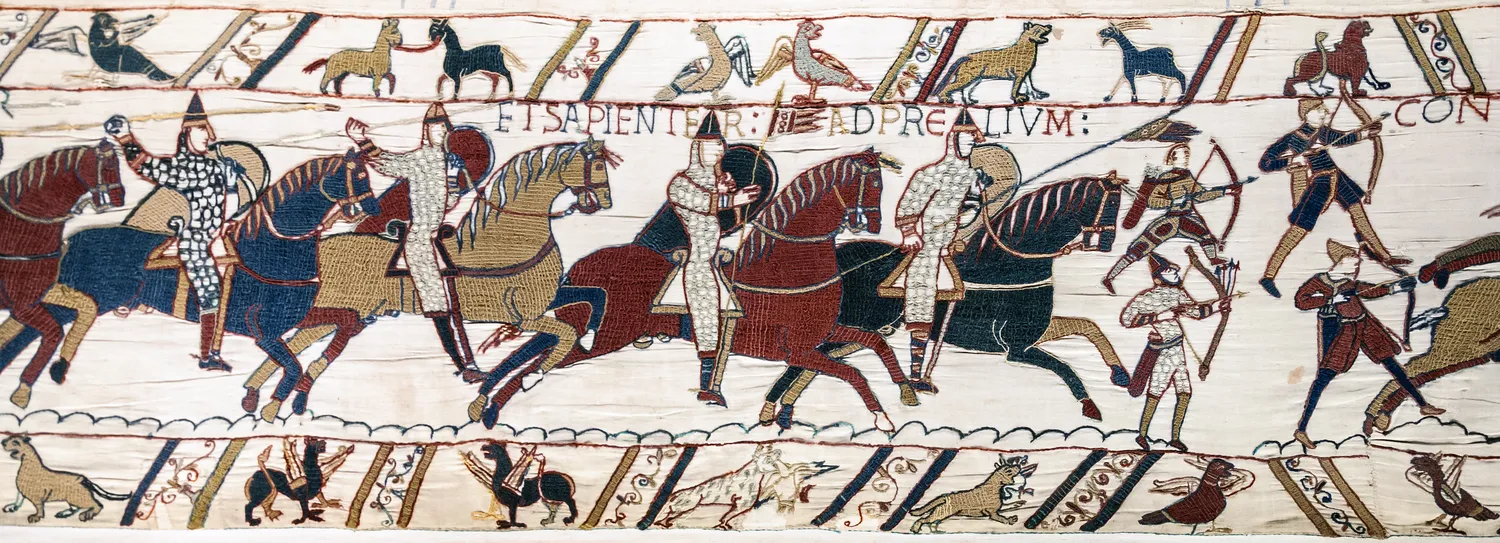
"Bayeux Tapestry scene51 Battle of Hastings Norman knights and archers" by Myrabella / Wikimedia Commons.
The English language changed dramatically during the Middle Ages, shaped by powerful forces like invasions, trade, and cultural contact. Between the 5th and 15th centuries, English absorbed many words from medieval French, Latin, and Norse languages. This transformation connects directly to historical events such as the Norman Conquest and Viking raids, which brought new rulers and customs to England.
After the Norman Conquest in 1066, French became the language of England's royal court, law, and administration. Words like court, jury, and parliament entered English from French, reflecting the new ruling class. Documents like the Domesday Book (1086), written in Latin, show how official records and government business relied on Latin and French vocabulary. At the same time, ordinary people continued to speak Old English at home and in villages, but they gradually adopted new words as they interacted with officials and merchants.
Latin influenced English mainly through the church, education, and science. Monasteries copied Latin texts and taught children to read and write using Latin words. Words such as scripture, library, and scholar show how learning and religion shaped the language. Even today, English has many Latin roots, especially in academic and legal terms.
Norse influence came from Viking settlers in northern and eastern England during the 8th to 11th centuries. Archaeological finds, such as runic inscriptions and place names ending in “-by” (like Grimsby and Derby), demonstrate Norse impact. Everyday English words like sky, egg, and window come from Norse. These additions show that language change was not only a result of conquest, but also from shared daily life, trade, and intermarriage between cultures.
The blending of languages in medieval England reflects the complex social hierarchy of the time. Nobles, clergy, and commoners often spoke different languages at home and in public. Over centuries, English grew richer and more flexible. This process shows how geography, migration, and power can influence the words people use—and how history leaves its mark on the language we speak today.
The evolution of English during the Middle Ages links to broader world history themes like cultural exchange, migration, and the lasting effects of conquest on daily life and communication.
Interesting Fact: The word "beef" comes from French "boeuf" and "cow" from Old English, reflecting how Norman nobles ate the meat while English-speaking peasants raised the animals.
Comprehension quiz (8 questions)
1. What year was the Norman Conquest?
2. Which document used Latin in 1086?
3. Which group spoke Norse?
4. Why did English gain French words?
5. What was Latin mainly used for?
6. How did Norse words enter English?
7. The word 'beef' is from French. True or false?
8. What does 'parliament' mean?
Perfect for the way you teach
- Build comprehension skills
- Auto-graded quiz
- Differentiated reading
- Read together at home
- Improve fluency
- Quiet reading time
- Reading curriculum support
- Independent practice
- Track Lexile growth