How Mountains and Elevation Affect Climate
Interactive passage with audio narration, comprehension questions, and printable PDF.
By completing this purchase you agree to our Terms of Use and Privacy Policy. Your subscription renews automatically until you cancel. You can cancel anytime from your account settings. All sales are final and non-refundable. Digital content is available for download in your account immediately upon purchase.
What's included
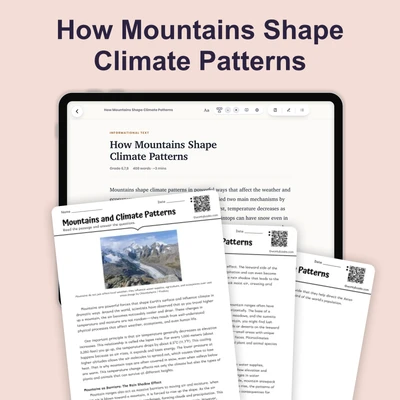
How Mountains and Elevation Affect Climate preview and details
About this printable How Mountains and Elevation Affect Climate science reading passage, NGSS-aligned (Grades 5-8)
Sample passage and quiz from How Mountains and Elevation Affect Climate
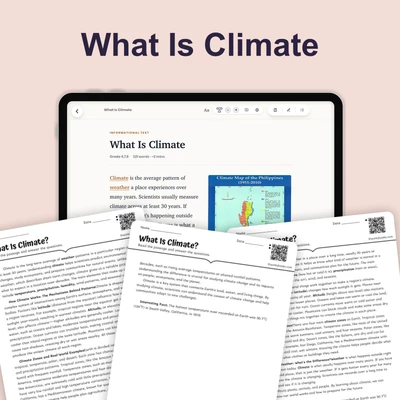
Reading passage and comprehension quiz preview
How Mountains and Elevation Affect Climate
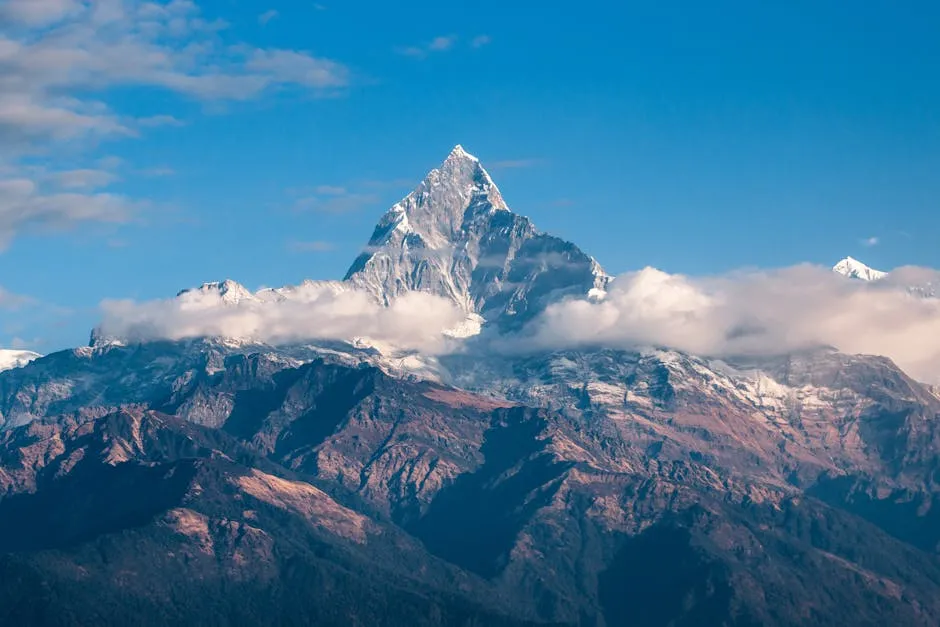
"Breathtaking view of a snow-covered mountain peak surrounded by clouds during sunrise." by Pixabay / Pexels.
Mountains are large landforms that rise high above the surrounding land. They can have a big effect on the climate of an area. Climate is the average weather of a place over a long period of time. Two important factors that affect climate are elevation and mountains.
Elevation is the height of land above sea level. As elevation increases, the air becomes thinner and cooler. This means that the higher you go up a mountain, the colder it gets. For every 1,000 meters you go up, the temperature drops by about 6.5 degrees Celsius. That is why you might see snow on top of tall mountains, even if the land below is warm.
Mountains can also change how much precipitation an area receives. Precipitation is any form of water, like rain, snow, or hail, that falls from the sky. When moist air moves toward a mountain, it is forced to rise. As the air rises, it cools and releases moisture as precipitation. This is why the windward side of a mountain (the side facing the wind) usually gets more rain and has lush vegetation.
On the other side of the mountain, called the leeward side, the air has already lost most of its moisture. As the air moves down, it becomes warmer and drier. This creates a rain shadow, which is an area with much less precipitation. The rain shadow effect can create dry regions and even deserts on the leeward side of mountain ranges.
For example, the Rocky Mountains in North America block moist air from the Pacific Ocean. The western side of the Rockies is wet and forested, while the eastern side is much drier. In South America, the Andes Mountains create a rain shadow that causes the Atacama Desert to be one of the driest places on Earth.
Mountains also affect ecosystems. Plants and animals living at high elevations must adapt to colder temperatures and less oxygen. Some species can only survive in certain climate zones on mountains. This is why you see different types of plants and animals at different heights.
Atmosphere is the layer of gases surrounding the Earth. Mountains can influence the movement of air in the atmosphere, changing weather patterns for large areas. This can impact where people live, what crops they grow, and even what clothes they wear.
Interesting Fact: The highest mountain on Earth, Mount Everest, is so tall that its peak is in the jet stream, where winds can reach over 160 kilometers per hour!
Comprehension quiz (8 questions)
1. What is elevation?
2. What forms on the leeward side?
3. Which mountain is the tallest?
4. Why is the windward side wetter?
5. What happens as elevation increases?
6. If a city is in a rain shadow, it will:
7. Mountains affect weather. True or false?
8. What is 'atmosphere'?
Perfect for the way you teach
- Build comprehension skills
- Auto-graded quiz
- Differentiated reading
- Read together at home
- Improve fluency
- Quiet reading time
- Reading curriculum support
- Independent practice
- Track Lexile growth