Pueblo Pottery: Art and Function — Reading Comprehension
Premium Resource
Grades
5
6
7
8
PRINT+DIGITAL RESOURCE
This learning resource is available in interactive and printable formats. The interactive worksheet can be played online and assigned to students. The Printable PDF version can be downloaded and printed for completion by hand.
This passage introduces students to the history and significance of Pueblo pottery, a tradition developed by Southwestern Native American peoples. It covers the development of coil-building techniques, the use of natural materials, and the role of pottery in daily life and artistic expression. With examples from archaeological sites and oral histories, the text aligns with CA HSS 6.1.1 and CCSS RI.6.3, helping students analyze cause and effect and understand cultural continuity. The resource includes a Spanish translation, differentiated reading version, glossary, comprehension activities, and graphic organizers, supporting both history content knowledge and ELA skills. Read aloud audio is available for increased accessibility.
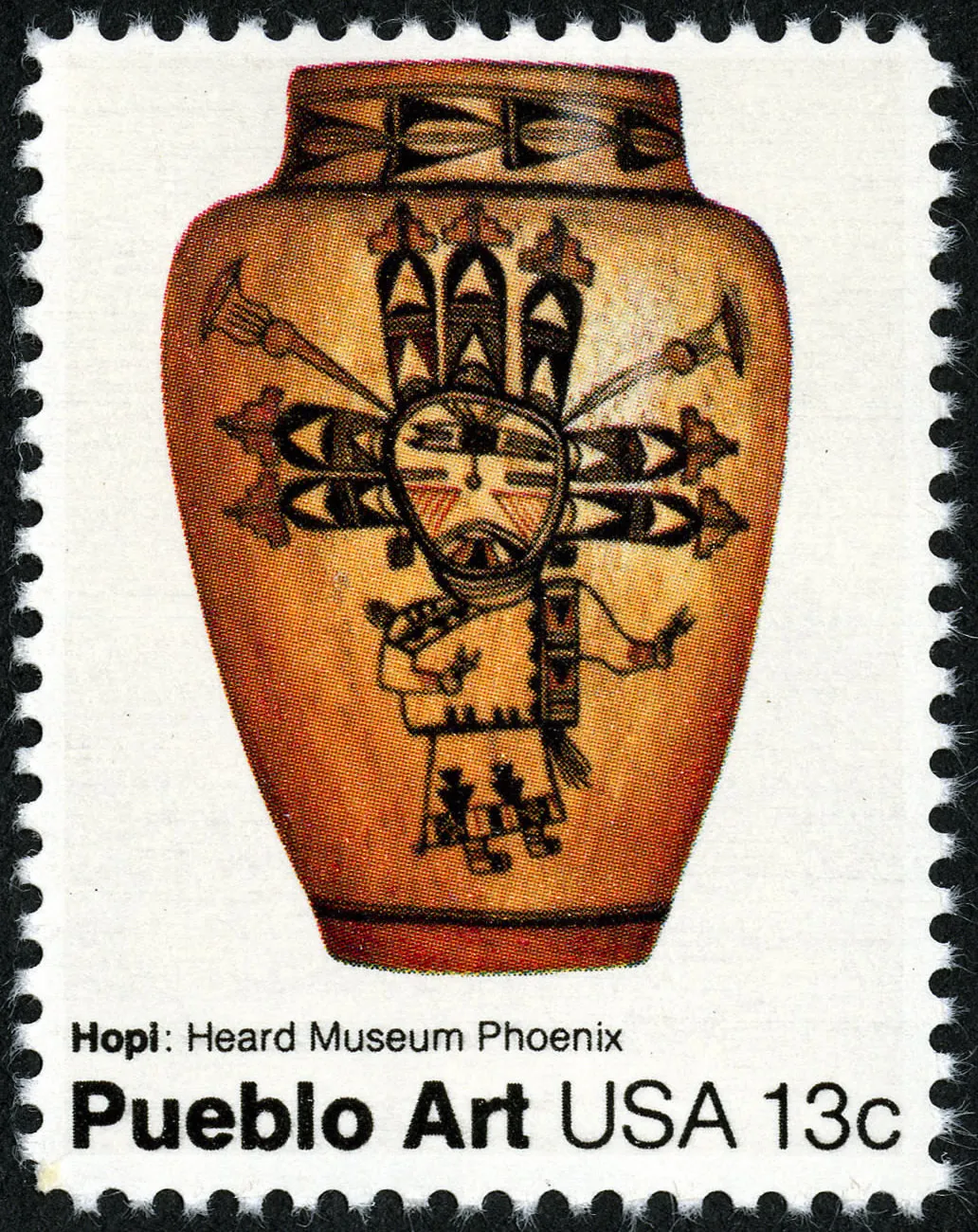
"Pueblo Pottery Hopi Pot 13c 1977 issue U.S. stamp" by Bureau of Engraving and Printing. Designed by Ford Ruthling. / Wikimedia Commons (Public domain).
The Pueblo peoples of the American Southwest are known for creating some of the most distinctive and long-lasting pottery traditions in North America. Archaeological evidence shows that pottery has been a central part of Pueblo life for over a thousand years, with the earliest forms dating back to around 700 CE. Pueblo pottery serves both functional and artistic purposes, reflecting the environment, beliefs, and social structures of different Pueblo communities.
Pueblo pottery is usually made using the coil-building method. In this technique, long coils of clay are stacked and smoothed to form the vessel's walls, rather than being shaped on a wheel. Potters use tools made from stones, gourds, or even corncobs to shape and polish the surface. The clay itself is often collected from local riverbeds or hillsides, and each Pueblo group selects specific clays and natural pigments that create unique colors and textures. After shaping, the pottery is painted with mineral or plant-based paints, often in geometric or symbolic designs. These designs can represent rain, animals, or important cultural stories. For example, black-on-white pottery from the Ancestral Puebloan site of Chaco Canyon (c. 900-1150 CE) features intricate patterns and is highly valued by archaeologists. Another example is the polychrome pottery of the Hopi people, which uses multiple colors and bird motifs.
Firing the pottery is another important step. Pueblo potters often build open-air kilns or use pit-firing methods. The temperature and type of fuel, such as wood or dung, affect the final color and hardness of the pottery. Pueblo women, who traditionally are the main potters, pass these firing techniques and design patterns down through generations. Oral histories and archaeological finds confirm that pottery was used for a variety of daily tasks, such as storing water, cooking, and carrying food, as well as for ceremonial purposes. Some pots, like the water jars from San Ildefonso Pueblo, became famous in the early 20th century when artists like Maria Martinez revived ancient black-on-black styles.
The continuity and change in Pueblo pottery tell us a lot about adaptation and identity. While the basic coil-building method has remained the same for centuries, new designs and forms have developed as Pueblo peoples interacted with neighboring groups and adapted to new needs. Pottery making also played a role in social hierarchy, with certain families or individuals recognized for their exceptional skill. Pottery was sometimes traded with distant communities, showing its value beyond the household.
Pueblo pottery is significant because it connects the past to the present, preserving cultural knowledge while allowing for creative expression. The study of pottery shards at sites like Mesa Verde helps archaeologists reconstruct ancient Pueblo life, trade, and migration patterns. Today, Pueblo artists continue to innovate within their traditions, keeping the art form alive and meaningful.
Interesting Fact: Some Pueblo pots are so well-made that they have survived for over 800 years, allowing modern scientists to study the clay, paint, and even fingerprints left by ancient potters.
This study of Pueblo pottery connects to larger themes like technological innovation, cultural continuity, and the relationship between people and their environments in world history.
When did Pueblo pottery first appear?
Around 700 CE500 BCE1200 CE1800 CE
Who is known for black-on-black pottery?
Maria MartinezSitting BullJohn SmithCesar Chavez
What is the coil-building method?
Stacking clay ropesSpinning clay on a wheelCarving from stoneMelting sand in fire
Why are different clays used by each Pueblo?
For unique colors and texturesFor making jewelryTo build housesTo cook food
How did pottery show social hierarchy?
Skilled potters were recognizedPottery was not importantEveryone made potteryOnly men made pottery
What was a main use of Pueblo pottery?
Holding water and foodBuilding roadsWriting lettersMaking clothing
Pueblo pottery has always been made the same way. True or false?
TrueFalse
What does 'geometric' mean in pottery designs?
Shapes and patternsAnimal furCooking methodType of clay
Perfect For:
👩🏫 Teachers
• Reading comprehension practice
• Auto-graded assessments
• Literacy skill development
👨👩👧👦 Parents
• Reading practice at home
• Comprehension improvement
• Educational reading time
🏠 Homeschoolers
• Reading curriculum support
• Independent reading practice
• Progress monitoring
Reading Features:
📖
Reading Passage
Engaging fiction or nonfiction text
❓
Comprehension Quiz
Auto-graded questions
📊
Instant Feedback
Immediate results and scoring
📄
Printable Version
Download for offline reading
🔊
Read Aloud
Voice-over with word highlighting
Related Content
Native American Respect for Nature
This engaging history reading passage explores Native American respect for nature, emphasizing the close relationship be...
D2.HIS.2.3-5D2.HIS.3.3-5RI.4.3RI.4.4
Native American Tribes Across America
This engaging history reading passage introduces students to Native American tribes across America, focusing on their da...
D2.HIS.1.3-5D2.HIS.2.3-5RI.4.1RI.4.2
Early Native American Treaties
This passage explores the history of broken treaties between the United States government and Native American nations, a...
D2.HIS.2.3-5D2.HIS.3.3-5RI.4.3RI.4.4
Traditional Native American Clothing
This engaging history passage explores traditional Native American clothing and how it reflected the environment, values...
D2.HIS.2.3-5D2.HIS.3.3-5RI.4.3RI.4.4
Early American Inventors and Ideas
This engaging history reading passage introduces students to early American inventors and their important ideas. It high...
D2.HIS.1.3-5D2.HIS.2.3-5RI.4.3RI.4.4
Native American Land Sales
This U.S. history reading passage explores the complex topic of Native American perspectives on land sales, comparing In...
D2.HIS.2.3-5D2.HIS.3.3-5RI.4.3RI.4.4
Disease and Native Americans
This engaging U.S. history reading passage explores the dramatic impact of European diseases on Native American populati...
D2.HIS.2.3-5D2.HIS.3.3-5RI.4.3RI.4.4
Women's Roles in Native American Tribes
This engaging U.S. history reading passage explores the important roles women played in Native American tribes. Aligned ...
D2.HIS.1-4.3-5D2.HIS.14.3-5RI.4.1RI.4.3
Life as a Native American Child
This engaging history reading passage explores daily life for Native American children before European settlers arrived....
D2.HIS.2.3-5D2.HIS.3.3-5RI.4.1RI.4.3
Native Americans as Slaveholders
This passage examines the complex role of Native Americans as slaveholders in U.S. history. Students will analyze the ca...
D2.HIS.2.3-5D2.HIS.3.3-5RI.4.3RI.4.4
The Cherokee Nation: History and Culture
This reading passage explores the rich history and culture of the Cherokee Nation, one of the largest Native American tr...
D2.HIS.2.3-5D2.HIS.14.3-5RI.4.3RI.4.4RI.4.10
How Native Americans Got Their Food
This engaging U.S. history reading passage explores how Native Americans got their food, focusing on hunting, gathering,...
D2.HIS.1-6.3-5RI.4.1RI.4.2RI.4.4
Moccasins: Soft Leather Footwear
This passage explores the history and significance of moccasins—a soft leather footwear invented by Native American nati...
Columbian Exchange Impact on Native Americans
This passage examines the complex effects of the Columbian Exchange on Native Americans, analyzing the causes, consequen...
D2.HIS.2.3-5D2.HIS.3.3-5RI.4.3RI.4.4
Native American Allies in Colonial Wars
This passage examines the complex role of Native American nations as allies and adversaries during the colonial wars of ...
D2.HIS.2.3-5D2.HIS.3.3-5RI.4.3RI.4.4
Spanish Missions Impact on Native American
This reading passage explores the complex impact of Spanish missions on Native American culture in what is now the south...
D2.HIS.2.3-5D2.HIS.3.3-5RI.4.3RI.4.4
Native American Civilizations Before European Contact
This engaging U.S. History reading passage explores Native American civilizations before European contact, focusing on t...
D2.HIS.2.3-5D2.HIS.3.3-5RI.4.3RI.4.4
Black History Month Word Search
RF.4.3RF.5.3L.4.4L.5.4
Pemmican: High-Energy Preserved Food
This engaging history reading passage explores the invention and significance of pemmican, a high-energy preserved food ...