Native American Civilizations Before European Contact
Interactive passage with audio narration, comprehension questions, and printable PDF.
What's included
Native American Civilizations Before European Contact preview and details
About this printable Native American Civilizations Before European Contact reading passage (Grades 6-8)
Sample passage and quiz from Native American Civilizations Before European Contact
Reading passage and comprehension quiz preview
Native American Civilizations Before European Contact
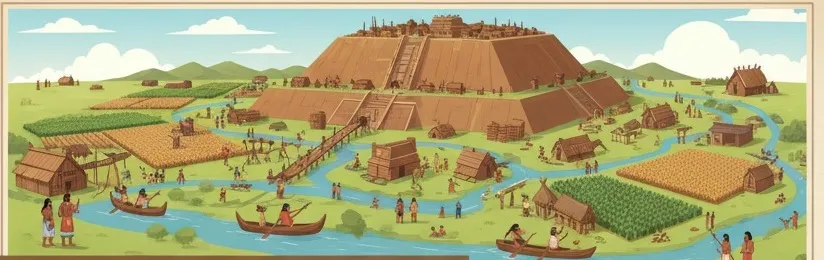
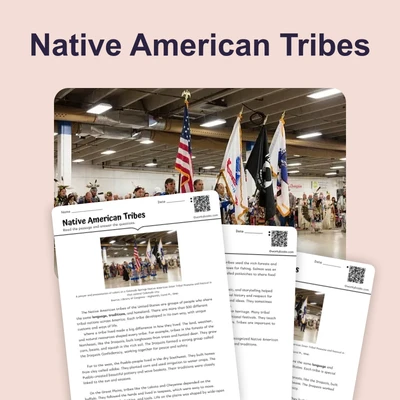
Before Europeans arrived in North America, many indigenous peoples built advanced societies across the continent. These civilizations developed unique forms of government, religion, and economies, each adapted to their environment. Historians organize these societies into culture areas, regions where people adapted in similar ways to climate, landforms, and resources. The diversity of North American geography—from forests to deserts to coastal waters—meant that Native American groups developed a wide range of traditions, technologies, and social systems.
For example, the Eastern Woodlands region, stretching from the Atlantic coast to the Mississippi River, was home to groups such as the Iroquois and the Algonquian. People here relied on forests and rivers for food, building wooden longhouses and using canoes for travel. The Iroquois formed a political alliance known as the Iroquois Confederacy, showing a sophisticated form of governance. Their society was organized into clans, and decisions were made through councils and consensus. Meanwhile, the Mississippian civilization, centered at Cahokia near present-day St. Louis, built enormous earthen mounds for ceremonies and leadership, indicating complex religious and social structures.
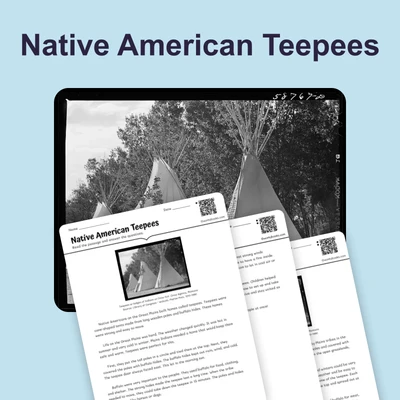
In contrast, the Great Plains were dominated by vast grasslands and herds of bison. Groups such as the Lakota and Cheyenne adapted by becoming skilled hunters and developing portable tipis that could be moved to follow the bison herds. Their societies valued mobility, and their economies depended on hunting rather than farming. In the Southwest, the Pueblo and Hopi peoples faced harsh deserts and relied on irrigation to grow crops like corn, beans, and squash. They built multi-story homes from adobe clay and developed religious ceremonies linked to rain and agriculture. These societies demonstrated remarkable adaptation to their environment through innovation in farming and architecture.
Along the Pacific Northwest coast, tribes such as the Tlingit and Haida lived in a region rich in forests, rivers, and ocean resources. They built sturdy wooden houses and became expert fishers, especially of salmon. Art and ceremony were central to their culture, with totem poles representing family stories and beliefs. Trade networks allowed groups to exchange goods and ideas over long distances, connecting different culture areas even before European contact.
Throughout North America, Native American civilizations showed both similarities and differences. All shared a deep connection to their lands and natural resources, but their ways of life were shaped by the specific challenges and opportunities of their regions. This diversity is evidence of their resilience and creativity in facing changing environments and needs.
Interesting Fact: The city of Cahokia, built by the Mississippians, was home to as many as 20,000 people around the year 1200 CE, making it larger than many European cities at the same time.
Comprehension quiz (8 questions)
1. Which region did the Iroquois live in?
2. What was Cahokia known for?
3. Which group built totem poles?
4. Why did Plains tribes use tipis?
5. How did Southwest peoples adapt to deserts?
6. What is the significance of culture areas?
7. All Native Americans lived in the same way. True or False?
8. What does adaptation mean in the passage?
Common Core standards for Native American Civilizations Before European Contact
Explain events, procedures, ideas, or concepts in a historical, scientific, or technical text, including what happened and why, based on specific information in the text.
Determine the meaning of general academic and domain-specific words or phrases in a text relevant to a grade 4 topic or subject area.
Write informative/explanatory texts to examine a topic and convey ideas and information clearly.
Perfect for the way you teach
- Build comprehension skills
- Auto-graded quiz
- Differentiated reading
- Read together at home
- Improve fluency
- Quiet reading time
- Reading curriculum support
- Independent practice
- Track Lexile growth