Disease and Native Americans — Reading Comprehension
Rate this
Premium Resource
Present
Present in classroom. No work saved
Assign
Classroom with student accounts, Track progress
Quick Play
No student accounts, assign with a link
Grades
6
7
8
Standards
D2.HIS.2.3-5
D2.HIS.3.3-5
RI.4.3
RI.4.4
W.4.2
PRINT+DIGITAL RESOURCE
This learning resource is available in interactive and printable formats. The interactive worksheet can be played online and assigned to students. The Printable PDF version can be downloaded and printed for completion by hand.
This engaging U.S. history reading passage explores the dramatic impact of European diseases on Native American populations after 1492. Students will analyze the causes, effects, and perspectives of both Native groups and Europeans, using historical reasoning and evidence. The passage is structured for critical thinking, including a primary source quote, disciplinary vocabulary, and clear explanations of complex historical events. Activities include a multiple-choice quiz, writing prompts, a graphic organizer, and a timeline to help students understand the sequence of events. The content is aligned to history standards D2.His.2.3-5, D2.His.3.3-5 and literacy standards RI.4.3, RI.4.4, W.4.2. A glossary of key terms and a complete Spanish translation are provided to support comprehension. Read aloud audio is included, making this a complete resource for exploring the devastating consequences of disease during early encounters in North America.
CONTENT PREVIEW
Expand content preview
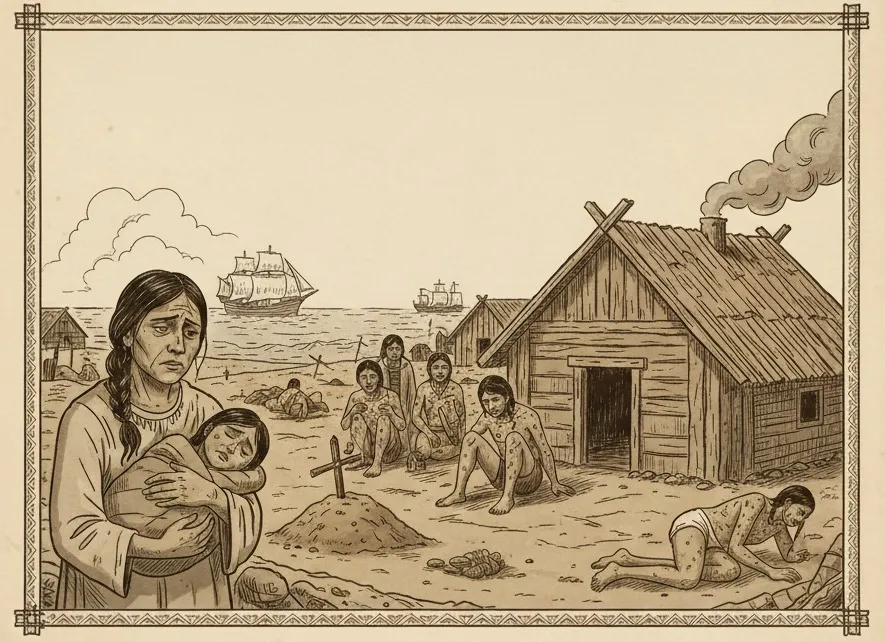
Artist's depiction of spread of disease among Native Americans after 1492.
The arrival of Europeans in the Americas brought not only explorers and settlers, but also invisible invaders: deadly diseases. When the first European ships landed in the early 1500s, they carried illnesses such as smallpox, measles, and influenza. Native American populations had no previous exposure to these diseases, so they lacked immunity—the natural ability of the body to resist infection. This difference would have catastrophic consequences for Indigenous communities across North America.
Unlike Europeans, whose ancestors had lived with these diseases for centuries and developed some resistance, Native Americans were highly vulnerable. Because their immune systems had never encountered such viruses, even a single epidemic could wipe out entire villages. Early accounts describe how, in some regions, up to 90% of the population died within just a few years of contact. The sudden loss of so many people is called mortality. High mortality rates created enormous problems for Native societies, disrupting family life, traditions, and systems of government.
The spread of European diseases across the continent was rapid and devastating. In some cases, pandemics—outbreaks of disease that affect large areas—traveled faster than the explorers themselves. Trade routes and migration allowed viruses to move ahead of European settlements. Entire regions were left weakened before any direct conflict or negotiation with newcomers occurred. Because these diseases struck without warning or explanation, many Native Americans believed they were being punished by supernatural forces. Others tried traditional medicines, but these cures had never faced such illnesses before and were mostly ineffective.
This biological disaster made it easier for Europeans to conquer and colonize the Americas. With so many Native leaders and warriors lost, resistance to European expansion became much more difficult. Lands that once supported thousands of people were left nearly empty. European settlers often misunderstood the cause of the population decline, sometimes believing that Native Americans had simply “disappeared” or were naturally few in number. In truth, disease—not war—was the greatest factor in the transformation of the continent.
Historians now use evidence from archaeology, oral history, and written records to estimate the true impact of these epidemics. They study burial sites, old journals, and even pollen samples to piece together what happened. Some scholars debate the exact numbers, but they agree that disease changed the course of American history. The loss of Indigenous life reshaped cultures, opened land for European settlement, and left a legacy that is still felt today.
Interesting Fact: Some Native American groups, such as the Mandan along the Missouri River, lost nearly their entire population to smallpox in a single year.
Which disease killed many Native Americans?
SmallpoxMalariaChickenpoxTuberculosis
What is immunity?
Natural disease resistanceA type of medicineA group of explorersA Native tradition
What made European colonization easier?
Loss of Native populationBetter weaponsNew cropsCold weather
Why were Native Americans so vulnerable?
No immunity to diseasesLack of tradeFew leadersNo livestock
How did disease spread so fast?
Trade and migration routesWritten messagesRadio wavesMagic
What did many Native Americans believe caused the disease?
Supernatural punishmentBad weatherHuntersLack of food
Disease, not war, caused most deaths.
TrueFalse
What is an epidemic?
A disease outbreakA type of cropA Native leaderA map
Perfect For:
👩🏫 Teachers
• Reading comprehension practice
• Auto-graded assessments
• Literacy skill development
👨👩👧👦 Parents
• Reading practice at home
• Comprehension improvement
• Educational reading time
🏠 Homeschoolers
• Reading curriculum support
• Independent reading practice
• Progress monitoring
Reading Features:
📖
Reading Passage
Engaging fiction or nonfiction text
❓
Comprehension Quiz
Auto-graded questions
📊
Instant Feedback
Immediate results and scoring
📄
Printable Version
Download for offline reading
🔊
Read Aloud
Voice-over with word highlighting
Reviews & Ratings
No reviews yet. Be the first to share your experience!
Related Content
Native American Tribes Across America
This engaging history reading passage introduces students to Native American tribes across America, focusing on their da...
D2.HIS.1.3-5D2.HIS.2.3-5RI.4.1RI.4.2
Teepees: Homes on the Great Plains
This engaging history reading passage introduces students to teepees, the unique homes of Native American tribes on the ...
D2.HIS.2.3-5D2.HIS.14.3-5RI.4.1RI.4.2RI.4.4
Traditional Native American Clothing
This engaging history passage explores traditional Native American clothing and how it reflected the environment, values...
D2.HIS.2.3-5D2.HIS.3.3-5RI.4.3RI.4.4
The Iroquois Confederacy: A System of Peace
This engaging U.S. History reading passage introduces students to the Iroquois Confederacy, a powerful alliance of Nativ...
D2.HIS.2.3-5D2.HIS.3.3-5RI.4.3RI.4.4
The Cherokee Nation: History and Culture
This reading passage explores the rich history and culture of the Cherokee Nation, one of the largest Native American tr...
D2.HIS.2.3-5D2.HIS.14.3-5RI.4.3RI.4.4RI.4.10
The Sioux: Warriors and Tribal Leaders
This history reading passage explores the Sioux Nation, focusing on their roles as warriors and tribal leaders. Students...
D2.HIS.1.3-5D2.HIS.2.3-5RI.4.1RI.4.3
Native American Respect for Nature
This engaging history reading passage explores Native American respect for nature, emphasizing the close relationship be...
D2.HIS.2.3-5D2.HIS.3.3-5RI.4.3RI.4.4
Jamestown: The First Permanent English Colony
This engaging history passage explores the founding of Jamestown, the first permanent English colony in America. Aligned...
D2.HIS.1.3-5D2.HIS.2.3-5RI.4.3RI.4.4
Pocahontas and the Powhatan People
This engaging reading passage explores the life of Pocahontas and the Powhatan people and their important role in early ...
D2.HIS.1.3-5D2.HIS.2.3-5RI.4.1RI.4.3
Colonial Children: School and Chores
This reading passage explores the daily lives of colonial children, focusing on their experiences at school and their ma...
D2.HIS.2.3-5D2.HIS.3.3-5RI.4.1RI.4.2RI.4.4
Colonial Clothing and Homemade Goods
This engaging U.S. history passage explores the daily life of early American colonists with a focus on colonial clothing...
D2.HIS.2.3-5RI.4.3RI.4.4
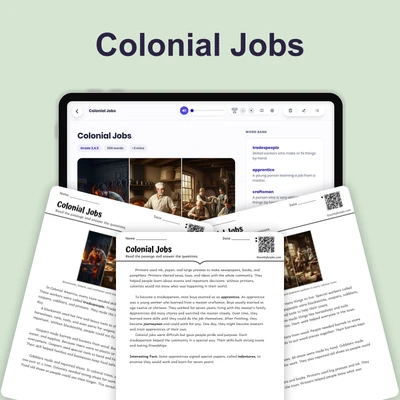
Colonial Jobs: Blacksmiths, Bakers, and Craftsmen
This engaging history reading passage explores the vital roles of blacksmiths, bakers, and craftsmen in colonial America...
D2.HIS.2.3-5D2.HIS.3.3-5RI.4.3RI.4.4
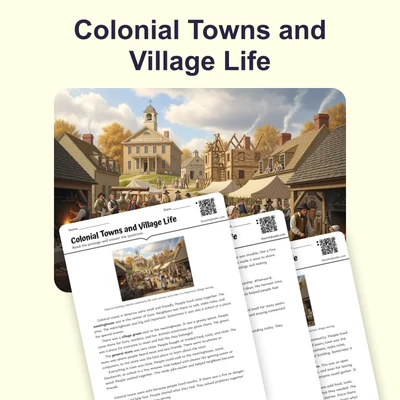
Colonial Towns and Village Life
This engaging history reading passage explores the daily life, work, and unity found in colonial towns and villages. Ali...
D2.HIS.1.3-5D2.HIS.2.3-5RI.4.3RI.4.4
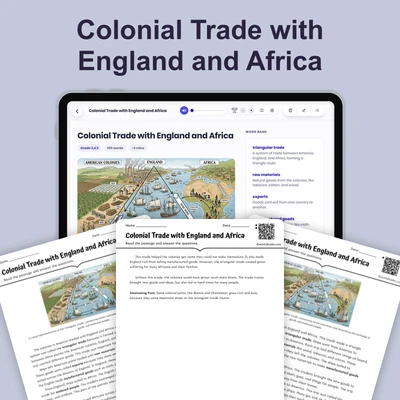
Colonial Trade with England and Africa
This history reading passage explores colonial trade between the American colonies, England, and Africa, focusing on the...
D2.HIS.2.3-5D2.HIS.14.3-5RI.4.3RI.4.4
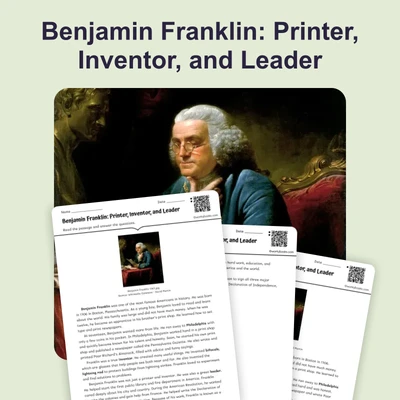
Benjamin Franklin: Printer, Inventor, and Leader
This history reading passage explores the life and achievements of Benjamin Franklin, one of America's most important ea...
D2.HIS.2.3-5D2.HIS.3.3-5RI.4.1RI.4.3
George Washington Leads the Army
This engaging history reading passage explores how George Washington bravely led the Continental Army during the America...
D2.HIS.1.3-5D2.HIS.2.3-5RI.4.3RI.4.4
Women and Children During the Revolutionary War
This reading passage explores the important roles women and children played during the Revolutionary War. Students will ...
D2.HIS.2.3-5RI.4.3RI.5.3
African Americans Fight for Freedom
This educational passage explores the brave and inspiring story of how African Americans fought for freedom in the Unite...
D2.HIS.2.3-5D2.HIS.3.3-5RI.4.3RI.4.4
The Battle of Yorktown Ends War
This engaging U.S. history reading passage explores the Battle of Yorktown, a key event that ended the American Revoluti...
D2.HIS.1.3-5D2.HIS.2.3-5RI.4.1RI.4.3
Loyalists vs. Patriots: Divided Families
This engaging U.S. history reading passage explores the division between Loyalists and Patriots during the American Revo...