Native American Land Sales — Reading Comprehension
Rate this
Premium Resource
Present
Present in classroom. No work saved
Assign
Classroom with student accounts, Track progress
Quick Play
No student accounts, assign with a link
Grades
6
7
8
Standards
D2.HIS.2.3-5
D2.HIS.3.3-5
RI.4.3
RI.4.4
W.4.2
PRINT+DIGITAL RESOURCE
This learning resource is available in interactive and printable formats. The interactive worksheet can be played online and assigned to students. The Printable PDF version can be downloaded and printed for completion by hand.
This comprehensive history reading passage examines Native American land sales in U.S. history and asks students to consider whether these transactions were fair or fraudulent. Covering the use of treaties, negotiation, cession, and deception, the passage provides a balanced analysis of how colonists acquired millions of acres—often using fraud, threats, or manipulation. Students will learn disciplinary vocabulary and practice historical reasoning in alignment with HSS 5.4.4 and 8.8.2, as well as CCSS.RI.6-8.1 and RI.6-8.8. The resource includes a detailed reading passage, timeline, glossary, differentiated and Spanish versions, and a range of engaging activities such as quizzes, writing prompts, and graphic organizers. Read aloud audio is provided for accessibility. This passage is ideal for building critical thinking skills about fairness, evidence, and historical context in U.S. history.
CONTENT PREVIEW
Expand content preview
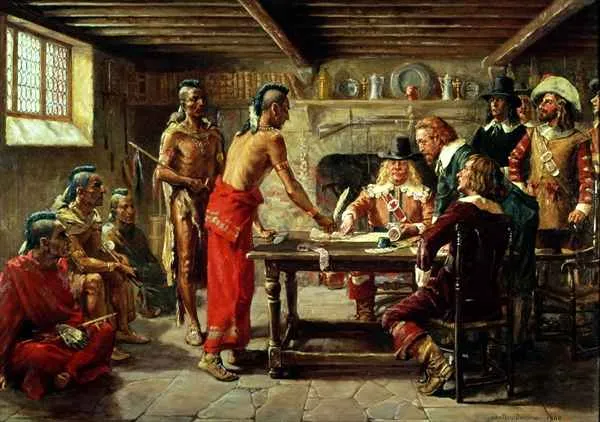
Signing the Treaty with the Indians.jpg Source: Wikimedia Commons -John Ward Dunsmore
Throughout United States history, the sale and transfer of land from Native American nations to European colonists and the U.S. government shaped the nation’s growth. These transactions often claimed to be legal and voluntary, but historians have found that many were clouded with fraud, manipulation, and unfair practices. Understanding whether these land sales were fair deals or acts of deception requires examining the methods used and the impact on Native communities.
Colonists and government representatives frequently used negotiation to obtain land. Official meetings, often called treaties, would bring together Native American leaders and colonial agents. However, these negotiations were rarely equal. The colonists usually held more power, controlled the terms, and sometimes offered gifts or money with hidden motives. In several cases, the people who signed away lands did not have the authority to represent their entire nation. This meant that the resulting cession, or giving up of land, was not always agreed upon by all the people affected.
Alcohol played a troubling role in many land deals. Some colonists provided alcohol to Native American leaders during negotiations, hoping it would cloud their judgment. There are records of agreements made when one side was under the influence, raising questions about the fairness and validity of such deals. These actions often resulted in Native Americans losing millions of acres of ancestral land.
Other tactics included threats and deception. Colonists sometimes hinted at violence or pressured Native leaders by saying that refusal to sign would lead to war or loss of trade. Documents were occasionally written in English, which many Native signers could not read. This made it possible to include terms that the Native Americans did not understand or agree to, furthering the use of fraud in these land sales.
The effects of these unfair land sales were profound. Native communities lost not just land, but also the ability to sustain their traditional ways of life, including hunting, farming, and holding spiritual ceremonies. The land cessions often forced people to move far from their original homes, leading to hardship and cultural loss. For the colonists and later the U.S. government, these land acquisitions fueled expansion, settlement, and economic growth, but at a great human cost for Native Americans.
Historians continue to debate the fairness of these agreements. Some treaties were honored, but many were broken or ignored by colonists and the government. Today, many Native American groups work to reclaim lost land and raise awareness of these past injustices. By studying the evidence, students can form their own conclusions about the justice or injustice of Native American land sales.
Interesting Fact: In some sales, a single beaded necklace or a handful of trade goods was used as payment for thousands of acres of land—highlighting the extreme imbalance in these transactions.
What is a treaty?
A written agreement between groupsA type of clothingA farming toolA Native American leader
Why did colonists give alcohol to leaders?
To cloud their judgmentAs a health remedyTo celebrate togetherFor religious reasons
What does 'cession' mean?
Giving up landStarting a warWriting a storyBuilding a city
Who often controlled the terms of land sales?
Colonists or governmentNative American childrenFarm animalsLocal farmers
What happened to many Native communities after land cessions?
They lost land and homesThey became richerThey moved to citiesThey started new governments
Why were many treaties unfair?
Leaders lacked authority or were deceivedNative Americans had more powerTreaties were never writtenNo one signed them
Native Americans never lost land. (True/False)
TrueFalse
What does 'fraud' mean in the passage?
Cheating or tricking in a dealRespectful negotiationBuilding a communityA type of food
Perfect For:
👩🏫 Teachers
• Reading comprehension practice
• Auto-graded assessments
• Literacy skill development
👨👩👧👦 Parents
• Reading practice at home
• Comprehension improvement
• Educational reading time
🏠 Homeschoolers
• Reading curriculum support
• Independent reading practice
• Progress monitoring
Reading Features:
📖
Reading Passage
Engaging fiction or nonfiction text
❓
Comprehension Quiz
Auto-graded questions
📊
Instant Feedback
Immediate results and scoring
📄
Printable Version
Download for offline reading
🔊
Read Aloud
Voice-over with word highlighting
Reviews & Ratings
No reviews yet. Be the first to share your experience!
Related Content
Native American Tribes Across America
This engaging history reading passage introduces students to Native American tribes across America, focusing on their da...
D2.HIS.1.3-5D2.HIS.2.3-5RI.4.1RI.4.2
Teepees: Homes on the Great Plains
This engaging history reading passage introduces students to teepees, the unique homes of Native American tribes on the ...
D2.HIS.2.3-5D2.HIS.14.3-5RI.4.1RI.4.2RI.4.4
Traditional Native American Clothing
This engaging history passage explores traditional Native American clothing and how it reflected the environment, values...
D2.HIS.2.3-5D2.HIS.3.3-5RI.4.3RI.4.4
The Iroquois Confederacy: A System of Peace
This engaging U.S. History reading passage introduces students to the Iroquois Confederacy, a powerful alliance of Nativ...
D2.HIS.2.3-5D2.HIS.3.3-5RI.4.3RI.4.4
The Cherokee Nation: History and Culture
This reading passage explores the rich history and culture of the Cherokee Nation, one of the largest Native American tr...
D2.HIS.2.3-5D2.HIS.14.3-5RI.4.3RI.4.4RI.4.10
The Sioux: Warriors and Tribal Leaders
This history reading passage explores the Sioux Nation, focusing on their roles as warriors and tribal leaders. Students...
D2.HIS.1.3-5D2.HIS.2.3-5RI.4.1RI.4.3
Native American Respect for Nature
This engaging history reading passage explores Native American respect for nature, emphasizing the close relationship be...
D2.HIS.2.3-5D2.HIS.3.3-5RI.4.3RI.4.4
Jamestown: The First Permanent English Colony
This engaging history passage explores the founding of Jamestown, the first permanent English colony in America. Aligned...
D2.HIS.1.3-5D2.HIS.2.3-5RI.4.3RI.4.4
Pocahontas and the Powhatan People
This engaging reading passage explores the life of Pocahontas and the Powhatan people and their important role in early ...
D2.HIS.1.3-5D2.HIS.2.3-5RI.4.1RI.4.3
Colonial Children: School and Chores
This reading passage explores the daily lives of colonial children, focusing on their experiences at school and their ma...
D2.HIS.2.3-5D2.HIS.3.3-5RI.4.1RI.4.2RI.4.4
Colonial Clothing and Homemade Goods
This engaging U.S. history passage explores the daily life of early American colonists with a focus on colonial clothing...
D2.HIS.2.3-5RI.4.3RI.4.4
Colonial Jobs: Blacksmiths, Bakers, and Craftsmen
This engaging history reading passage explores the vital roles of blacksmiths, bakers, and craftsmen in colonial America...
D2.HIS.2.3-5D2.HIS.3.3-5RI.4.3RI.4.4
Colonial Towns and Village Life
This engaging history reading passage explores the daily life, work, and unity found in colonial towns and villages. Ali...
D2.HIS.1.3-5D2.HIS.2.3-5RI.4.3RI.4.4
Colonial Trade with England and Africa
This history reading passage explores colonial trade between the American colonies, England, and Africa, focusing on the...
D2.HIS.2.3-5D2.HIS.14.3-5RI.4.3RI.4.4
Benjamin Franklin: Printer, Inventor, and Leader
This history reading passage explores the life and achievements of Benjamin Franklin, one of America's most important ea...
D2.HIS.2.3-5D2.HIS.3.3-5RI.4.1RI.4.3
George Washington Leads the Army
This engaging history reading passage explores how George Washington bravely led the Continental Army during the America...
D2.HIS.1.3-5D2.HIS.2.3-5RI.4.3RI.4.4
Women and Children During the Revolutionary War
This reading passage explores the important roles women and children played during the Revolutionary War. Students will ...
D2.HIS.2.3-5RI.4.3RI.5.3
African Americans Fight for Freedom
This educational passage explores the brave and inspiring story of how African Americans fought for freedom in the Unite...
D2.HIS.2.3-5D2.HIS.3.3-5RI.4.3RI.4.4
The Battle of Yorktown Ends War
This engaging U.S. history reading passage explores the Battle of Yorktown, a key event that ended the American Revoluti...
D2.HIS.1.3-5D2.HIS.2.3-5RI.4.1RI.4.3
Loyalists vs. Patriots: Divided Families
This engaging U.S. history reading passage explores the division between Loyalists and Patriots during the American Revo...