Native American Respect for Nature — Reading Comprehension
Rate this
Premium Resource
Present
Present in classroom. No work saved
Assign
Classroom with student accounts, Track progress
Quick Play
No student accounts, assign with a link
Grades
3
4
5
Standards
D2.HIS.2.3-5
D2.HIS.3.3-5
RI.4.3
RI.4.4
PRINT+DIGITAL RESOURCE
This learning resource is available in interactive and printable formats. The interactive worksheet can be played online and assigned to students. The Printable PDF version can be downloaded and printed for completion by hand.
This engaging history reading passage explores Native American respect for nature, emphasizing the close relationship between tribes and the environment. Students will learn how Native Americans used only what they needed, honored animals and plants, and passed down these traditions through stories and ceremonies. The passage is written for developing readers, integrating key vocabulary and a clear cause-and-effect structure. Activities include a multiple-choice quiz, writing prompts, and a helpful glossary. A timeline highlights the sequence of important actions and beliefs. This resource aligns with C3 Framework and Common Core standards, making it perfect for classrooms. Read aloud audio and a full Spanish translation are included to support diverse learners and enhance accessibility.
CONTENT PREVIEW
Expand content preview
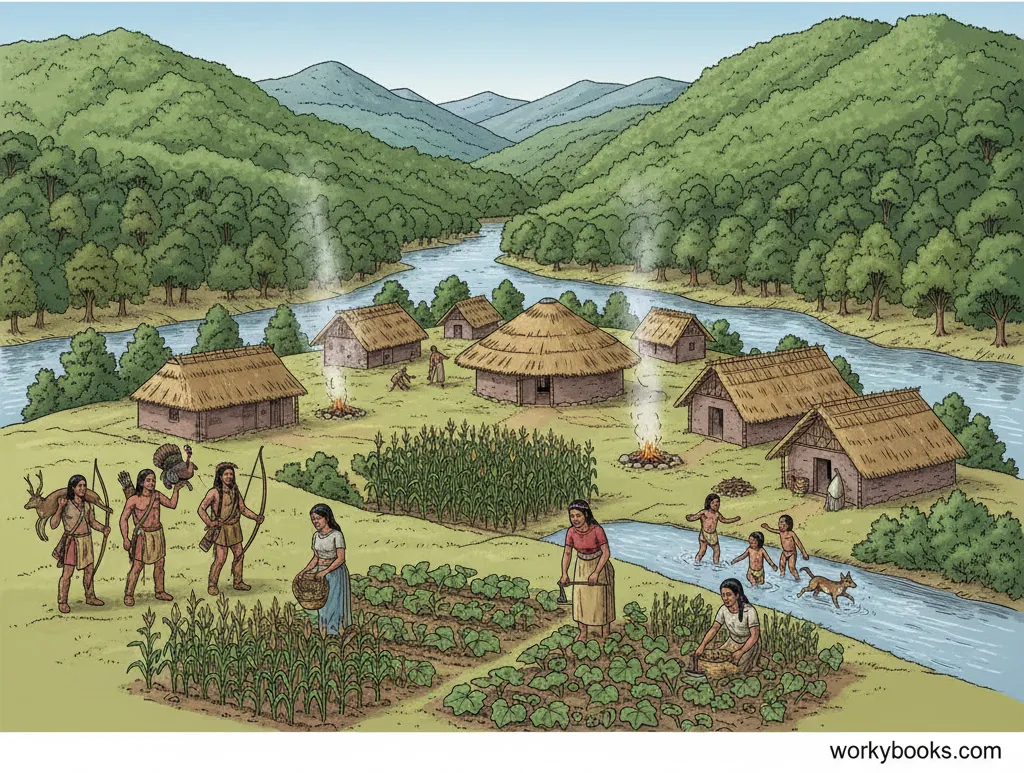
Native American tribes across North America believed that people should care for the Earth and all living things. They did not see themselves as owners of the land, but as part of a large family that included animals, plants, water, and air. This belief shaped the way they lived, hunted, and farmed.
Many Native Americans saw the land as a precious gift. They understood that everything in nature was connected. If you harmed one part of nature, it could hurt everything else. For example, if a tribe hunted too many animals, there would be fewer left for the future. So, they took only what they needed and left the rest. This is called balance.
When hunting, Native Americans often thanked the animal’s spirit. They used every part of the animal, such as meat for food, hides for clothing, and bones for tools. This showed gratitude and respect. They believed giving thanks was important because it honored both the animal and the Earth.
Farming was also done with care. Native Americans planted crops like corn, beans, and squash together. These plants helped each other grow. This method kept the soil healthy and strong. It is an example of environmental stewardship, which means taking care of the land for future generations.
Everyday life showed respect for nature, too. Rivers and lakes were treated as sacred places. Before gathering plants or fishing, people often offered prayers or small gifts to thank the Earth. Children learned from elders about the importance of living in harmony with nature. Stories, songs, and ceremonies taught these lessons to each new generation.
Some tribes, like the Iroquois, held special ceremonies to give thanks for the harvest. The Navajo people created beautiful sand paintings to honor the land and spirits. These traditions helped people remember that humans must protect the Earth, not just use its resources.
Today, many Native Americans continue to teach about balance, gratitude, and care for the Earth. Their traditions remind us that we all share a responsibility to protect the environment.
Interesting Fact: Some Native American languages do not have a word for “owning” the land, showing how deeply they believe the Earth belongs to everyone.
What did Native Americans believe about the land?
They should care for itThey owned itIt was not importantOnly animals needed it
How did they show gratitude when hunting?
Thanked the animal's spiritLeft food behindDid not use bonesPlanted crops
Which crops did they plant together?
Corn, beans, squashWheat, rice, potatoesOats, barley, ryePeas, carrots, apples
Why did Native Americans take only what they needed?
To keep balance in natureTo have more to sellTo waste less timeTo follow the law
What does environmental stewardship mean?
Caring for the landOwning the landSelling resourcesBuilding houses
Why were ceremonies and stories important?
Taught respect for natureMade people richHelped build housesTaught hunting only
Native Americans owned the land. True or false?
TrueFalse
What is another word for thankfulness?
GratitudeBalanceTraditionHarmony
Perfect For:
👩🏫 Teachers
• Reading comprehension practice
• Auto-graded assessments
• Literacy skill development
👨👩👧👦 Parents
• Reading practice at home
• Comprehension improvement
• Educational reading time
🏠 Homeschoolers
• Reading curriculum support
• Independent reading practice
• Progress monitoring
Reading Features:
📖
Reading Passage
Engaging fiction or nonfiction text
❓
Comprehension Quiz
Auto-graded questions
📊
Instant Feedback
Immediate results and scoring
📄
Printable Version
Download for offline reading
🔊
Read Aloud
Voice-over with word highlighting
Reviews & Ratings
No reviews yet. Be the first to share your experience!
Related Content
Native American Tribes Across America
This engaging history reading passage introduces students to Native American tribes across America, focusing on their da...
D2.HIS.1.3-5D2.HIS.2.3-5RI.4.1RI.4.2
Teepees: Homes on the Great Plains
This engaging history reading passage introduces students to teepees, the unique homes of Native American tribes on the ...
D2.HIS.2.3-5D2.HIS.14.3-5RI.4.1RI.4.2RI.4.4
Traditional Native American Clothing
This engaging history passage explores traditional Native American clothing and how it reflected the environment, values...
D2.HIS.2.3-5D2.HIS.3.3-5RI.4.3RI.4.4
The Iroquois Confederacy: A System of Peace
This engaging U.S. History reading passage introduces students to the Iroquois Confederacy, a powerful alliance of Nativ...
D2.HIS.2.3-5D2.HIS.3.3-5RI.4.3RI.4.4
The Cherokee Nation: History and Culture
This reading passage explores the rich history and culture of the Cherokee Nation, one of the largest Native American tr...
D2.HIS.2.3-5D2.HIS.14.3-5RI.4.3RI.4.4RI.4.10
The Sioux: Warriors and Tribal Leaders
This history reading passage explores the Sioux Nation, focusing on their roles as warriors and tribal leaders. Students...
D2.HIS.1.3-5D2.HIS.2.3-5RI.4.1RI.4.3
Jamestown: The First Permanent English Colony
This engaging history passage explores the founding of Jamestown, the first permanent English colony in America. Aligned...
D2.HIS.1.3-5D2.HIS.2.3-5RI.4.3RI.4.4
Pocahontas and the Powhatan People
This engaging reading passage explores the life of Pocahontas and the Powhatan people and their important role in early ...
D2.HIS.1.3-5D2.HIS.2.3-5RI.4.1RI.4.3
Colonial Children: School and Chores
This reading passage explores the daily lives of colonial children, focusing on their experiences at school and their ma...
D2.HIS.2.3-5D2.HIS.3.3-5RI.4.1RI.4.2RI.4.4
Colonial Clothing and Homemade Goods
This engaging U.S. history passage explores the daily life of early American colonists with a focus on colonial clothing...
D2.HIS.2.3-5RI.4.3RI.4.4
Colonial Jobs: Blacksmiths, Bakers, and Craftsmen
This engaging history reading passage explores the vital roles of blacksmiths, bakers, and craftsmen in colonial America...
D2.HIS.2.3-5D2.HIS.3.3-5RI.4.3RI.4.4
Colonial Towns and Village Life
This engaging history reading passage explores the daily life, work, and unity found in colonial towns and villages. Ali...
D2.HIS.1.3-5D2.HIS.2.3-5RI.4.3RI.4.4
Colonial Trade with England and Africa
This history reading passage explores colonial trade between the American colonies, England, and Africa, focusing on the...
D2.HIS.2.3-5D2.HIS.14.3-5RI.4.3RI.4.4
Benjamin Franklin: Printer, Inventor, and Leader
This history reading passage explores the life and achievements of Benjamin Franklin, one of America's most important ea...
D2.HIS.2.3-5D2.HIS.3.3-5RI.4.1RI.4.3
George Washington Leads the Army
This engaging history reading passage explores how George Washington bravely led the Continental Army during the America...
D2.HIS.1.3-5D2.HIS.2.3-5RI.4.3RI.4.4
Women and Children During the Revolutionary War
This reading passage explores the important roles women and children played during the Revolutionary War. Students will ...
D2.HIS.2.3-5RI.4.3RI.5.3
African Americans Fight for Freedom
This educational passage explores the brave and inspiring story of how African Americans fought for freedom in the Unite...
D2.HIS.2.3-5D2.HIS.3.3-5RI.4.3RI.4.4
The Battle of Yorktown Ends War
This engaging U.S. history reading passage explores the Battle of Yorktown, a key event that ended the American Revoluti...
D2.HIS.1.3-5D2.HIS.2.3-5RI.4.1RI.4.3
Loyalists vs. Patriots: Divided Families
This engaging U.S. history reading passage explores the division between Loyalists and Patriots during the American Revo...