This learning resource is available in interactive and printable formats. The interactive worksheet can be played online and assigned to students. The Printable PDF version can be downloaded and printed for completion by hand.
This passage explores the history and significance of moccasins—a soft leather footwear invented by Native American nations to adapt to their local environments. Students will learn how different moccasin styles, such as the hard-sole Plains style, soft-sole Eastern woodlands type, and Arctic mukluks, represent ingenious adaptation to geography and climate using available natural materials. The passage connects archaeological evidence, cultural context, and technological innovation, while addressing how social roles and daily life influenced moccasin design and use. The resource includes a Spanish translation, glossary, multiple-choice quiz, writing prompts, and graphic organizers for historical analysis. It aligns with the California HSS Framework and Common Core reading standards, supporting inquiry and evidence-based learning for middle school students. The passage is suitable for lessons on invention, cultural adaptation, and world history, and includes a relevant public domain image and a coloring page prompt.
CONTENT PREVIEW
Expand content preview
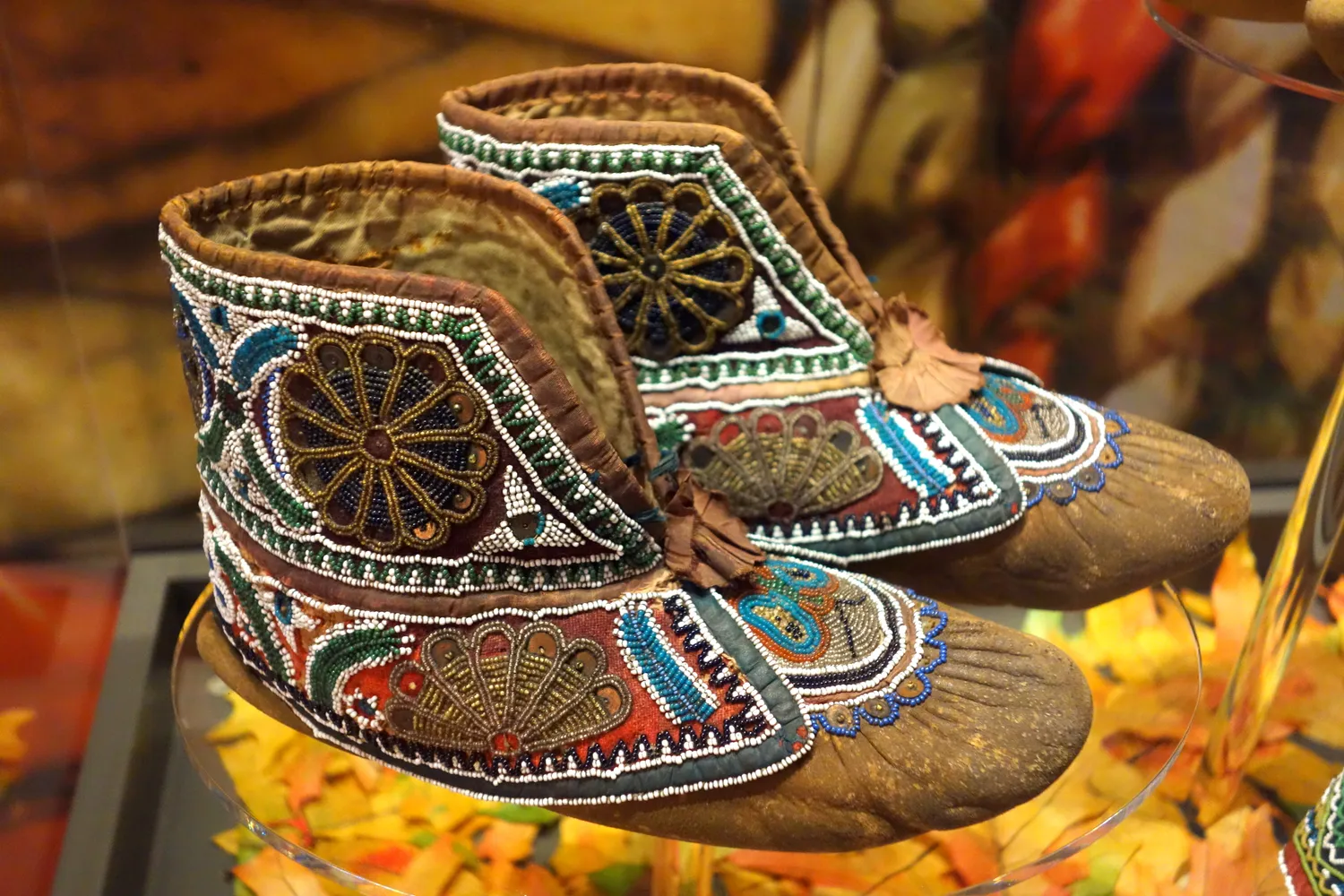
"Huron moccasins, c. 1880 - Bata Shoe Museum - Image by Daderot / Wikimedia Commons (CC0).
Moccasins are a type of soft leather footwear first developed by Native American nations across North America. These shoes were expertly crafted to provide comfort, protection, and flexibility for walking in natural environments. Over time, different Indigenous groups created region-specific designs that reflected not only their culture but also their adaptation to local geography and climate. Today, moccasins remain an important example of technological innovation and cultural identity.
Each Native American nation designed moccasins to fit the needs of their environment. For example, the Plains tribes, such as the Sioux and Cheyenne, made moccasins with hard, thick soles. These hard-sole moccasins protected feet from sharp rocks and dry prairie grasses. Archaeological evidence shows that by the 1700s, Plains moccasins often featured rawhide soles and decorative beadwork, which also reflected social status. In contrast, the Eastern Woodlands peoples, like the Iroquois, wore soft-sole moccasins made from a single piece of deerskin. These shoes allowed quiet movement through forested areas and were often decorated with quillwork or painted designs. The Arctic and Subarctic peoples, including the Inuit, developed tall boots called mukluks, made from sealskin or caribou hide. Mukluks provided insulation against freezing temperatures and snow, demonstrating adaptation to one of the harshest climates on Earth.
Primary sources, such as early European accounts and existing examples in museums, show the diversity and skilled craftsmanship of moccasins. For instance, explorer Samuel de Champlain described the "comfortable and light" shoes worn by Algonquin guides during his expeditions in the early 1600s. Archaeologists have uncovered centuries-old moccasins in dry caves in the American Southwest, revealing construction techniques and materials. While designs varied, all moccasins shared features like soft uppers, stitched seams, and the use of natural resources such as animal hides and sinew thread. Family members often made moccasins for one another, passing down skills and decorative patterns through generations.
Moccasins played a significant role in daily life and social organization. They enabled hunters, traders, and children to travel safely and efficiently, supporting survival and trade. The process of creating moccasins reflected gender roles and community traditions, with women usually responsible for tanning hides and sewing. Over time, moccasins also became symbols of cultural identity and pride, especially during ceremonies and in resistance to outside influences. Even today, many Native communities continue to produce and wear moccasins, keeping traditional techniques alive while also adapting designs for modern use.
Moccasins demonstrate how people creatively responded to their environment. They are not just simple shoes, but a technological achievement that connected resources, climate, and culture. Studying moccasins helps us understand how invention arises from necessity and how daily life shapes and is shaped by geography and history.
Interesting Fact: Some ancient moccasins found in Nevada’s Lovelock Cave are over 2,000 years old, showing that this invention has a very long history in North America.
This topic connects to broader themes of world history, such as innovation, adaptation, and the relationship between people and their environment.
Who made the first moccasins?
Native American nationsEuropean settlersAfrican kingdomsChinese emperors
What are mukluks made from?
Sealskin or caribou hideWool and cottonPlastic and rubberMetal and glass
Which tribe developed hard-sole moccasins?
SiouxInuitIroquoisAztec
Why did Eastern Woodlands moccasins have soft soles?
To move quietly in forestsTo skate on iceTo climb mountainsFor swimming
How did climate affect moccasin design?
People adapted styles to weatherEveryone wore the same styleClimate had no effectDesigns were random
What does archaeological evidence show?
Moccasin styles changed over timeOnly men wore moccasinsMoccasins were metalMoccasins were invented in Europe
Moccasins are still made today. (True or False)
TrueFalse
What does 'resources' mean in the passage?
Materials used to make thingsStories from the pastRules for ceremoniesNames of tribes
Perfect For:
👩🏫 Teachers
• Reading comprehension practice
• Auto-graded assessments
• Literacy skill development
👨👩👧👦 Parents
• Reading practice at home
• Comprehension improvement
• Educational reading time
🏠 Homeschoolers
• Reading curriculum support
• Independent reading practice
• Progress monitoring
Reading Features:
📖
Reading Passage
Engaging fiction or nonfiction text
❓
Comprehension Quiz
Auto-graded questions
📊
Instant Feedback
Immediate results and scoring
📄
Printable Version
Download for offline reading
🔊
Read Aloud
Voice-over with word highlighting
Reviews & Ratings
No reviews yet. Be the first to share your experience!
Related Content
Native American Respect for Nature
This engaging history reading passage explores Native American respect for nature, emphasizing the close relationship be...
D2.HIS.2.3-5D2.HIS.3.3-5RI.4.3RI.4.4
Native Americans and Slavery in Early America
This comprehensive U.S. history reading passage explores the complex relationship between Native Americans and slavery d...
D2.HIS.2.3-5D2.HIS.3.3-5RI.4.3RI.4.4
Native American Tribes Across America
This engaging history reading passage introduces students to Native American tribes across America, focusing on their da...
D2.HIS.1.3-5D2.HIS.2.3-5RI.4.1RI.4.2
Traditional Native American Clothing
This engaging history passage explores traditional Native American clothing and how it reflected the environment, values...
D2.HIS.2.3-5D2.HIS.3.3-5RI.4.3RI.4.4
Native American Basket Weaving
This passage examines the historical importance of basket weaving among Indigenous Americans, highlighting how different...
Native American Treaties
This passage examines early Native American treaties, agreements that were meant to establish peace and boundaries betwe...
D2.HIS.2.3-5D2.HIS.3.3-5RI.4.3RI.4.4
Native American Land Sales
This comprehensive history reading passage examines Native American land sales in U.S. history and asks students to cons...
D2.HIS.2.3-5D2.HIS.3.3-5RI.4.3RI.4.4
Disease and Native Americans
This engaging U.S. history reading passage explores the dramatic impact of European diseases on Native American populati...
D2.HIS.2.3-5D2.HIS.3.3-5RI.4.3RI.4.4
The Cherokee Nation: History and Culture
This reading passage explores the rich history and culture of the Cherokee Nation, one of the largest Native American tr...
D2.HIS.2.3-5D2.HIS.14.3-5RI.4.3RI.4.4RI.4.10
Columbian Exchange Impact on Native Americans
This passage examines the complex effects of the Columbian Exchange on Native Americans, analyzing the causes, consequen...
D2.HIS.2.3-5D2.HIS.3.3-5RI.4.3RI.4.4
Native American Allies in Colonial Wars
This passage examines the complex role of Native American nations as allies and adversaries during the colonial wars of ...
D2.HIS.2.3-5D2.HIS.3.3-5RI.4.3RI.4.4
Spanish Missions Impact on Native American
This reading passage explores the complex impact of Spanish missions on Native American culture in what is now the south...
D2.HIS.2.3-5D2.HIS.3.3-5RI.4.3RI.4.4
Native American Civilizations Before European Contact
This engaging U.S. History reading passage explores Native American civilizations before European contact, focusing on t...
D2.HIS.2.3-5D2.HIS.3.3-5RI.4.3RI.4.4
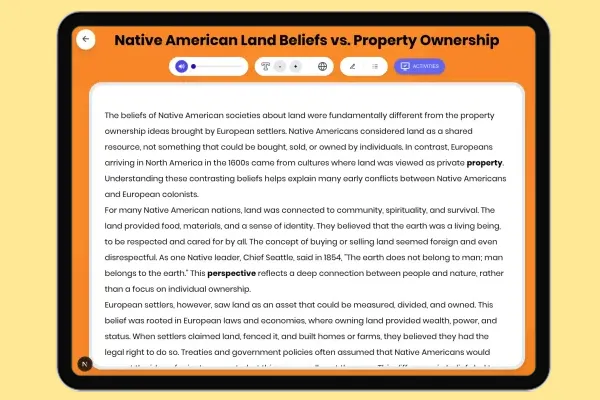
Native vs European Land Views
This passage examines the contrasting beliefs about land between Native American societies and European settlers, highli...
D2.HIS.2.3-5D2.HIS.3.3-5RI.4.3RI.4.4
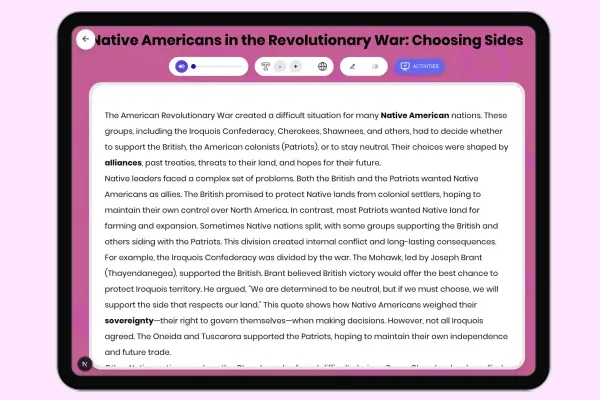
Native Americans in Revolutionary War
This engaging U.S. history reading passage explores how Native American nations made difficult decisions during the Amer...
D2.HIS.2.3-5D2.HIS.3.3-5RI.4.3RI.4.4
Black History Month Word Search
RF.4.3RF.5.3L.4.4L.5.4
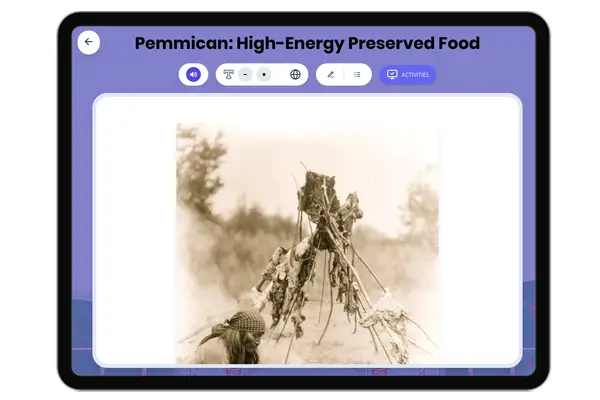
Pemmican: High-Energy Preserved Food
This engaging history reading passage explores the invention and significance of pemmican, a high-energy preserved food ...
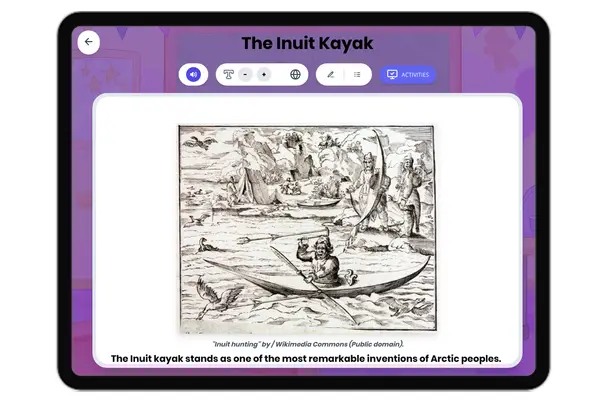
The Inuit Kayak
This passage examines the history and significance of the Inuit kayak, an advanced invention developed by Arctic peoples...
American History Word Search
Word search on American History Word Search! Vocabulary practice aligned to Common Core standards!