The Cherokee Nation: History and Culture — Reading Comprehension
Rate this
Premium Resource
Present
Present in classroom. No work saved
Assign
Classroom with student accounts, Track progress
Quick Play
No student accounts, assign with a link
Grades
3
4
5
Standards
D2.HIS.2.3-5
D2.HIS.14.3-5RI.4.3
RI.4.4
RI.4.10
PRINT+DIGITAL RESOURCE
This learning resource is available in interactive and printable formats. The interactive worksheet can be played online and assigned to students. The Printable PDF version can be downloaded and printed for completion by hand.
This reading passage explores the rich history and culture of the Cherokee Nation, one of the largest Native American tribes in the United States. Students will follow the story of the Cherokee people, their traditional ways of life, the challenges they faced, and their journey along the Trail of Tears. The passage highlights the bravery and unity of the Cherokee as they adapted to changes and fought to keep their community strong. Key vocabulary is included to build literacy skills. The passage aligns with the C3 Framework for Social Studies and Common Core ELA standards. This resource also includes a read aloud audio, Spanish translation, a multiple-choice quiz, writing activities, and a timeline of major events. It is designed to support students' historical understanding and literacy development.
CONTENT PREVIEW
Expand content preview
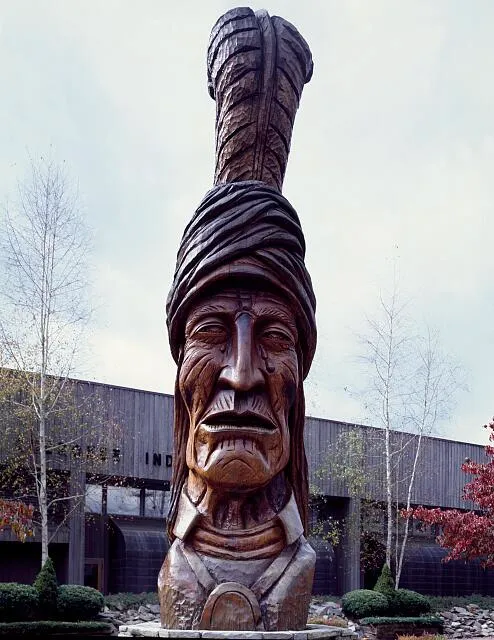
Statue of the Cherokee leader Sequoyah, Cherokee, North Carolina Source: Library of Congress - Highsmith, Carol M., 1946-
The Cherokee Nation was one of the largest Native American tribes in the Southeastern United States. The Cherokee lived in the woodlands of Georgia, North Carolina, Tennessee, and Alabama. Their towns had homes made of wood and clay, with gardens for corn, beans, and squash. The Cherokee created a strong government and held meetings in council houses to make important decisions.
In the early 1800s, the Cherokee faced many challenges. More settlers arrived and wanted Cherokee land. The Cherokee knew they had to work together to protect their people and culture. They wanted to show others that they were a smart and organized nation. To do this, they built schools to teach their children reading, writing, and math. They also started a newspaper called the Cherokee Phoenix to share news in both Cherokee and English.
One of the most important changes was the creation of a written language. Sequoyah, a Cherokee man who was a silversmith, saw that other people used writing to share ideas and stories. He wanted the Cherokee to have their own way to write. Sequoyah worked for twelve years to invent a system of symbols for the Cherokee language. This system is called a syllabary. Each symbol stands for a sound in the Cherokee language.
With the new syllabary, Cherokee people could read and write in their own language for the first time. Children learned to read quickly, and adults used the syllabary to write letters, laws, and stories. The Cherokee Nation became one of the first Native American groups to have a written language and a newspaper.
The Cherokee used their new skills to keep their culture strong. They worked together to protect their land and way of life. Their government, schools, and written language helped them face many challenges as a united people.
Interesting Fact: Sequoyah was the only person in history to create a complete writing system for a previously unwritten language on his own.
Who created the Cherokee syllabary?
SequoyahTecumsehSitting BullGeronimo
What is a syllabary?
A set of symbols for soundsA Cherokee leaderA type of houseA kind of garden
Where did the Cherokee live?
Southeastern United StatesWestern desertsNorthern forestsPacific coast
Why did the Cherokee create schools?
To teach reading and writingTo build housesTo grow foodTo travel
How did Sequoyah help his people?
He invented a writing systemHe built housesHe grew foodHe made laws
What was the effect of the syllabary?
Cherokee could read and writeCherokee moved awayCherokee lost their cultureCherokee became farmers
The Cherokee Phoenix was a newspaper. True or false?
TrueFalse
What does 'council' mean?
A group that makes decisionsA type of foodA kind of houseA farming tool
Perfect For:
👩🏫 Teachers
• Reading comprehension practice
• Auto-graded assessments
• Literacy skill development
👨👩👧👦 Parents
• Reading practice at home
• Comprehension improvement
• Educational reading time
🏠 Homeschoolers
• Reading curriculum support
• Independent reading practice
• Progress monitoring
Reading Features:
📖
Reading Passage
Engaging fiction or nonfiction text
❓
Comprehension Quiz
Auto-graded questions
📊
Instant Feedback
Immediate results and scoring
📄
Printable Version
Download for offline reading
🔊
Read Aloud
Voice-over with word highlighting
Reviews & Ratings
No reviews yet. Be the first to share your experience!
Related Content
Native American Tribes Across America
This engaging history reading passage introduces students to Native American tribes across America, focusing on their da...
D2.HIS.1.3-5D2.HIS.2.3-5RI.4.1RI.4.2
Teepees: Homes on the Great Plains
This engaging history reading passage introduces students to teepees, the unique homes of Native American tribes on the ...
D2.HIS.2.3-5D2.HIS.14.3-5RI.4.1RI.4.2RI.4.4
Traditional Native American Clothing
This engaging history passage explores traditional Native American clothing and how it reflected the environment, values...
D2.HIS.2.3-5D2.HIS.3.3-5RI.4.3RI.4.4
The Iroquois Confederacy: A System of Peace
This engaging U.S. History reading passage introduces students to the Iroquois Confederacy, a powerful alliance of Nativ...
D2.HIS.2.3-5D2.HIS.3.3-5RI.4.3RI.4.4
The Sioux: Warriors and Tribal Leaders
This history reading passage explores the Sioux Nation, focusing on their roles as warriors and tribal leaders. Students...
D2.HIS.1.3-5D2.HIS.2.3-5RI.4.1RI.4.3
Native American Respect for Nature
This engaging history reading passage explores Native American respect for nature, emphasizing the close relationship be...
D2.HIS.2.3-5D2.HIS.3.3-5RI.4.3RI.4.4
Jamestown: The First Permanent English Colony
This engaging history passage explores the founding of Jamestown, the first permanent English colony in America. Aligned...
D2.HIS.1.3-5D2.HIS.2.3-5RI.4.3RI.4.4
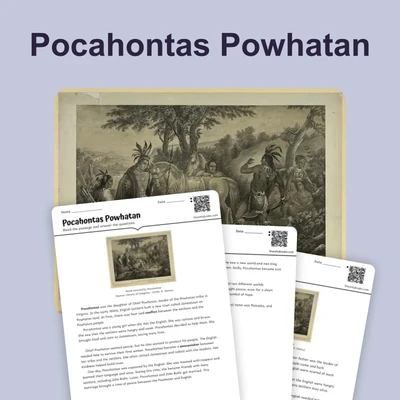
Pocahontas and the Powhatan People
This engaging reading passage explores the life of Pocahontas and the Powhatan people and their important role in early ...
D2.HIS.1.3-5D2.HIS.2.3-5RI.4.1RI.4.3
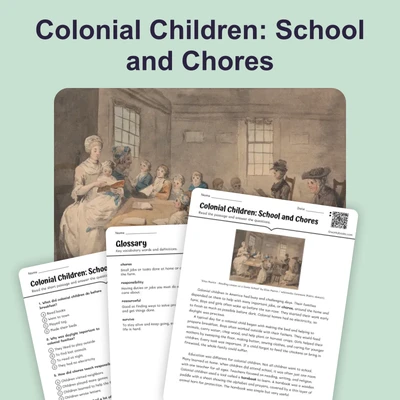
Colonial Children: School and Chores
This reading passage explores the daily lives of colonial children, focusing on their experiences at school and their ma...
D2.HIS.2.3-5D2.HIS.3.3-5RI.4.1RI.4.2RI.4.4
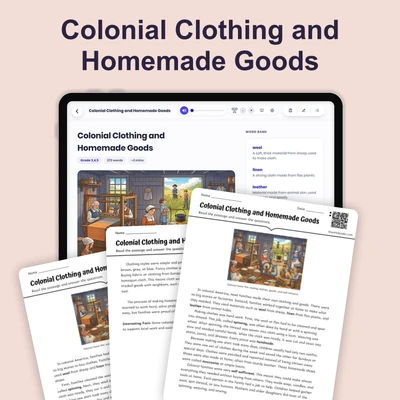
Colonial Clothing and Homemade Goods
This engaging U.S. history passage explores the daily life of early American colonists with a focus on colonial clothing...
D2.HIS.2.3-5RI.4.3RI.4.4
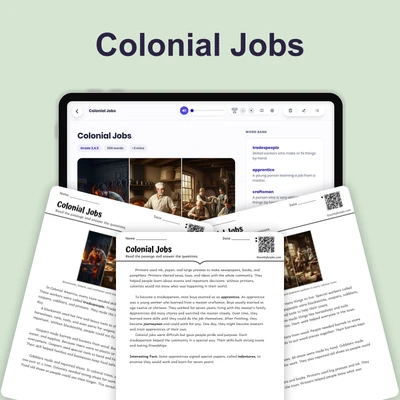
Colonial Jobs: Blacksmiths, Bakers, and Craftsmen
This engaging history reading passage explores the vital roles of blacksmiths, bakers, and craftsmen in colonial America...
D2.HIS.2.3-5D2.HIS.3.3-5RI.4.3RI.4.4
Colonial Towns and Village Life
This engaging history reading passage explores the daily life, work, and unity found in colonial towns and villages. Ali...
D2.HIS.1.3-5D2.HIS.2.3-5RI.4.3RI.4.4
Colonial Trade with England and Africa
This history reading passage explores colonial trade between the American colonies, England, and Africa, focusing on the...
D2.HIS.2.3-5D2.HIS.14.3-5RI.4.3RI.4.4
Benjamin Franklin: Printer, Inventor, and Leader
This history reading passage explores the life and achievements of Benjamin Franklin, one of America's most important ea...
D2.HIS.2.3-5D2.HIS.3.3-5RI.4.1RI.4.3
George Washington Leads the Army
This engaging history reading passage explores how George Washington bravely led the Continental Army during the America...
D2.HIS.1.3-5D2.HIS.2.3-5RI.4.3RI.4.4
Women and Children During the Revolutionary War
This reading passage explores the important roles women and children played during the Revolutionary War. Students will ...
D2.HIS.2.3-5RI.4.3RI.5.3
African Americans Fight for Freedom
This educational passage explores the brave and inspiring story of how African Americans fought for freedom in the Unite...
D2.HIS.2.3-5D2.HIS.3.3-5RI.4.3RI.4.4
The Battle of Yorktown Ends War
This engaging U.S. history reading passage explores the Battle of Yorktown, a key event that ended the American Revoluti...
D2.HIS.1.3-5D2.HIS.2.3-5RI.4.1RI.4.3
Loyalists vs. Patriots: Divided Families
This engaging U.S. history reading passage explores the division between Loyalists and Patriots during the American Revo...