The Internet Connects the World — Reading Comprehension
Rate this|
1
Present
Present in classroom. No work saved
Assign
Classroom with student accounts, Track progress
Quick Play
No student accounts, assign with a link
Grades
3
4
5
Standards
D2.HIS.1-3.3-5
RI.4.1
RI.4.3
RI.4.4
RI.4.10
PRINT+DIGITAL RESOURCE
This learning resource is available in interactive and printable formats. The interactive worksheet can be played online and assigned to students. The Printable PDF version can be downloaded and printed for completion by hand.
This reading passage explores the fascinating story of how the Internet connects people across the globe and changed the way we communicate, learn, and solve problems. Aligned with the C3 Framework and Common Core standards, the passage presents a clear, chronological narrative that highlights key events, important figures, and the cause-and-effect relationships behind the creation and growth of the Internet. Students will learn how brave problem-solvers worked together to build a network that now links countries and cultures. The passage includes a glossary of key vocabulary words, a Spanish translation, and an engaging multiple-choice quiz. A writing activity encourages students to analyze historical events, connect past and present, and think critically about cause and effect. With read aloud audio and a relevant public domain image, this resource helps students build literacy and historical understanding while meeting educational standards for history and ELA.
CONTENT PREVIEW
Expand content preview
The Internet Revolution began in the late 1900s and changed the world in amazing ways. Before the internet, people had to send letters or make phone calls to talk to each other. Finding information meant going to the library or reading books. Everything changed when computers began to connect through the internet.
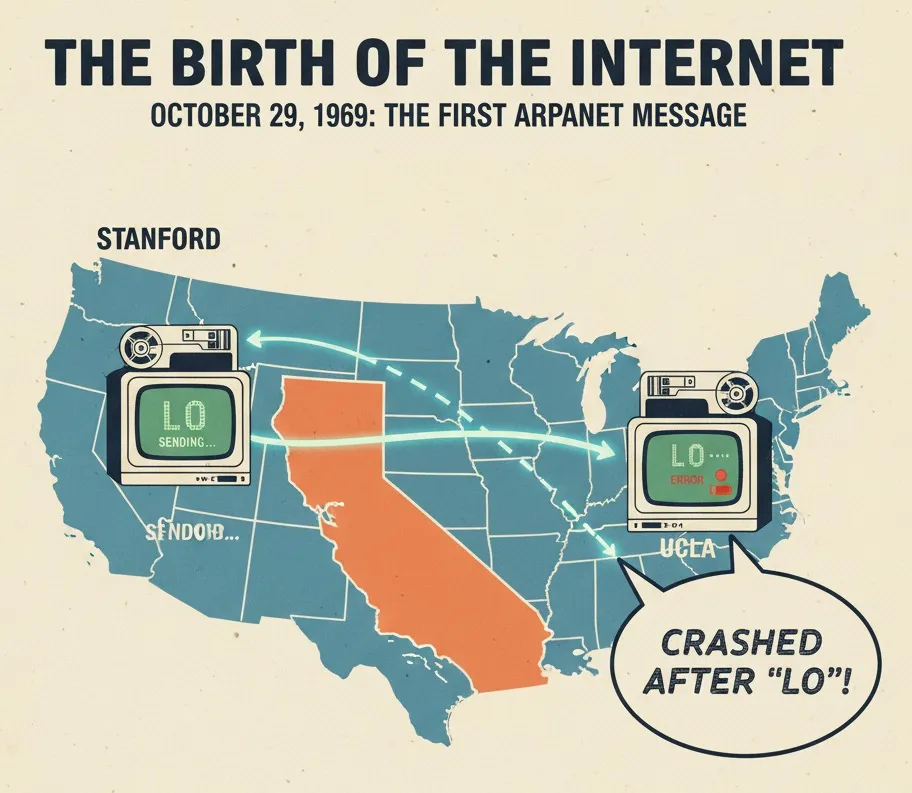
In 1969, the United States government helped start a project called ARPANET. This early network let computers send messages to each other. Scientists and students could share ideas much faster. Over time, more computers joined the network. By the 1980s and 1990s, the internet grew quickly, connecting schools, businesses, and homes.
One big step was the invention of the World Wide Web in 1989 by Tim Berners-Lee. The World Wide Web made it easy for people to visit websites and find information. Soon, people could send emails, shop online, and watch videos from home. The internet also made it possible to talk to someone on the other side of the world in seconds.
The internet changed how people learn and work. Teachers can use websites to help students learn new things. Workers can use digital communication to share ideas with others far away. Friends and families use video calls and messages to stay close, even if they are far apart.
Shopping also changed. People can buy clothes, books, and even groceries online. Businesses can share their products with customers everywhere. News can travel around the world in just a few moments. Many people now use smartphones to connect to the internet from almost anywhere.
The Internet Revolution made life faster and helped people feel more connected. It opened up new ways to learn, work, and share. Today, the internet is one of the most important inventions since electricity.
Interesting Fact: The first message ever sent over the internet in 1969 was the word “LOGIN,” but the system crashed after just two letters were typed!
When did the Internet Revolution begin?
Late 1900sEarly 1800s19852020
Who invented the World Wide Web?
Tim Berners-LeeThomas EdisonBill GatesSteve Jobs
What was ARPANET?
First computer networkA smartphoneA video gameA type of email
How did the internet change shopping?
People shopped onlineStores closed foreverOnly mail ordersNo change at all
Why is the internet important for learning?
Gives easy access to informationHarder to find factsOnly teachers can use itStops new ideas
What is one effect of digital communication?
People connect fasterSlower messagesNo sharing ideasFewer friends
The first internet message was 'LOGIN.'
TrueFalse
What does 'inventions' mean in the passage?
New things people createOld booksFun gamesFast cars
Perfect For:
👩🏫 Teachers
• Reading comprehension practice
• Auto-graded assessments
• Literacy skill development
👨👩👧👦 Parents
• Reading practice at home
• Comprehension improvement
• Educational reading time
🏠 Homeschoolers
• Reading curriculum support
• Independent reading practice
• Progress monitoring
Reading Features:
📖
Reading Passage
Engaging fiction or nonfiction text
❓
Comprehension Quiz
Auto-graded questions
📊
Instant Feedback
Immediate results and scoring
📄
Printable Version
Download for offline reading
🔊
Read Aloud
Voice-over with word highlighting
Reviews & Ratings
No reviews yet. Be the first to share your experience!
Related Content
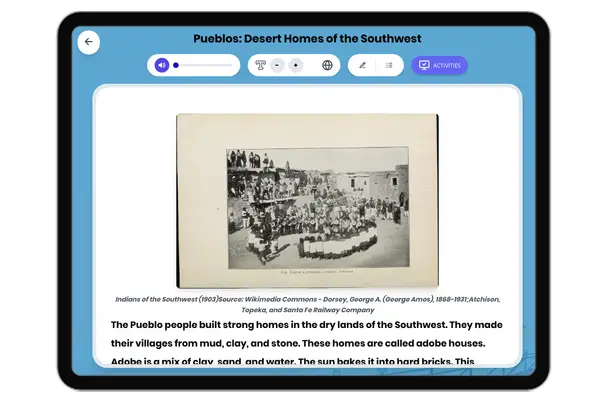
Pueblos: Desert Homes of the Southwest
This engaging U.S. history reading passage explores the Pueblos, the unique desert homes of the Southwest. Students will...
D2.HIS.1-3.3-5RI.4.1RI.4.2RI.4.4
The Shot Heard Round the World
This engaging history reading passage explores the story of the Shot Heard Round the World, a key event that started the...
D2.HIS.1-3.3-5RI.4.1RI.4.3RI.4.4
Creating the American Flag
This engaging reading passage explores the creation of the American flag, highlighting its importance as a national symb...
D2.HIS.1-3.3-5RI.4.3RI.4.4W.4.2
The Liberty Bell Rings for Freedom
This engaging history reading passage, 'The Liberty Bell Rings for Freedom,' introduces students to the story and signif...
D2.HIS.1-3.3-5RI.4.1RI.4.4RI.4.5
Building Washington D.C., Our Capital
This history reading passage explores the building of Washington D.C., the capital of the United States. Students will l...
D2.HIS.1-3.3-5D2.HIS.14.3-5RI.4.3RI.4.4
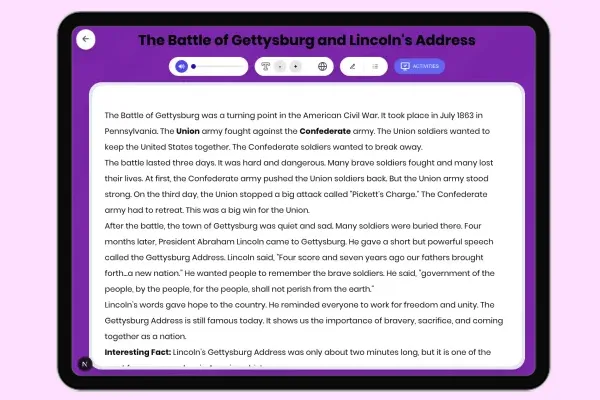
The Battle of Gettysburg and Lincoln's Address
This engaging U.S. History reading passage explores the Battle of Gettysburg and Abraham Lincoln's famous Gettysburg Add...
D2.HIS.1-3.3-5RI.4.3RI.4.4W.4.2
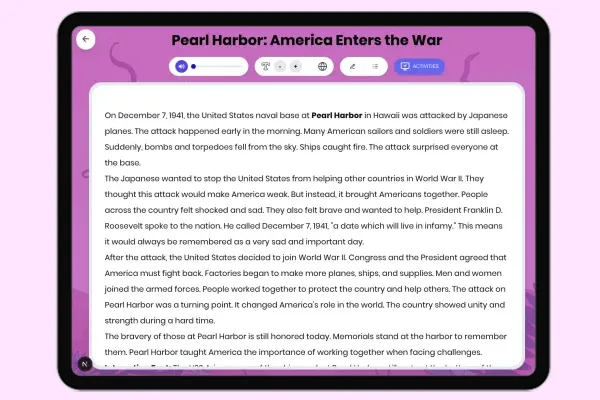
Pearl Harbor: America Enters the War
This engaging reading passage introduces students to the historic event of Pearl Harbor and America’s entry into World W...
D2.HIS.1-3.3-5RI.4.3RI.5.2
Snorkeling & Scuba Diving
RI.2.2RI.2.6RI.2.10RF.2.4.A
Polar Bears and Climate
This informational text on polar bears is a great way to practice reading comprehension. Students will read the passage ...
RI.4.1W.4.72-LS4-1RF.4.4
Climate and Water Cycle
W.4.2.ARI.4.4RI.4.1
Earthquakes and Infrastructure
Get this worksheet about the effects of earthquakes on infrastructure. The worksheet includes an informational passage t...
W.4.7RI.4.1ESS3B
The Rubik's Cube
RI.2.2RI.2.6RI.2.10RF.2.4.A
Understanding Climate Action Context Clues
Understanding Climate Action" worksheet, aligned with CCS L.4.4.A and NGSS. This resource introduces key concepts such a...
L.4.4.ARI.4.1RI.4.4
Earthquake and buildings
Download this worksheet on the impact of earthquakes on buildings. The informational text included in this worksheet is ...
RI.4.1ESS3BW.4.7RF.4.4
How Do Scientists Study Past Climates?
Students will analyze how tools like ice cores and tree rings provide scientific evidence about Earth’s historical clima...
RI.4.1RI.4.2RI.4.3.4.RI.4.74-ESS2-2
Earth Day and Types of Pollution
Earth Day is coming! Get ready to learn about pollution and test your knowledge. Click for a free reading passage and qu...
RI.4.1RI.4.2ESS3.CESS3.A
Earth Day and Green Initiatives
Celebrate Earth Day with this fun and educational activity! Students will begin by reading a short passage that explains...
RI.4.1RI.4.2ESS3.CESS3.A
Sunspots and Solar Flares
This quiz is designed to test your understanding of the fascinating phenomena of sunspots and solar flares, as described...
RI.4.1RI.4.4RI.5.1ESS1.A
How might climate change affect animals?
This passage explains to children how climate change impacts animal life. It uses specific examples like polar bears los...