Building Washington D.C., Our Capital — Reading Comprehension
Rate this|
2
Present
Present in classroom. No work saved
Assign
Classroom with student accounts, Track progress
Quick Play
No student accounts, assign with a link
Grades
3
4
5
Standards
D2.HIS.1-3.3-5
D2.HIS.14.3-5
RI.4.3
RI.4.4
RI.4.7
W.4.2
PRINT+DIGITAL RESOURCE
This learning resource is available in interactive and printable formats. The interactive worksheet can be played online and assigned to students. The Printable PDF version can be downloaded and printed for completion by hand.
This history reading passage explores the building of Washington D.C., the capital of the United States. Students will learn how leaders like George Washington and Pierre L'Enfant worked together to design and build the city. The passage highlights key decisions, teamwork, and challenges faced during the process. It provides a clear sequence of historical events, making it easy for students to understand cause and effect. The quiz and writing activities reinforce reading comprehension, vocabulary, and analysis skills. A glossary of important terms helps build language skills. A timeline shows the major steps in creating the capital. Aligned with the C3 Framework and Common Core State Standards, this passage also features read aloud audio and a full Spanish translation, making it accessible for diverse learners.
CONTENT PREVIEW
Expand content preview
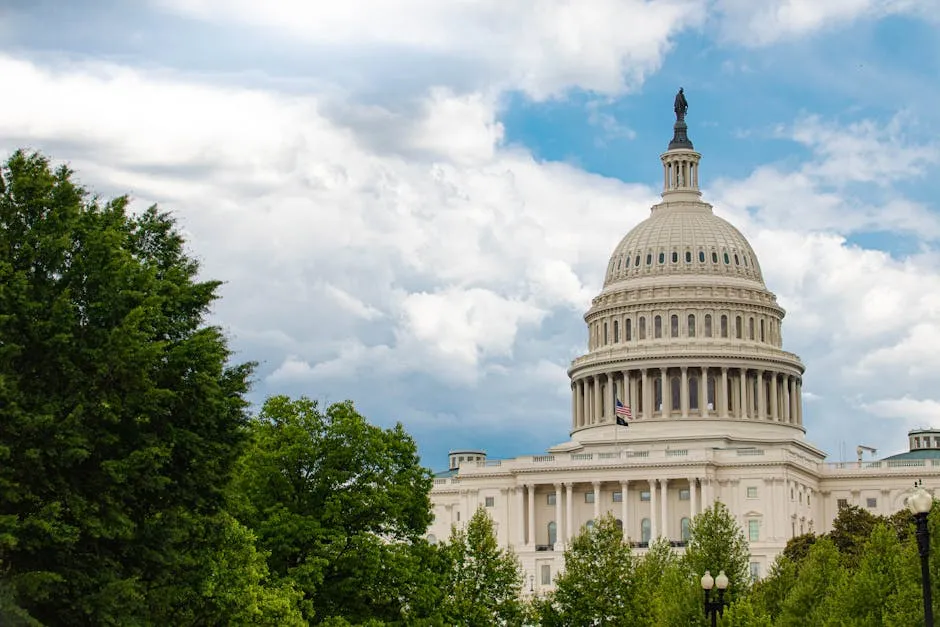
Iconic view of the U.S. Capitol building surrounded by lush trees in Washington D.C. Source: Pexels - Paula Nardini
The United States decided to build a new capital city after the American Revolution. The leaders wanted a city that belonged to all the states, not just one. They chose land along the Potomac River, halfway between the North and South. This was a big decision because the land was mostly swampy and empty.
In 1790, President George Washington picked the exact spot for the new city. The plan was to make a place where the government could meet and work together. This new capital would show that the country was united.
President Washington asked a French engineer, Pierre L'Enfant, to design the city. L'Enfant used wide streets and open spaces. He made plans for important buildings like the Capitol and the President’s House (now called the White House). His design included many monuments and parks.
The builders had to work very hard. The land was muddy, hot, and full of bugs. Workers drained the swamps, cut down trees, and built roads. It was a huge project. Many people from different backgrounds helped build the city. Some were free workers, and sadly, some were enslaved people.
Slowly, Washington D.C. began to take shape. By 1800, the government moved in. The President and Congress started working in the new city. At first, there were not many houses or stores. But over time, more people came to live and work there.
Washington D.C. became a symbol of the whole country. The city’s design, with its grand buildings and monuments, reminded people of the nation’s goals. It stood for unity, hope, and the idea that people from all states could work together.
Today, Washington D.C. is filled with important monuments, museums, and government buildings. It is a place where history is made every day, and it continues to bring Americans together.
Interesting Fact: The streets of Washington D.C. were designed in a grid pattern, with the Capitol building at the center.
Why did leaders want a new city?
To unite all statesIt was the biggest cityIt was easy to buildIt was near the ocean
Who designed Washington D.C.?
Pierre L'EnfantGeorge WashingtonThomas JeffersonJohn Adams
Where is Washington D.C. located?
Potomac RiverMississippi RiverGreat LakesHudson River
Why was building the city difficult?
The land was swampyIt was very coldThere were no workersIt was already a city
How did the city show unity?
It belonged to all statesOnly one state owned itIt was a small villageIt was made of wood
What was the President’s House later called?
White HouseThe PentagonLincoln MemorialSupreme Court
Washington D.C. was built after the Revolution. True or false?
TrueFalse
What does 'monument' mean in the passage?
Building to honor people or eventsA type of foodA mapA river
Perfect For:
👩🏫 Teachers
• Reading comprehension practice
• Auto-graded assessments
• Literacy skill development
👨👩👧👦 Parents
• Reading practice at home
• Comprehension improvement
• Educational reading time
🏠 Homeschoolers
• Reading curriculum support
• Independent reading practice
• Progress monitoring
Reading Features:
📖
Reading Passage
Engaging fiction or nonfiction text
❓
Comprehension Quiz
Auto-graded questions
📊
Instant Feedback
Immediate results and scoring
📄
Printable Version
Download for offline reading
🔊
Read Aloud
Voice-over with word highlighting
Reviews & Ratings
No reviews yet. Be the first to share your experience!
Related Content
Pueblos: Desert Homes of the Southwest
This engaging U.S. history reading passage explores the Pueblos, the unique desert homes of the Southwest. Students will...
D2.HIS.1-3.3-5RI.4.1RI.4.2RI.4.4
The Shot Heard Round the World
This engaging history reading passage explores the story of the Shot Heard Round the World, a key event that started the...
D2.HIS.1-3.3-5RI.4.1RI.4.3RI.4.4
Creating the American Flag
This engaging reading passage explores the creation of the American flag, highlighting its importance as a national symb...
D2.HIS.1-3.3-5RI.4.3RI.4.4W.4.2
The Liberty Bell Rings for Freedom
This engaging history reading passage, 'The Liberty Bell Rings for Freedom,' introduces students to the story and signif...
D2.HIS.1-3.3-5RI.4.1RI.4.4RI.4.5
The Battle of Gettysburg and Lincoln's Address
This engaging U.S. History reading passage explores the Battle of Gettysburg and Abraham Lincoln's famous Gettysburg Add...
D2.HIS.1-3.3-5RI.4.3RI.4.4W.4.2
Pearl Harbor: America Enters the War
This engaging reading passage introduces students to the historic event of Pearl Harbor and America’s entry into World W...
D2.HIS.1-3.3-5RI.4.3RI.5.2
The Internet Connects the World
This reading passage explores the fascinating story of how the Internet connects people across the globe and changed the...
D2.HIS.1-3.3-5RI.4.1RI.4.3RI.4.4
Colonial Trade with England and Africa
This history reading passage explores colonial trade between the American colonies, England, and Africa, focusing on the...
D2.HIS.2.3-5D2.HIS.14.3-5RI.4.3RI.4.4
John Adams: Second President
This engaging U.S. history reading passage introduces students to John Adams, the second President of the United States....
D2.HIS.2.3-5D2.HIS.14.3-5RI.4.3RI.4.4
Dolley Madison Saves Washington's Portrait
This engaging history reading passage tells the inspiring story of Dolley Madison and her brave actions during the War o...
D2.HIS.2.3-5D2.HIS.14.3-5RI.4.3RI.4.4
Boomtowns Spring Up Out West
This engaging passage explores the exciting rise of boomtowns in the American West during the 1800s, focusing on the Gol...
D2.HIS.2.3-5D2.HIS.14.3-5RI.4.3RI.4.4
Franklin D. Roosevelt and the New Deal
This engaging history reading passage explores the life and leadership of Franklin D. Roosevelt and his creation of the ...
D2.HIS.2.3-5D2.HIS.14.3-5RI.4.3RI.4.4
Rationing and Life on the Home Front
This history reading passage explores rationing and life on the home front during World War II, focusing on how American...
D2.HIS.2.3-5D2.HIS.14.3-5RI.4.3RI.4.4
D-Day and the End of World War II
This engaging reading passage explores the key events of D-Day and how it helped bring World War II to a close. Students...
D2.HIS.2.3-5D2.HIS.14.3-5RI.4.3RI.4.4
Martin Luther King Jr. and "I Have a Dream"
This engaging history reading passage introduces students to the life and legacy of Martin Luther King Jr., focusing on ...
D2.HIS.2.3-5D2.HIS.14.3-5RI.4.1RI.4.3.
Ruby Bridges and the Little Rock Nine
This engaging history reading passage explores the stories of Ruby Bridges and the Little Rock Nine, two important group...
D2.HIS.2.3-5D2.HIS.14.3-5RI.4.3RI.4.4
Cesar Chavez and Farm Workers' Rights
This engaging history reading passage explores the life and impact of Cesar Chavez, a key leader in the fight for farm w...
D2.HIS.2.3-5D2.HIS.14.3-5RI.4.3RI.4.4
When Mexico Took Over California
This engaging U.S. history reading passage explores the period when Mexico took over California during the era of Westwa...
D2.HIS.2.3-5D2.HIS.3.3-5D2.HIS.14.3-5RI.4.3
Californios Culture
This history reading passage explores the story of the Californios—Spanish and Mexican settlers who shaped California be...