This learning resource is available in interactive and printable formats. The interactive worksheet can be played online and assigned to students. The Printable PDF version can be downloaded and printed for completion by hand.
This passage explores the structure and significance of government and law in the Roman Republic, focusing on how Roman citizens and officials shaped the republic's political system. Students will learn about the Senate, consuls, the Twelve Tables, and the influence of geography and social hierarchy in ancient Rome. The passage incorporates evidence from primary and archaeological sources, cause-and-effect relationships, and the long-term impact of Roman law on later civilizations. Aligned to CA HSS 6.7 and CCSS RI.6.3, this resource includes a glossary, multiple-choice and writing activities, graphic organizers, and a Spanish translation. The passage is designed for middle school students and supports history and ELA standards, providing opportunities for critical analysis, vocabulary development, and historical thinking. Read aloud audio is available for accessibility.
CONTENT PREVIEW
Expand content preview
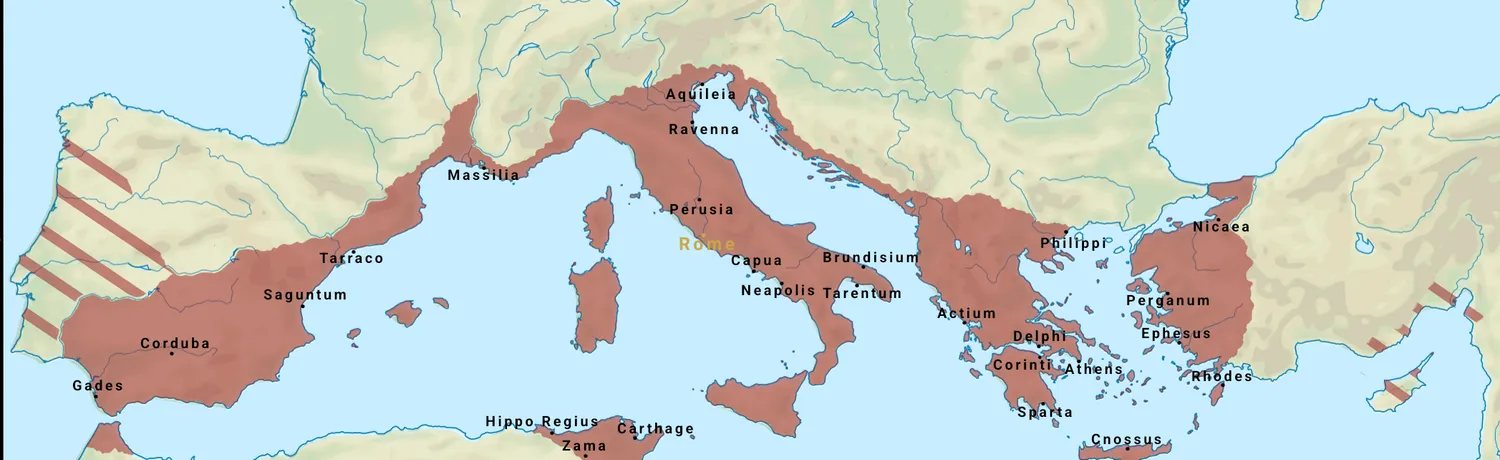
"Roman Republic and its cities in 100 BC" by Portasa Cristian / Wikimedia Commons
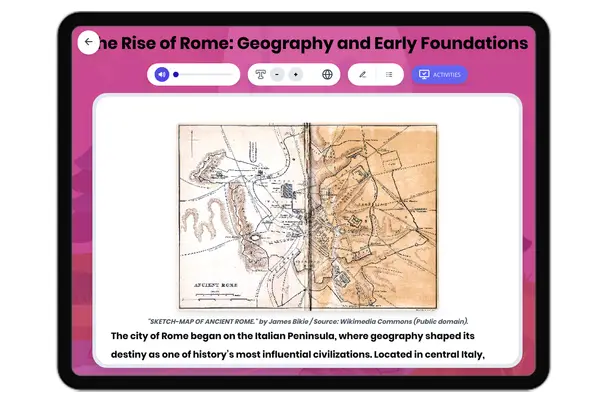
The Roman Republic was a powerful civilization that shaped much of Western government. Located in central Italy, Rome grew from a small city-state on the Tiber River to control a vast territory between 509 BCE and 27 BCE. The Romans developed a complex system of government and law, which influenced societies for centuries.
The Republic’s government was based on a balance of power among different groups. At its heart was the Senate, an assembly of wealthy and influential citizens called patricians. The Senate advised the magistrates and made decisions about war, finances, and foreign policy. Two consuls were elected each year to lead the government and command the army. This system prevented any one leader from gaining too much power. Ordinary citizens, known as plebeians, eventually won the right to elect their own officials called tribunes. Tribunes could veto actions by other officials, protecting the rights of the common people.
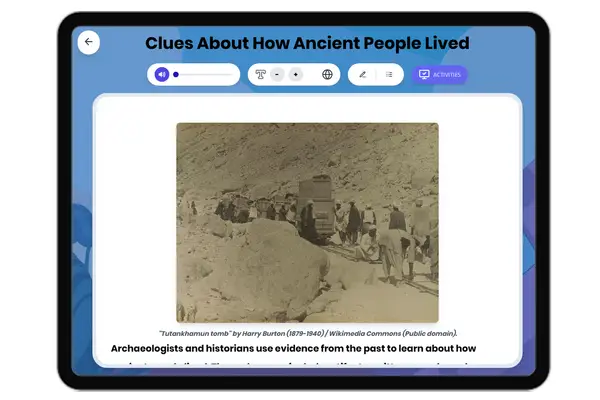
Laws were central to Rome’s success. Around 450 BCE, the Romans created the Twelve Tables, the first written code of laws in Rome. These laws covered property, crime, family, and civil rights. They were carved into bronze tablets and displayed in the forum, so all citizens could know the rules. Archaeologists have found fragments of these tablets, showing that Roman law focused on fairness and order. In a famous case from 384 BCE, the Roman assembly debated whether Marcus Manlius, a hero who saved Rome, should be punished for trying to become king. The assembly used the law to decide his fate, showing how legal processes shaped Roman society.
Geography played a key role in shaping Roman government. Italy’s central location made it easier to control distant regions and trade across the Mediterranean. As Rome expanded, it had to adapt its government and laws to manage new territories and people. The Republic allowed conquered people some rights, but also created a social hierarchy. Patricians held most power, but plebeians slowly gained more rights through protests and reforms. This balance between tradition and change helped the Republic remain stable for centuries.
The Roman Republic’s government and laws became a model for later civilizations, including the United States. Concepts like elected officials, checks and balances, and written laws continue to influence societies today.
Interesting Fact: Did You Know? The word “senate” comes from the Latin word “senex,” which means “old man.” Only older, respected men could serve in the Roman Senate. This study of the Roman Republic connects to the broader theme of how civilizations build systems of government that shape people’s lives and influence the world.
When did the Roman Republic start?
509 BCE450 BCE27 BCE100 CE
What were the Twelve Tables?
Written lawsTemplesMarketsPalaces
Who could serve as Roman senators?
PatriciansSlavesAll citizensWomen
Why were consuls elected each year?
To prevent one leader from ruling too longTo collect taxesTo build templesTo write poetry
How did plebeians protect their rights?
By electing tribunesBy becoming consulsBy invading RomeBy joining the Senate
What did geography help Rome do?
Control land and tradeGrow grapesBuild pyramidsWrite poetry
The Roman Republic ended in 27 BCE. True or false?
TrueFalse
What does 'forum' mean?
Public squareLawyerSoldierKing
Perfect For:
👩🏫 Teachers
• Reading comprehension practice
• Auto-graded assessments
• Literacy skill development
👨👩👧👦 Parents
• Reading practice at home
• Comprehension improvement
• Educational reading time
🏠 Homeschoolers
• Reading curriculum support
• Independent reading practice
• Progress monitoring
Reading Features:
📖
Reading Passage
Engaging fiction or nonfiction text
❓
Comprehension Quiz
Auto-graded questions
📊
Instant Feedback
Immediate results and scoring
📄
Printable Version
Download for offline reading
🔊
Read Aloud
Voice-over with word highlighting
Reviews & Ratings
No reviews yet. Be the first to share your experience!
Related Content
Ancient Law Codes: Hammurabi to Rome
This passage explores how ancient civilizations like Babylon and Rome used law codes to govern people, maintain social o...
Geography and Early Rome
This passage, aligned to HSS 6.7 and CCSS RH.6-8.2, explores the rise of Ancient Rome with a focus on its geographical s...
Rome's Lasting Legacy
This passage explores the profound legacy of Ancient Rome and how its beliefs, innovations, and systems continue to shap...
Evidence in Ancient History
This engaging history reading passage investigates how archaeologists and historians discover clues about how ancient pe...
Livy: Historian of Early Rome
This passage introduces students to Livy, one of Ancient Rome's most significant historians, whose writings help us unde...
Germanic Invasions of Rome
This engaging history reading passage explores the causes and effects of the Germanic tribes’ invasions of the Western R...
Slavery in Ancient Rome and in the Americas
This educational passage examines the history of slavery in two distinct regions and eras: Ancient Rome and Colonial Ame...
Ancient Theocracy
This engaging history reading passage explores the concept of theocracy in ancient civilizations, where priests and reli...
Slavery in Ancient World
This passage explores the complex history of slavery in the ancient world, examining its presence in societies such as M...
Life in the Roman Empire
This rigorous history reading passage explores Life in the Roman Empire, guiding students through the social hierarchy, ...
Ancient Canaan
This educational passage explores the land of Canaan, the historical homeland of the ancient Israelites. Students will l...
Ancient Literature
This passage explores the importance of ancient stories and poems from civilizations such as Greece, India, and Israel. ...
Geography of Ancient Israel
This passage explores the rich geography of Ancient Israel, focusing on how landforms, climate, and natural resources sh...
The Etruscans
This engaging history reading passage explores the vital role of the Etruscans in shaping Ancient Rome. Students will di...
Ancient Writing Systems
This engaging history reading passage explores the origins and evolution of ancient writing systems, including cuneiform...
Ancient Agriculture Farming
This passage explores the transformative impact of farming on ancient societies, examining how the Neolithic Revolution ...
Cincinnatus
This rigorous history reading passage explores the story of Cincinnatus, a Roman farmer who became a dictator in a time ...
Ancient Mathematics
This passage explores the essential role of mathematics in ancient civilizations, including Mesopotamia, Egypt, Greece, ...
Trade Across Ancient India
This history reading passage explores Ancient India's trade networks and their impact on global connections. Students wi...