This learning resource is available in interactive and printable formats. The interactive worksheet can be played online and assigned to students. The Printable PDF version can be downloaded and printed for completion by hand.
This engaging history reading passage explores the concept of theocracy in ancient civilizations, where priests and religious leaders held both spiritual and political power. Students will learn about the rise of religious authority in societies such as Ancient Egypt and Sumer, the role of pharaohs as god-kings, priest-kings of Mesopotamia, and how religious beliefs shaped government decisions. The passage integrates primary source evidence, examines cause-and-effect relationships, and discusses continuity and change over time. Activities challenge students to analyze history like historians, with vocabulary support, a multiple-choice quiz, Spanish translation, and graphic organizers. This resource aligns with CA HSS 6.2.4, 6.2.3, and Common Core RI.6.1, RI.6.4, W.6.2, supporting literacy and critical thinking in the study of ancient civilizations. Read aloud audio and Spanish translations are included for greater accessibility.
CONTENT PREVIEW
Expand content preview
Theocracy influenced laws, social class, and everyday life for thousands of years.
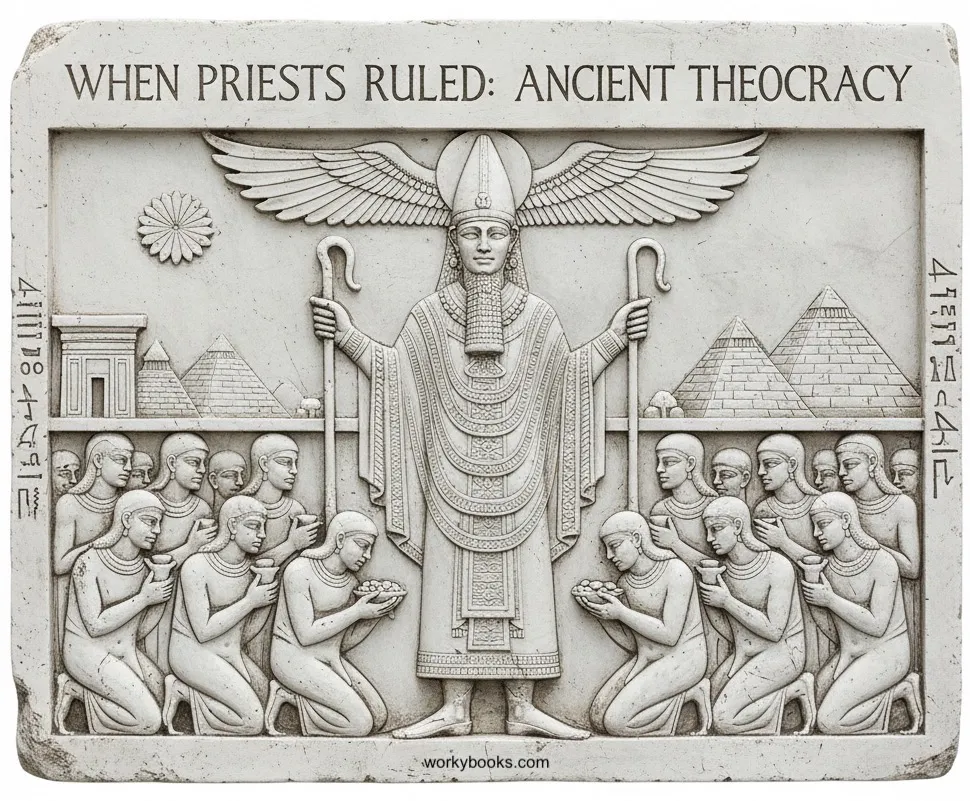
Theocracy is a form of government in which religious leaders rule in the name of a god or gods. In ancient history, many civilizations such as Egypt and Sumer had governments led by priests or rulers who claimed divine authority. These religious leaders held power over both spiritual life and daily government decisions, shaping how people lived, worked, and worshipped.
In Ancient Egypt, the pharaoh was considered both a king and a living god. The pharaoh led ceremonies, made laws, and was believed to communicate with the gods to ensure the Nile River flooded regularly—a key event for farming. Evidence from ancient tombs and temples, like the carvings at Karnak, show priests performing rituals to honor the gods and support the pharaoh’s rule. One famous pharaoh, Ramses II (ruled c. 1279–1213 BCE), built massive temples and statues to emphasize his divine connection. Egyptian society was structured around religious festivals, and priests controlled land, wealth, and education. The priesthood played a vital role in interpreting omens and making decisions about war or peace.
Mesopotamia, located between the Tigris and Euphrates rivers, also developed theocratic governments. In Sumerian city-states like Ur and Uruk (c. 3500–2000 BCE), priest-kings (called "ensi") acted as both governors and chief priests. Archaeological records, such as clay tablets and the Ziggurat of Ur, reveal that priests managed irrigation, collected taxes, and organized building projects. The people believed gods decided the fate of their city, and leaders had to please the gods through offerings and rituals. When disasters struck, like floods or invasions, the population looked to priests for guidance, reinforcing their authority.
The theocratic system had both strengths and weaknesses. Religious unity helped maintain order and gave rulers legitimacy. However, conflicts sometimes arose if people questioned the priests’ power or if different religious groups competed. Over time, some regions shifted away from priestly rule. For example, in ancient Israel, the establishment of kings like Saul and David marked a move from priest-led to monarch-led government, though religion remained influential.
The rule of priests and religious leaders in ancient civilizations shows how beliefs shaped politics, society, and even geography. Theocracy influenced laws, social class, and everyday life for thousands of years. Understanding ancient theocracy helps us see how spiritual ideas can affect the structure of governments and the lives of ordinary people throughout history.
Interesting Fact: Priests in ancient Egypt shaved their entire bodies to stay pure during rituals, a detail found in tomb paintings and ancient writings.
Who was a pharaoh in Egypt?
A king and a godA merchantA farmerA soldier
Which rivers bordered Mesopotamia?
Tigris and EuphratesNile and AmazonYangtze and GangesMississippi and Danube
What did priest-kings do in Sumer?
Led rituals and ruledOnly farmedWere soldiersBuilt roads only
Why did people trust priestly rulers?
Believed they had divine powerThey were the richestThey were the strongestThey traveled far
What could cause conflict in a theocracy?
People questioned priest powerGood harvestsPeaceful timesStrong armies
How did priests affect daily life?
Controlled land, rituals, educationFought wars onlyIgnored the peopleLived far away
Theocracy means rule by religious leaders.
TrueFalse
What does 'legitimacy' mean?
Right to ruleFarming skillTemple sizeRiver flooding
Perfect For:
👩🏫 Teachers
• Reading comprehension practice
• Auto-graded assessments
• Literacy skill development
👨👩👧👦 Parents
• Reading practice at home
• Comprehension improvement
• Educational reading time
🏠 Homeschoolers
• Reading curriculum support
• Independent reading practice
• Progress monitoring
Reading Features:
📖
Reading Passage
Engaging fiction or nonfiction text
❓
Comprehension Quiz
Auto-graded questions
📊
Instant Feedback
Immediate results and scoring
📄
Printable Version
Download for offline reading
🔊
Read Aloud
Voice-over with word highlighting
Reviews & Ratings
No reviews yet. Be the first to share your experience!
Related Content
Ancient Civilizations and the Environment
This engaging history reading passage explores how ancient civilizations such as Mesopotamia, Egypt, and the Maya adapte...
Gender Roles in Ancient Civilizations
This engaging history reading passage explores the roles of men and women in various ancient civilizations, including Me...
Writing Prompts Ancient Civilizations
Step into the shoes of an archaeologist with this engaging worksheet focused on ancient civilizations. Students will be ...
W.5.2.A-2W.5.1.CW.5.1.D
Power and Authority in Ancient Civilizations
This passage explores the roles of men in positions of power within ancient civilizations, focusing on their authority i...
Ancient Monarchy
This reading passage explores the concept of monarchy in ancient civilizations, focusing on the origins, structure, and ...
Evidence in Ancient History
This engaging history reading passage investigates how archaeologists and historians discover clues about how ancient pe...
Ancient Mathematics
This passage explores the essential role of mathematics in ancient civilizations, including Mesopotamia, Egypt, Greece, ...
Ancient Canaan
This educational passage explores the land of Canaan, the historical homeland of the ancient Israelites. Students will l...
Ancient Money Barter
This passage explores the fascinating evolution from barter to the earliest coins in ancient civilizations, focusing on ...
Ancient Science and Medicine
This comprehensive reading passage explores the development of science and medicine in ancient civilizations, including ...
Ancient Literature
This passage explores the importance of ancient stories and poems from civilizations such as Greece, India, and Israel. ...
Ancient Agriculture Farming
This passage explores the transformative impact of farming on ancient societies, examining how the Neolithic Revolution ...
Ancient Writing Systems
This engaging history reading passage explores the origins and evolution of ancient writing systems, including cuneiform...
Geography of Ancient Israel
This passage explores the rich geography of Ancient Israel, focusing on how landforms, climate, and natural resources sh...
Slavery Across Civilizations
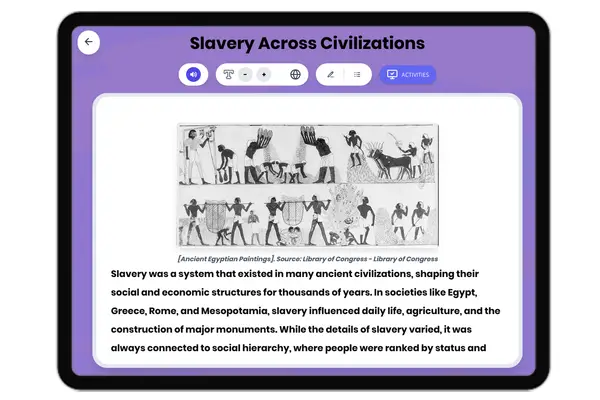
This detailed history reading passage explores the role and impact of slavery across several ancient civilizations, incl...
Social Classes in Ancient Societies
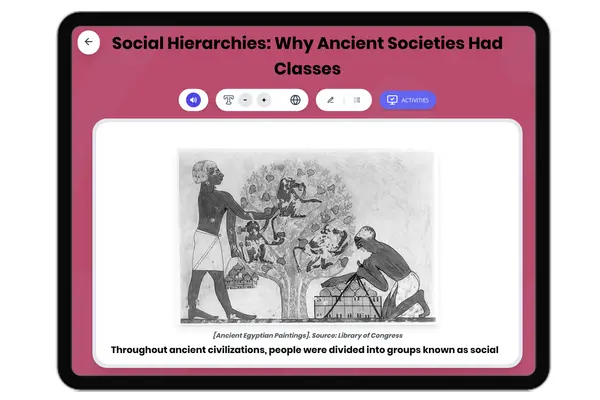
This passage explores the concept of social hierarchies in ancient civilizations, focusing on why societies such as Meso...
Social structures in Ancient World
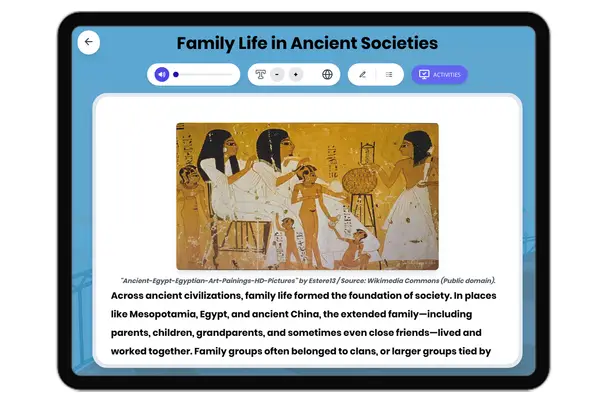
This passage explores the organization and significance of family life in ancient societies, focusing on how extended fa...
Polytheism and Monotheism in Ancient Times
This passage explores the religious beliefs of ancient civilizations, focusing on the differences and similarities betwe...
Women in Ancient Societies
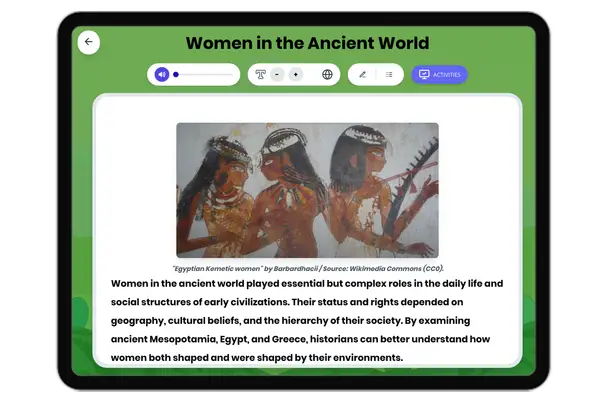
This reading passage explores the complex roles of women in the ancient world, focusing on civilizations such as Mesopot...