This learning resource is available in interactive and printable formats. The interactive worksheet can be played online and assigned to students. The Printable PDF version can be downloaded and printed for completion by hand.
This U.S. History reading passage explores the life and inventions of Thomas Edison, one of America's most influential inventors. Students will learn about Edison's major contributions, such as the light bulb, phonograph, and motion pictures, and discover how his ideas helped shape the modern world. The passage uses clear, chronological narrative and simple language to explain Edison's curiosity, problem-solving skills, and the impact of his inventions. Activities include a glossary of key terms, comprehension and writing questions, a timeline of Edison's life, and graphic organizers to support learning. The passage aligns with HSS 5.8.5 and RI.4.2 standards, and includes a read aloud audio and Spanish translation to support all learners. This resource is ideal for building literacy skills and historical knowledge about the Progressive Era in U.S. history.
CONTENT PREVIEW
Expand content preview
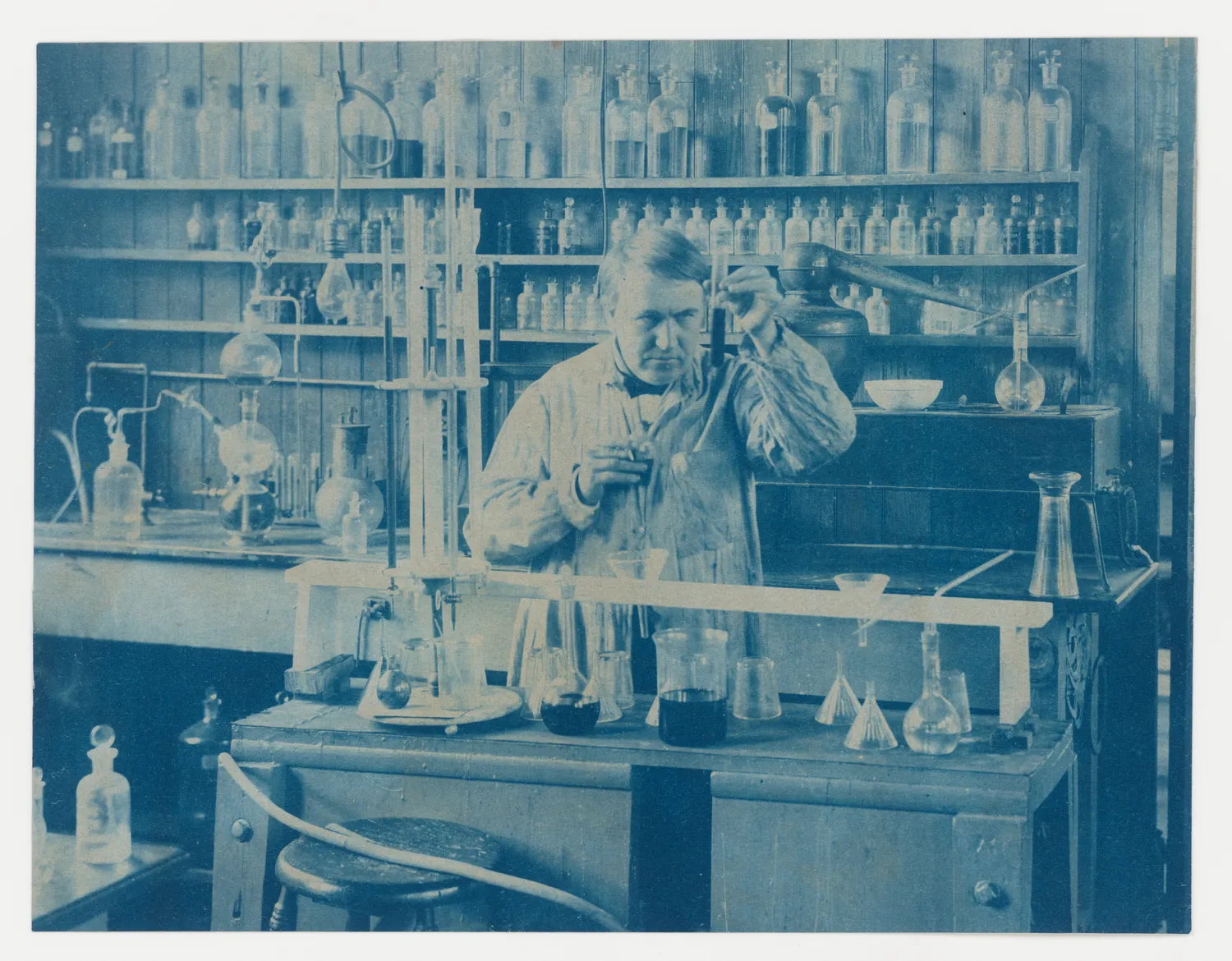
"Thomas Edison" by National Portrait Gallery / Smithsonian
Thomas Edison was one of the most important inventors in American history. Born in 1847 in Ohio, Edison was curious and loved to learn about how things worked. From a young age, he asked many questions and liked to experiment with simple machines and tools.
By the time Edison was a young man, he was already working with telegraphs and learning about electricity. His first big invention was the phonograph. This device could record sound and play it back. Before the phonograph, people could not save music or voices to listen to later. Edison's invention amazed the world and was the first time people could hear recorded sound.
Next, Edison focused on making electric light. People used candles and oil lamps to light their homes, which were dim and sometimes dangerous. Edison wanted to create a safe, bright, and steady light. He spent years testing different materials and designs. In 1879, Edison invented a practical light bulb. His light bulb used a tiny piece of carbon called a filament that glowed when electricity passed through it. This invention changed how people lived and worked, making it possible to light homes, streets, and factories safely.
Edison did not stop there. He built a laboratory in Menlo Park, New Jersey, where he and a team of workers created and tested new inventions. Edison received over 1,000 patents for his ideas. A patent is a special right that lets an inventor control how their invention is used. This allowed Edison to protect his work and earn money from his inventions.
Another important invention was the motion picture camera. With this device, people could record moving images for the first time. Edison's camera made movies possible, so people could watch stories and events on a screen.
Thomas Edison became known as the "Wizard of Menlo Park" because of his many amazing inventions. His hard work and curiosity changed the world. Today, we still use light bulbs, recorded sound, and movies—all because Edison believed that with enough effort, anything could be improved.
Interesting Fact: Edison tested over 6,000 different materials before finding the best filament for his light bulb!
What was Edison's first big invention?
PhonographLight bulbRadioMotion picture camera
What did Edison's light bulb use to glow?
FilamentBatteryWaterMetal tube
Where was Edison's famous laboratory?
Menlo ParkBostonChicagoNew York
Why was the phonograph important?
It recorded and played soundIt made moviesIt made lightIt was a fast train
How did Edison's inventions change homes?
Safer and brighter with electric lightColder with less heatMore crowdedNo changes
What does a patent do?
Protects inventionsMakes a lightRecords soundCleans tools
Edison invented the telephone. (True/False)
TrueFalse
What is a 'laboratory'?
Place for experimentsMovie theaterSchoolStore
Perfect For:
👩🏫 Teachers
• Reading comprehension practice
• Auto-graded assessments
• Literacy skill development
👨👩👧👦 Parents
• Reading practice at home
• Comprehension improvement
• Educational reading time
🏠 Homeschoolers
• Reading curriculum support
• Independent reading practice
• Progress monitoring
Reading Features:
📖
Reading Passage
Engaging fiction or nonfiction text
❓
Comprehension Quiz
Auto-graded questions
📊
Instant Feedback
Immediate results and scoring
📄
Printable Version
Download for offline reading
🔊
Read Aloud
Voice-over with word highlighting
Reviews & Ratings
No reviews yet. Be the first to share your experience!
Related Content
Alexander Graham Bell
This engaging history reading passage explores the life and achievements of Alexander Graham Bell, the inventor of the t...
HSS 5.8.5RI.4.3
Wright Brothers Flight
This reading passage explores the historic achievement of the Wright Brothers, who completed the first successful powere...
HSS 5.8.5RI.4.1
Identify Main Idea Graphic Organizer
This graphic organizer on main idea includes space to write the main idea and three supporting details.
RI.1.2RI.2.2RI.3.2RI.4.2
Main Idea and Suporting Details Graphic Organizer
This graphic organizer on main idea includes space to write the main idea and three supporting details.
RI.1.2RI.2.2RI.3.2RI.4.2
Snorkeling & Scuba Diving
RI.2.2RI.2.6RI.2.10RF.2.4.A
Main Idea and Details Graphic Organizer
This graphic organizer on main idea includes space to write the main idea and three supporting details.
RI.1.2RI.2.2RI.3.2RI.4.2
The Space Needle
Students read a passage about the history and features of Seattle's Space Needle, then answer comprehension questions to...
RI.4.2
The Rubik's Cube
RI.2.2RI.2.6RI.2.10RF.2.4.A
Graphic Organizer for Main Idea
This graphic organizer on main idea includes space to write the main idea and three supporting details.
RI.1.2RI.2.2RI.3.2RI.4.2
Pollination: A Crucial Ecosystem Service
Explore the vital role of pollination beyond plant reproduction, as it sustains ecosystems by ensuring food security, pr...
RI.4.2RI.4.3RI.4.4RI.5.1
The States of Matter: Solid
Discover the differences between solids, liquids and gases by exploring how their particles are arranged and move. This ...
RI.4.2RI.4.3RI.4.4RI.5.1
What is a Simple Machine
Discover the power of simple machines! This informational text explores how basic tools like levers, pulleys and incline...
RI.4.2RI.4.3RI.4.4RI.5.1
How Do Scientists Study Past Climates?
Students will analyze how tools like ice cores and tree rings provide scientific evidence about Earth’s historical clima...
RI.4.1RI.4.2RI.4.3.4.RI.4.74-ESS2-2
The Role of Pollinators in Nature
Learn about the fascinating world of pollinators and discover their crucial role in the reproductive process of flowerin...
RI.4.2RI.4.3RI.4.4RI.5.1
Seed Dispersal: How Plants Travel
Plants may seem stationary, but their seeds have amazing ways to travel! Explore the fascinating world of seed dispersal...
RI.4.2RI.4.3RI.4.4RI.5.1
Earth Day and Types of Pollution
Earth Day is coming! Get ready to learn about pollution and test your knowledge. Click for a free reading passage and qu...
RI.4.1RI.4.2ESS3.CESS3.A
Earth Day and Green Initiatives
Celebrate Earth Day with this fun and educational activity! Students will begin by reading a short passage that explains...
RI.4.1RI.4.2ESS3.CESS3.A
Exploring Space: Rockets and Spacecraft
Space exploration has been one of humanity's greatest achievements, made possible by rockets and spacecraft. Rockets act...
RI.4.4RI.4.2
The Water Cycle
The water cycle describes how water continuously moves through our planet via evaporation, condensation, precipitation, ...