Water Wars: Sharing a Precious Resource — Reading Comprehension
Rate this
Premium Resource
Present
Present in classroom. No work saved
Assign
Classroom with student accounts, Track progress
Quick Play
No student accounts, assign with a link
Grades
3
4
5
Standards
D2.HIS.2.5
D2.HIS.3.5
RI.4.3
RI.4.4
W.4.2
PRINT+DIGITAL RESOURCE
This learning resource is available in interactive and printable formats. The interactive worksheet can be played online and assigned to students. The Printable PDF version can be downloaded and printed for completion by hand.
This engaging U.S. history reading passage explores the story of California’s "Water Wars" and the challenges of sharing water in a growing, diverse state. Students will learn how water became a precious resource as people from many backgrounds moved to California. The passage highlights the impact of immigration and diversity, the building of aqueducts, and how different communities worked together—and sometimes disagreed—to solve problems. Key vocabulary words are included, along with a Spanish translation for learners. Activities include a multiple-choice quiz, writing prompts, a timeline, and graphic organizers to help students analyze cause and effect and understand the importance of water in Modern America. This resource is aligned with C3 Framework and Common Core standards, featuring read aloud audio and supports for English learners. Perfect for building foundational literacy and historical understanding while exploring real events that shaped California and the nation.
CONTENT PREVIEW
Expand content preview
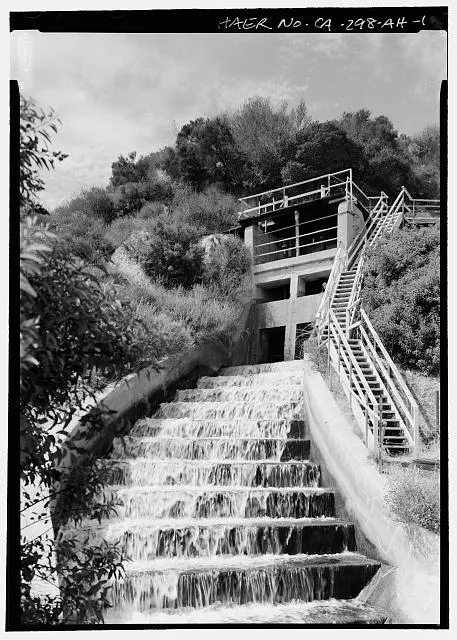
1. View northwest of 1st Aqueduct Cascades portal - Los Angeles Aqueduct, Cascades Structures, Los Angeles, Los Angeles County, CA Source: Library of Congress - Lowe, Jet
California faces a major challenge: water scarcity. This means there is not enough fresh water for everyone who needs it. Drought, which is a long period of very little rain, happens often in California. These dry times make it hard for people, farms, and animals to get the water they need.
For more than 100 years, people have been moving to California. Cities like Los Angeles and San Francisco have grown very large. As more people arrived, they needed more water for drinking, washing, and growing food. Farmers also needed water for crops like fruits, vegetables, and nuts. California’s Central Valley is one of the most important farming areas in the United States. But it is also very dry, so it depends on water from rivers, lakes, and even water brought in from far away through aqueducts.
Managing water in California is a big job. The state built huge dams and long canals to move water from the mountains to farms and cities. The aqueducts are like giant water highways. They carry water across hundreds of miles. This helped farms grow and cities expand, but it also changed the natural environment. Some rivers became smaller, and some wetlands dried up. Fish and other wildlife lost important habitats.
Today, water scarcity is a bigger problem than ever. California’s population keeps growing, but there is less water because of frequent droughts and climate change. People now work hard to save water. This is called conservation. Many cities use water-saving toilets, showers, and sprinklers. Farmers use new ways to water crops without wasting as much. Everyone must think about how to use water carefully.
Resource management is another important idea. This means making plans so there is enough water for people, farms, and nature. Sometimes, people disagree about who should get the water first. The government helps decide how water is shared. Laws protect rivers and wildlife, but also help farmers and cities get the water they need.
Managing water is California’s most critical environmental challenge. By working together, people hope to solve these problems and protect the state’s future.
Interesting Fact: The California Aqueduct is over 400 miles long and delivers water to millions of people and farms every day!
What is water scarcity?
Not enough water for needsToo much rain everywhereWater only in mountainsWater for animals only
Which area is important for farming?
Central ValleyDeath ValleySan DiegoYosemite Park
What do aqueducts do?
Carry water long distancesGrow fruitsStop all droughtsMake water salty
Why did cities and farms grow?
More water moved inDroughts became shorterFewer people cameNo water was needed
How does water scarcity affect animals?
Lose homes and habitatsGet more foodMove to citiesGrow in number
Why is conservation important?
Saves water for everyoneMakes rivers biggerStops all droughtsBuilds more cities
Water conservation means using water carefully. True or false?
TrueFalse
What is a habitat?
Place where animals liveA farming toolA water pipeA law
Perfect For:
👩🏫 Teachers
• Reading comprehension practice
• Auto-graded assessments
• Literacy skill development
👨👩👧👦 Parents
• Reading practice at home
• Comprehension improvement
• Educational reading time
🏠 Homeschoolers
• Reading curriculum support
• Independent reading practice
• Progress monitoring
Reading Features:
📖
Reading Passage
Engaging fiction or nonfiction text
❓
Comprehension Quiz
Auto-graded questions
📊
Instant Feedback
Immediate results and scoring
📄
Printable Version
Download for offline reading
🔊
Read Aloud
Voice-over with word highlighting
Reviews & Ratings
No reviews yet. Be the first to share your experience!
Related Content
1879 California Constitution
This engaging history reading passage introduces students to the 1879 California Constitution and the demand for change ...
D2.HIS.1.5D2.HIS.2.5D2.HIS.3.5RI.5.3
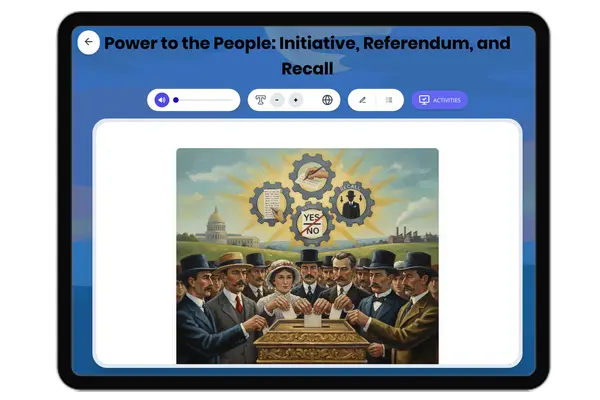
California Direct Democracy
This reading passage introduces students to the important concepts of initiative, referendum, and recall during the Prog...
D2.HIS.2.5D2.HIS.3.5RI.5.3RI.5.4
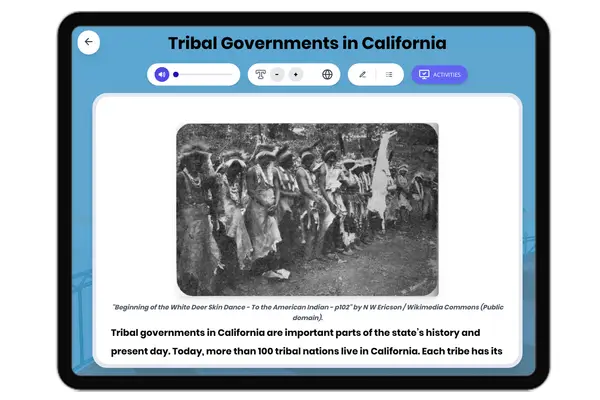
Tribal Governments in California
This reading passage explores the history and structure of tribal governments in California, focusing on their developme...
D2.HIS.2.5D2.HIS.3.5RI.5.3RI.5.4
Informational Text —Healthy Teeth and Gums
RI.4.10RI.4.3RF.4.4RF.4.4.A
Informational Text —Migratory Birds
Engage young minds with this worksheet that delves into the wonders of migratory birds. Learn about their extraordinary ...
RI.4.10RI.4.3RF.4.4RF.4.4.A
Informational Text —All About Dentists
Students read an informational text explaining what dentists do and how they are trained. Aligned to RI.4.3-2
RI.4.10RI.4.3RF.4.4RF.4.4.A
The Role of Pollinators in Nature
Learn about the fascinating world of pollinators and discover their crucial role in the reproductive process of flowerin...
RI.4.2RI.4.3RI.4.4RI.5.1
Pollination: A Crucial Ecosystem Service
Explore the vital role of pollination beyond plant reproduction, as it sustains ecosystems by ensuring food security, pr...
RI.4.2RI.4.3RI.4.4RI.5.1
Seed Dispersal: How Plants Travel
Plants may seem stationary, but their seeds have amazing ways to travel! Explore the fascinating world of seed dispersal...
RI.4.2RI.4.3RI.4.4RI.5.1
The States of Matter: Solid
Discover the differences between solids, liquids and gases by exploring how their particles are arranged and move. This ...
RI.4.2RI.4.3RI.4.4RI.5.1
What is a Simple Machine
Discover the power of simple machines! This informational text explores how basic tools like levers, pulleys and incline...
RI.4.2RI.4.3RI.4.4RI.5.1
Bats in the Night
This informative first-grade reading passage delves into the intriguing world of bats, highlighting their nocturnal natu...
RI.3.1RI.4.4RI.4.3
What is Milky Way
This engaging passage introduces Grade 4-5 students to the Milky Way, our home galaxy. Students will learn that the Milk...
5-ESS1-15-ESS1-2RI.3.1RI.3.4
Andromeda Galaxy
This engaging science passage introduces Grade 4-5 students to the Andromeda Galaxy, our closest large galactic neighbor...
5-ESS1-15-ESS1-2RI.3.1RI.3.4
Malala Yousafzai
This Grade 4-5 science reading passage introduces students to Malala Yousafzai, a courageous young woman from Pakistan w...
NGSSRI.3.1RI.3.2RI.4.3
Understanding Biological Evolution and Diversity
This passage addresses the NGSS standard 3-LS4-2 focusing on biological evolution and the unity and diversity of life. T...
RI.3.3RI.4.3RI.5.33-LS4-2
Early Life Forms and Their Adaptations
This educational passage focuses on early life forms and their basic adaptations, supporting NGSS standard 3-LS4-2 for e...
RI.3.3RI.4.3RI.5.33-LS4-2
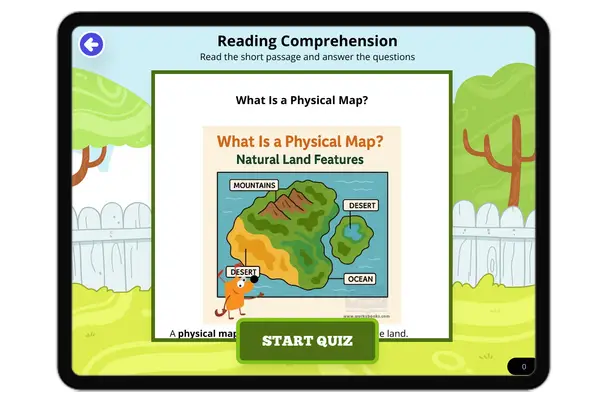
What Is a Physical Map?
This Grade 4-5 science passage introduces students to physical maps, explaining how these maps display natural features ...
5-ESS2-1RI.3.1RI.3.4RI.4.3
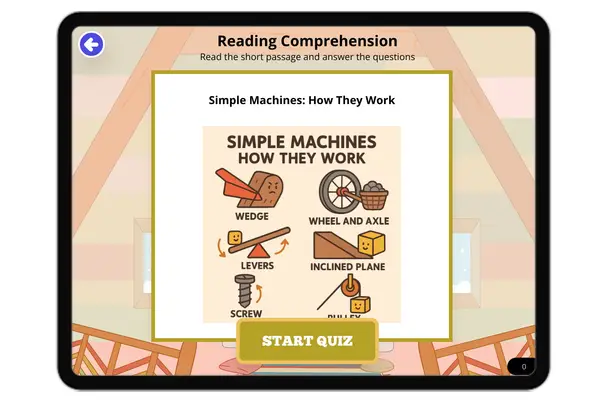
Simple Machines: How They Work
Students read an informative paragraph on simple machines and fill in key technical vocabulary terms to demonstrate unde...