This learning resource is available in interactive and printable formats. The interactive worksheet can be played online and assigned to students. The Printable PDF version can be downloaded and printed for completion by hand.
Earthquakes occur when tectonic plates move, causing the ground to shake. Understanding earthquakes helps us prepare and stay safe in affected areas.
CONTENT PREVIEW
Expand content preview
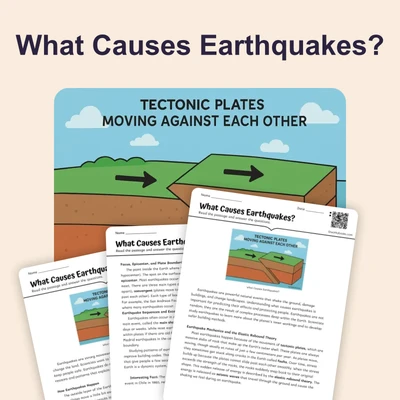
Earthquakes are powerful natural events that shake the Earth's surface. They happen when huge rocks underground suddenly move or break. These rocks are part of the Earth's crust, which is made up of large pieces called tectonic plates. When these plates push against each other or slide past one another, they can cause the ground to shake.
Earthquakes come in different strengths and have various effects. Some earthquakes are so small that people can't even feel them. Others are so strong that they can knock down buildings and create giant waves in the ocean called tsunamis. Scientists use a special tool called a seismograph to measure how strong an earthquake is. They rate earthquakes on a scale from 1 to 10, with 10 being the most powerful.
People who live in areas where earthquakes often happen have learned ways to stay safe. Buildings in these places are made stronger to withstand shaking. People are taught what to do during an earthquake, like taking cover under a sturdy table or standing in a doorway. It's important to have emergency kits with food, water, and first-aid supplies ready.
Earthquakes can cause a lot of damage, but they can also change the Earth in interesting ways. They can create new mountains, valleys, and even islands. Scientists study earthquakes to learn more about our planet and how it works. By understanding earthquakes better, we can help keep people safe and be ready when the ground starts to shake.
The more we know about earthquakes, the better prepared we can be. While we can't stop earthquakes from happening, we can learn to live with them safely. Every earthquake teaches us something new about our amazing planet Earth.
What causes earthquakes?
Volcanoes eruptingStrong windsSudden movement of rocks in the Earth's crustHeavy rain
What tool do scientists use to measure the strength of earthquakes?
ThermometerSeismographTelescopeBarometer
On what scale are earthquakes rated?
1 to 51 to 10A to F0 to 100
What is a tsunami?
A type of earthquakeA giant wave in the ocean caused by earthquakesA tool to measure earthquakesA type of building that can withstand earthquakes
What is one way people can prepare for earthquakes?
Ignore themMove to a different countryHave an emergency kit readyBuild taller buildings
How can earthquakes change the Earth?
They can create new mountains and valleysThey can change the color of the skyThey can make the Earth spin fasterThey can create new oceans
Perfect For:
👩🏫 Teachers
• Reading comprehension practice
• Auto-graded assessments
• Literacy skill development
👨👩👧👦 Parents
• Reading practice at home
• Comprehension improvement
• Educational reading time
🏠 Homeschoolers
• Reading curriculum support
• Independent reading practice
• Progress monitoring
Reading Features:
📖
Reading Passage
Engaging fiction or nonfiction text
❓
Comprehension Quiz
Auto-graded questions
📊
Instant Feedback
Immediate results and scoring
📄
Printable Version
Download for offline reading
🔊
Read Aloud
Voice-over with word highlighting
Reviews & Ratings
No reviews yet. Be the first to share your experience!
Related Content
Volcanic Eruptions: Causes, Types, and Key Features
This science passage explains volcanic eruptions, aligned with NGSS MS-ESS3-2 (natural hazards) and ESS2-2 (Earth’s syst...
MS-ESS3-2MS-ESS2-2RST.6-8.3
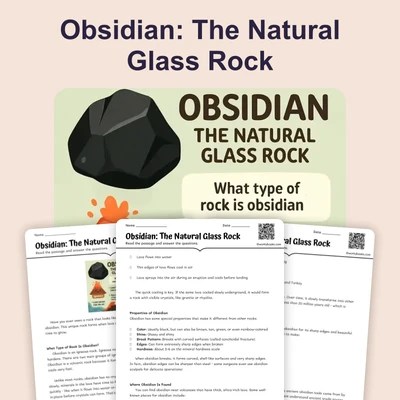
Obsidian: The Natural Glass Rock
This science reading passage explores obsidian, a volcanic glass that forms when lava cools so rapidly that crystals can...
MS-ESS2-3MS-ESS3-2RST.6-8.4
Kīlauea Volcano: Hawaii’s Ever-Changing Landscape
This passage details Kīlauea's volcanic history and status, aligned with NGSS MS-ESS3-2 (natural hazards) and ESS2-3 (Ea...
MS-ESS3-2MS-ESS2-3RST.6-8.2
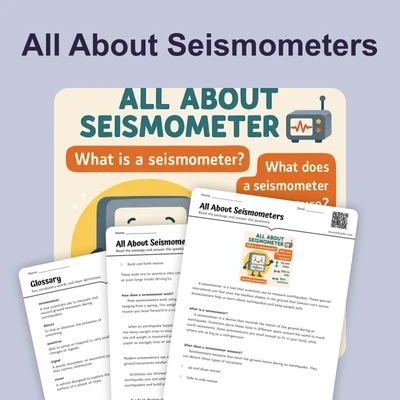
All About Seismometers
This informational science passage explores seismometers and their role in measuring earthquakes, designed specifically ...
MS-ESS3-2MS-ESS2-3RST.6-8.2
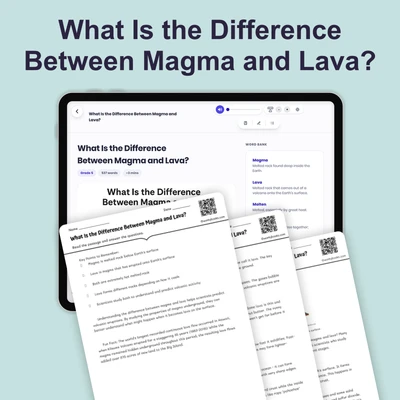
What Is the Difference Between Magma and Lava?
This educational reading passage explains the critical difference between magma and molten rock beneath Earth's surface ...
MS-ESS2-3MS-ESS3-2RST.6-8.4
Measuring Hurricane Intensity – The Saffir-Simpson Hurricane Wind Scale
This NGSS-aligned science reading passage explains how the Saffir-Simpson Hurricane Wind Scale is used to measure the in...
MS-ESS3-2
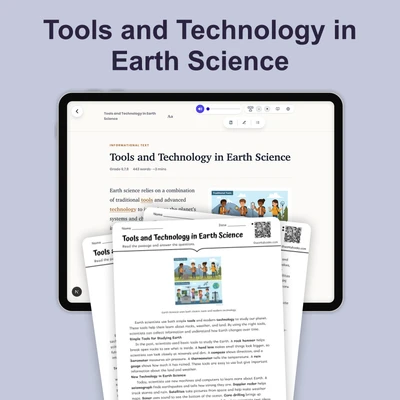
Tools and Technology in Earth Science
This middle school science reading passage explores the wide range of tools and technologies used in Earth science, from...
MS-ESS2-2MS-ESS3-2MS-ETS1-1MS-PS4-3
Types of Maps
This engaging science passage for grades 6-8 introduces students to the various types of maps and their uses, supporting...
MS-ESS2-2MS-ESS3-2MS-ETS1-1MS-ETS1-4
Mass Movements
This NGSS-aligned passage introduces middle school students to the science of mass movements—gravity-driven motions of r...
MS-ESS2-1MS-ESS3-2
What Causes Earthquakes?
This middle school science passage explains what causes earthquakes, focusing on the interactions between tectonic plate...
MS-ESS2-2MS-ESS3-2
Floods: Causes and Types
This middle school science passage provides a comprehensive look at floods, their causes, types, and impacts, addressing...
MS-ESS3-2
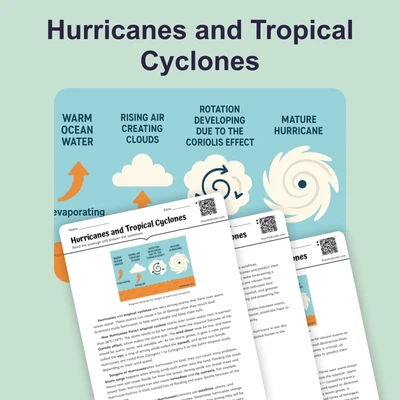
Hurricanes and Tropical Cyclones
This in-depth passage for grades 6-8 covers hurricanes and tropical cyclones, aligning with NGSS standards MS-ESS3-2 and...
MS-ESS3-2MS-ESS2-5
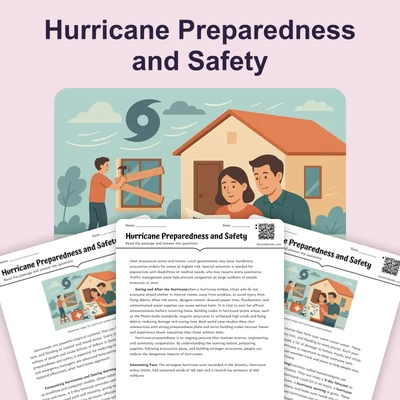
Hurricane Preparedness and Safety
This passage explores the science and practical strategies of hurricane preparedness and safety, designed for middle sch...
MS-ESS3-2MS-ETS1-1
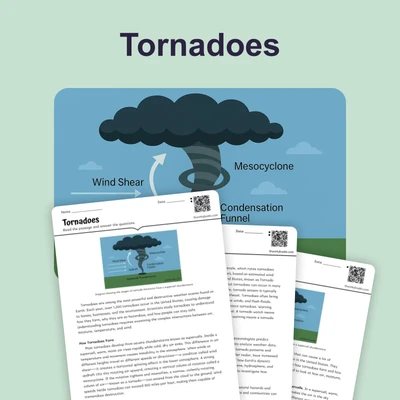
Tornadoes
This informational science passage for grades 6-8 explores the science of tornadoes, aligning with NGSS standards MS-ESS...
MS-ESS3-2MS-ESS2-5
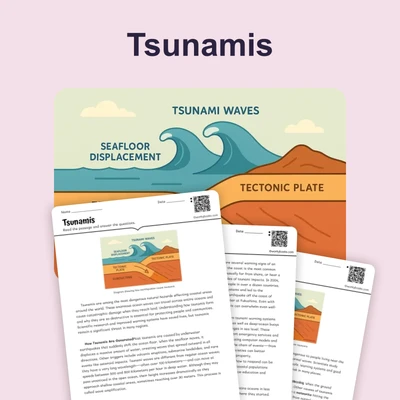
Tsunamis
This middle school science passage explores tsunamis, focusing on their causes, characteristics, and impacts. Students w...
MS-ESS3-2
Tsunami Warning and Safety
This comprehensive middle school science passage examines the systems and science behind tsunami warning and safety. Ali...
MS-ESS3-2
Earthquake Hazards and Damage
This middle school science reading passage examines the hazards and damage caused by earthquakes, aligned with NGSS MS-E...
MS-ESS3-2
Earthquake Zones and Patterns
This informational science passage introduces middle school students to the global distribution of earthquakes, focusing...
MS-ESS2-2MS-ESS3-2
Seismic Waves
This comprehensive middle school passage introduces students to seismic waves, the energy released during earthquakes. A...