Sedimentary Rocks
Interactive passage with audio narration, comprehension questions, and printable PDF.
By completing this purchase you agree to our Terms of Use and Privacy Policy. Your subscription renews automatically until you cancel. You can cancel anytime from your account settings. All sales are final and non-refundable. Digital content is available for download in your account immediately upon purchase.
What's included
Sedimentary Rocks preview and details
About this printable Sedimentary Rocks science reading passage, NGSS-aligned (Grades 5-8)
Sample passage and quiz from Sedimentary Rocks
Reading passage and comprehension quiz preview
Sedimentary Rocks
Sedimentary rocks are one of the three main types of rocks found on Earth. These rocks are crucial for understanding how our planet has changed over millions of years. Scientists study sedimentary rocks to investigate the environments of the past, uncover fossil evidence, and find important resources. The formation and features of sedimentary rocks are closely linked to Earth’s systems and cycles.
How Sedimentary Rocks Form
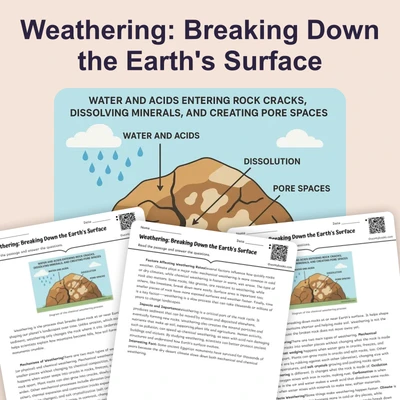
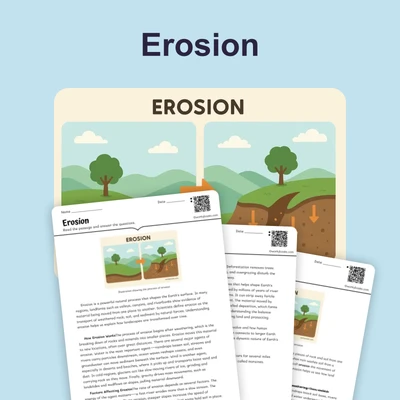
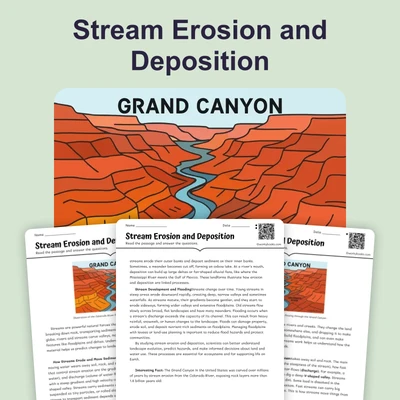
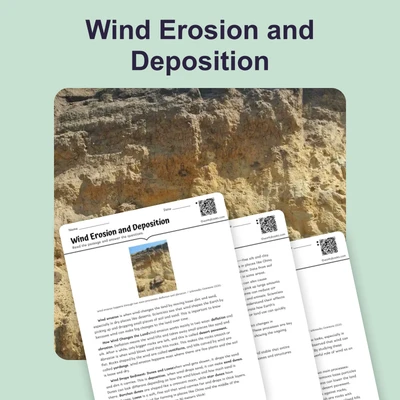
The formation of sedimentary rocks involves several connected processes. First, existing rocks are broken down into smaller pieces by weathering, which can be caused by wind, water, temperature changes, or chemical reactions. These particles, called sediments, are then carried away by erosion. Rivers, glaciers, and wind transport sediments across the land. When the energy of moving water or wind decreases, sediments settle and build up in layers through deposition. Over time, the weight of more layers presses the lower sediments together, a process called compaction. Minerals dissolved in water fill the spaces and glue sediments together, a process named cementation. This entire sequence can take thousands to millions of years and results in solid sedimentary rock.
Types and Features of Sedimentary Rocks
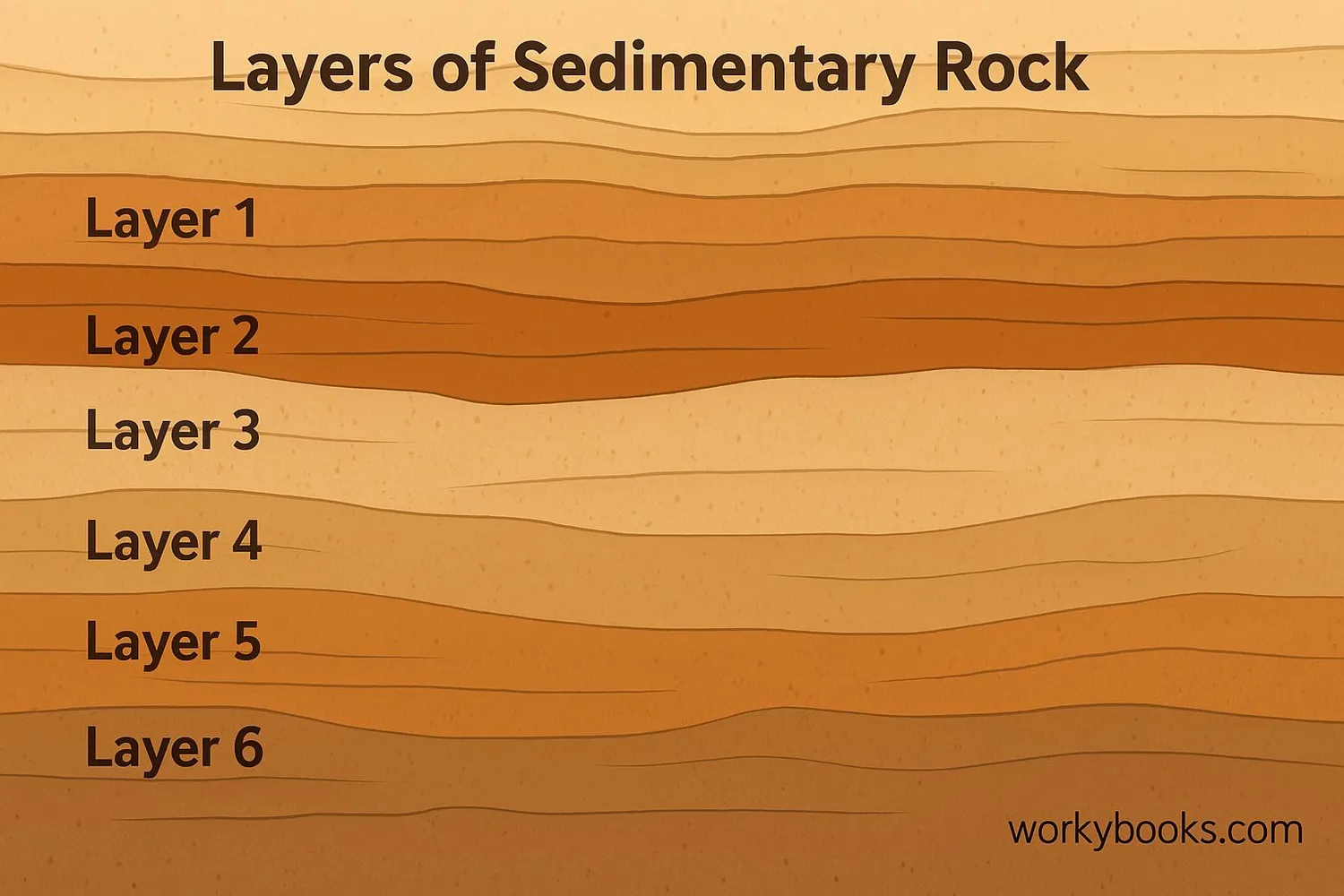
Sedimentary rocks are classified into three main categories. Clastic sedimentary rocks form from fragments of other rocks. Examples include shale (made from clay), sandstone (sand-sized grains), and conglomerate (rounded pebbles). Chemical sedimentary rocks develop when minerals precipitate from water, such as rock salt and some types of limestone. Organic or bioclastic sedimentary rocks are made from the remains of once-living things, like coal, fossil limestone, and chalk. Sedimentary rocks often have visible layers called strata, where each layer represents a different period of deposition. They may also contain fossils, ripple marks, and mud cracks—features that provide clues to ancient environments and the conditions in which the rocks formed.
Importance and Applications
Sedimentary rocks are essential to science and society. Fossils found in these rocks help scientists reconstruct the history of life and major environmental changes. The arrangement and features of strata allow geologists to interpret events like floods, droughts, or shifts in climate. Many natural resources, such as fossil fuels (coal, oil, and natural gas), are found in sedimentary rocks. Aquifers, which store freshwater underground, often occur in porous sedimentary rocks. By studying sedimentary rocks, scientists gain insight into Earth’s past, manage resources, and protect the environment.
Sedimentary rocks are more than just piles of old mud or sand. They are dynamic records of Earth’s story and vital to our daily lives. Their study connects geology, biology, chemistry, and environmental science, illustrating how Earth’s processes are interconnected.
Interesting Fact: Some sedimentary rock layers contain fossils that are over 500 million years old, giving us a direct window into ancient life on Earth.
Comprehension quiz (10 questions)
1. Which of the following best describes the process of weathering?
2. What comes immediately after deposition in the formation of sedimentary rocks?
3. Which type of sedimentary rock is made from fragments of other rocks?
4. What is a key feature of sedimentary rocks that helps scientists interpret ancient environments?
5. What is the meaning of the word 'cementation' as used in the passage?
6. In the passage, what does 'organic' sedimentary rock mean?
7. Why are sedimentary rocks important to scientists? (Choose the best answer.)
8. If a scientist finds ripple marks in a sedimentary rock layer, what can they infer?
9. True or False: Sedimentary rocks can contain fossils from over 500 million years ago.
10. True or False: Only igneous rocks can store aquifers underground.
Perfect for the way you teach
- Build comprehension skills
- Auto-graded quiz
- Differentiated reading
- Read together at home
- Improve fluency
- Quiet reading time
- Reading curriculum support
- Independent practice
- Track Lexile growth