Continental Drift Theory
Interactive passage with audio narration, comprehension questions, and printable PDF.
What's included
Continental Drift Theory preview and details
About this printable Continental Drift Theory science reading passage, NGSS-aligned (Grades 5-8)
Sample passage and quiz from Continental Drift Theory
Reading passage and comprehension quiz preview
Continental Drift Theory
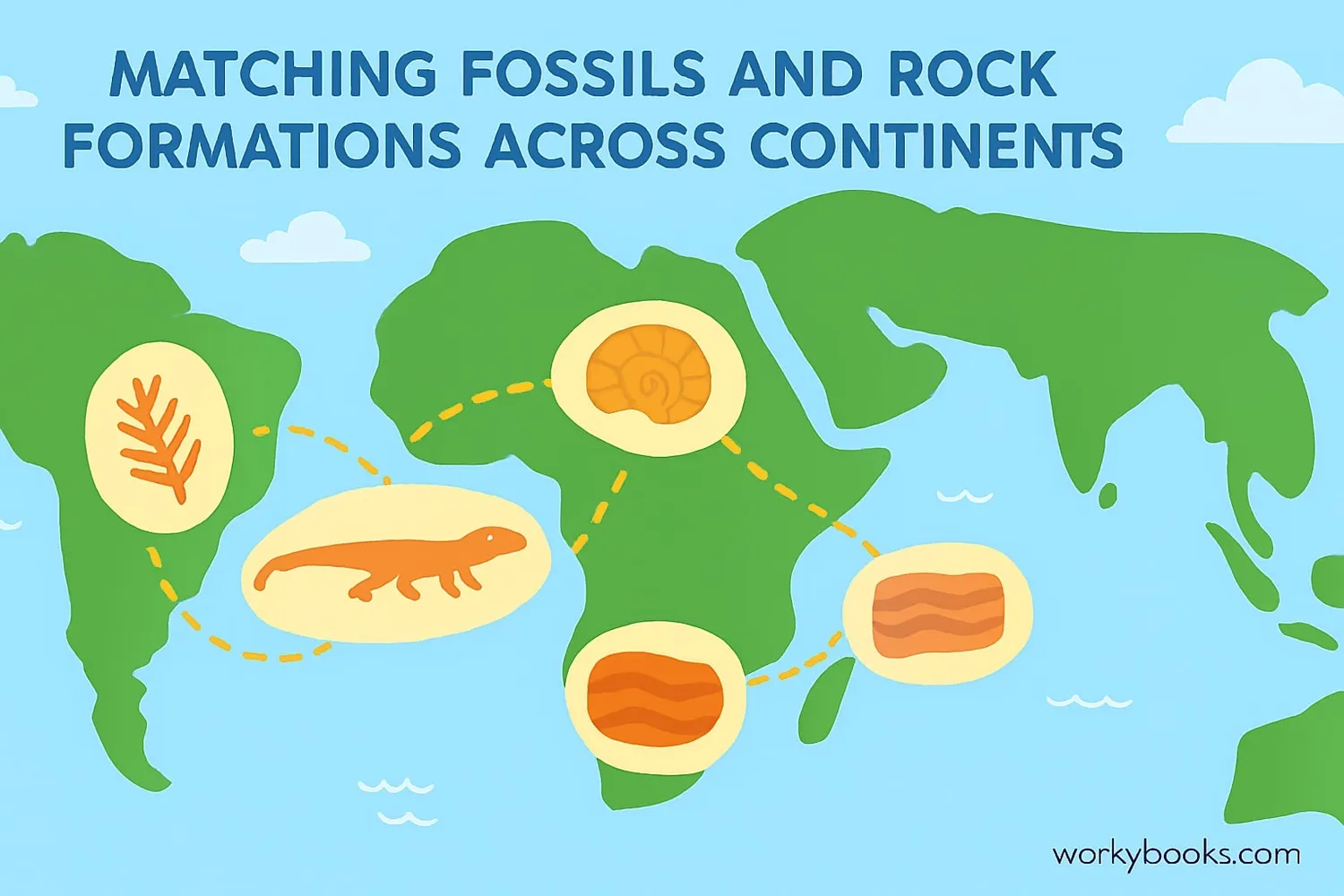
Continental drift describes the theory that Earth’s continents have moved slowly across the globe over millions of years. Scientists noticed similarities among the shapes and features of continents on modern maps. For example, the coastlines of South America and Africa appear to fit together like pieces of a puzzle. This observation led geologists to wonder whether the continents were once joined together and later drifted apart.
In 1912, German scientist Alfred Wegener presented the hypothesis of continental drift. He proposed that all continents were part of a single, massive landmass called Pangaea about 250 million years ago. According to Wegener, Pangaea broke apart, and the continents slowly moved to their current positions. Wegener’s idea challenged the common belief that continents and oceans were fixed and unchanging.
Evidence for Continental Drift
Wegener gathered several lines of evidence to support his theory. First, he pointed out the jigsaw-like fit of continents, especially the close match between South America and Africa. Second, he found that identical fossils of ancient plants and animals, such as the reptile Mesosaurus and the plant Glossopteris, were discovered on continents now separated by oceans. This suggested these lands were once connected. Third, Wegener noted that similar rock formations and mountain ranges, like those in eastern North America and western Europe, lined up when the continents were placed together. Finally, he identified glacial deposits—evidence of ancient ice sheets—in present-day tropical regions, showing these areas were once much colder and likely closer to the South Pole.
Challenges and Scientific Debate
Despite strong evidence, many scientists rejected Wegener’s theory at first. The main problem was the lack of a convincing mechanism—how could massive continents move through solid ocean rock? Some proposed that continents plowed through the ocean floor, but this idea did not fit with what was known about Earth's crust. As a result, Wegener’s theory was dismissed by most geologists for decades. However, he persisted, believing that further research would reveal the answer.
Legacy and Connection to Plate Tectonics
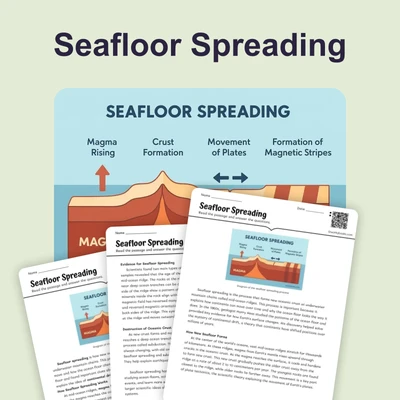
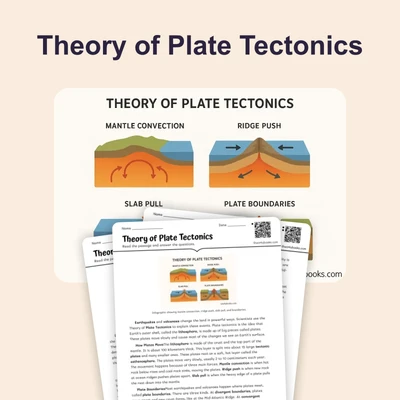
Wegener’s work inspired scientists to search for more evidence. In the 1960s, discoveries such as seafloor spreading provided the mechanism that Wegener lacked. Scientists realized that the movement of large sections of Earth's lithosphere, called tectonic plates, could explain continental drift. Today, the theory of plate tectonics is a unifying principle in Earth science, explaining earthquakes, volcanoes, and mountain formation as well as the movement of continents.
Interesting Fact: The Atlantic Ocean is growing wider by about 2.5 centimeters per year as the Americas and Africa/Europe drift apart—about as fast as fingernails grow!
Comprehension quiz (10 questions)
1. What is the main idea of the continental drift theory?
2. Who proposed the hypothesis of continental drift in 1912?
3. What does the term "Pangaea" mean in the passage?
4. According to the passage, which of the following is NOT evidence used by Wegener?
5. In the passage, what does 'mechanism' refer to?
6. Why was Wegener's theory rejected by most scientists at first?
7. Which discovery in the 1960s helped explain how continents move?
8. Which of these statements best describes a cause-and-effect relationship from the passage?
9. True or False: Wegener’s theory is now completely ignored by scientists today.
10. True or False: The Atlantic Ocean is currently getting wider each year.
Perfect for the way you teach
- Build comprehension skills
- Auto-graded quiz
- Differentiated reading
- Read together at home
- Improve fluency
- Quiet reading time
- Reading curriculum support
- Independent practice
- Track Lexile growth