
Passage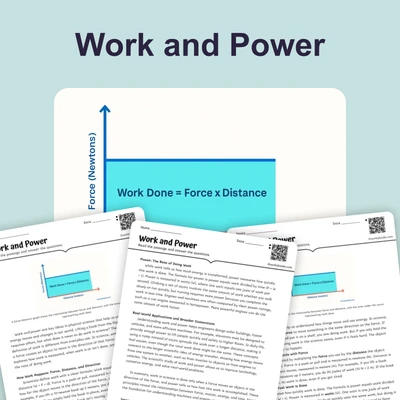
Grades 5–8
Work and Power
Reading Passage · MS-PS3-1
$1.50

Explore our comprehensive collection of Simple Machines curriculum resources, designed for grades K through 8. From printable worksheets to interactive games and reading passages, this hub provides no-prep, standards-aligned materials that build foundational understanding and deepen knowledge across the elementary and middle school years.
Reading Passage · MS-PS3-1
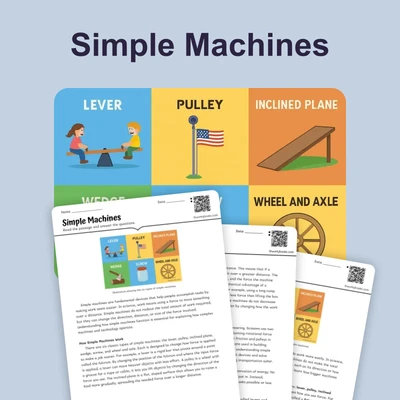
Reading Passage · MS-PS3-1
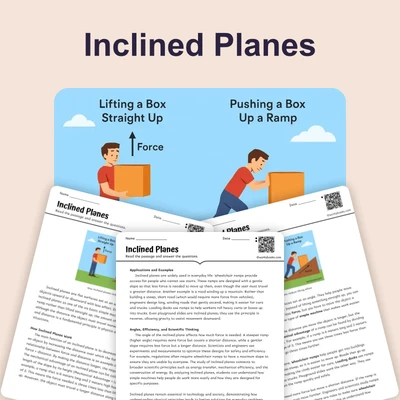
Reading Passage · MS-PS3-1
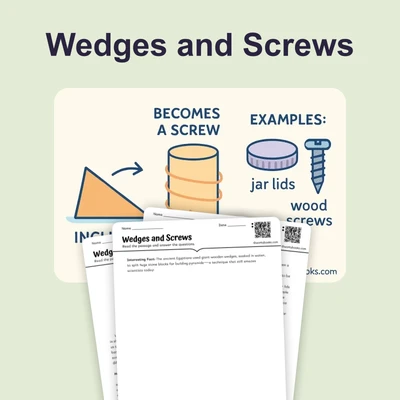
Reading Passage · MS-PS3-1
Reading Passage · MS-PS3-1
Reading Passage · MS-PS3-1
Reading Passage · MS-PS3-1
Reading Passage · MS-PS3-1
Reading Passage · MS-PS3-1
Three ways to use Workybooks — pick what fits.
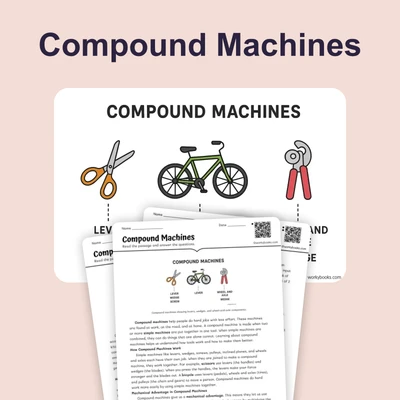
Simple Machines are introduced in the earliest grades as students explore basic tools like levers, pulleys, and inclined planes through hands-on activities and simple experiments. In kindergarten and first grade, children learn to identify and describe how these machines make work easier. As students progress through second and third grades, they investigate how simple machines combine to form compound machines and begin measuring mechanical advantage. By upper elementary and middle school, students analyze real-world applications, calculate force and work, and design their own machines using engineering principles.
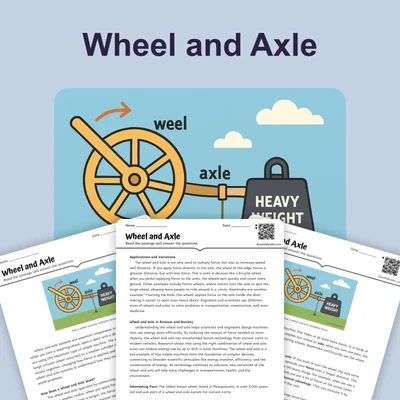
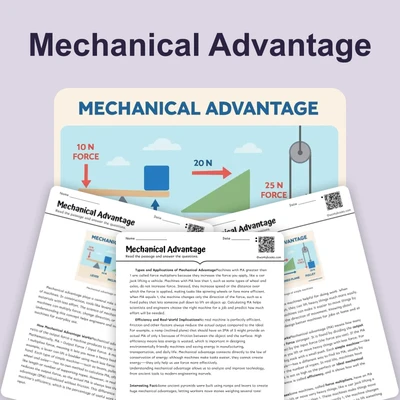
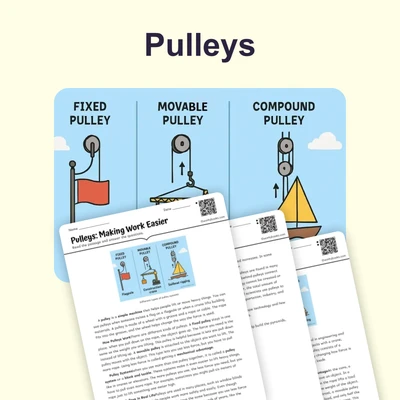
Our resources cover all six classic simple machines: lever, pulley, wheel and axle, inclined plane, wedge, and screw. Related concepts include force, motion, friction, work, mechanical advantage, and energy. Activities range from cut-and-paste sorts and labeling worksheets for early grades to data collection labs, reading comprehension passages, and STEM design challenges for older students. The collection includes printable worksheets, digital interactives, graphic organizers, and game-based learning tools that reinforce vocabulary, critical thinking, and problem-solving skills.
Teachers can use this hub to differentiate instruction across a mixed-ability classroom. For whole-group lessons, project a digital interactive or use a reading passage to introduce a concept. In small groups, students can work on hands-on activities or game-based reviews at their level. Literacy centers can feature vocabulary sorts or leveled readers, while math integration allows students to calculate mechanical advantage. Assign printable worksheets as independent practice or homework, and use graphic organizers for intervention or review. The scaffolded resources allow you to choose the right level for each student, from basic identification to complex problem-solving. Assessment options include exit tickets, quizzes, and performance tasks that align with your curriculum.
These resources support grade-level Common Core standards for reading informational text and writing, as well as Next Generation Science Standards (NGSS) related to engineering design and forces and interactions across grades K-8.
Yes, many of our Simple Machines worksheets are printable and ready to use in your classroom. Some resources are available as digital PDFs that you can print, while others are interactive online activities. Please note that while some resources are free, most require a paid membership to access the full library.
Absolutely. Our Simple Machines worksheets for kids are designed for grades K through 8, with content that progresses from basic identification in early grades to more complex calculations and engineering design in upper grades. You can easily find resources tailored to your students' grade level and skill needs.
Yes. Many of our Simple Machines resources are available in digital formats that work on tablets, Chromebooks, and computers. You can assign interactive games, digital worksheets, and reading passages through your learning management system for at-home or in-class use.
Yes, most of our printable worksheets and activities include answer keys for teachers. Additionally, many resources come with teacher notes, suggested lesson plans, or alignment guides to help you integrate them into your curriculum seamlessly.