Inclined Planes
Interactive passage with audio narration, comprehension questions, and printable PDF.
By completing this purchase you agree to our Terms of Use and Privacy Policy. Your subscription renews automatically until you cancel. You can cancel anytime from your account settings. All sales are final and non-refundable. Digital content is available for download in your account immediately upon purchase.
What's included
Inclined Planes preview and details
About this printable Inclined Planes science reading passage, NGSS-aligned (Grades 5-8)
Sample passage and quiz from Inclined Planes
Reading passage and comprehension quiz preview
Inclined Planes
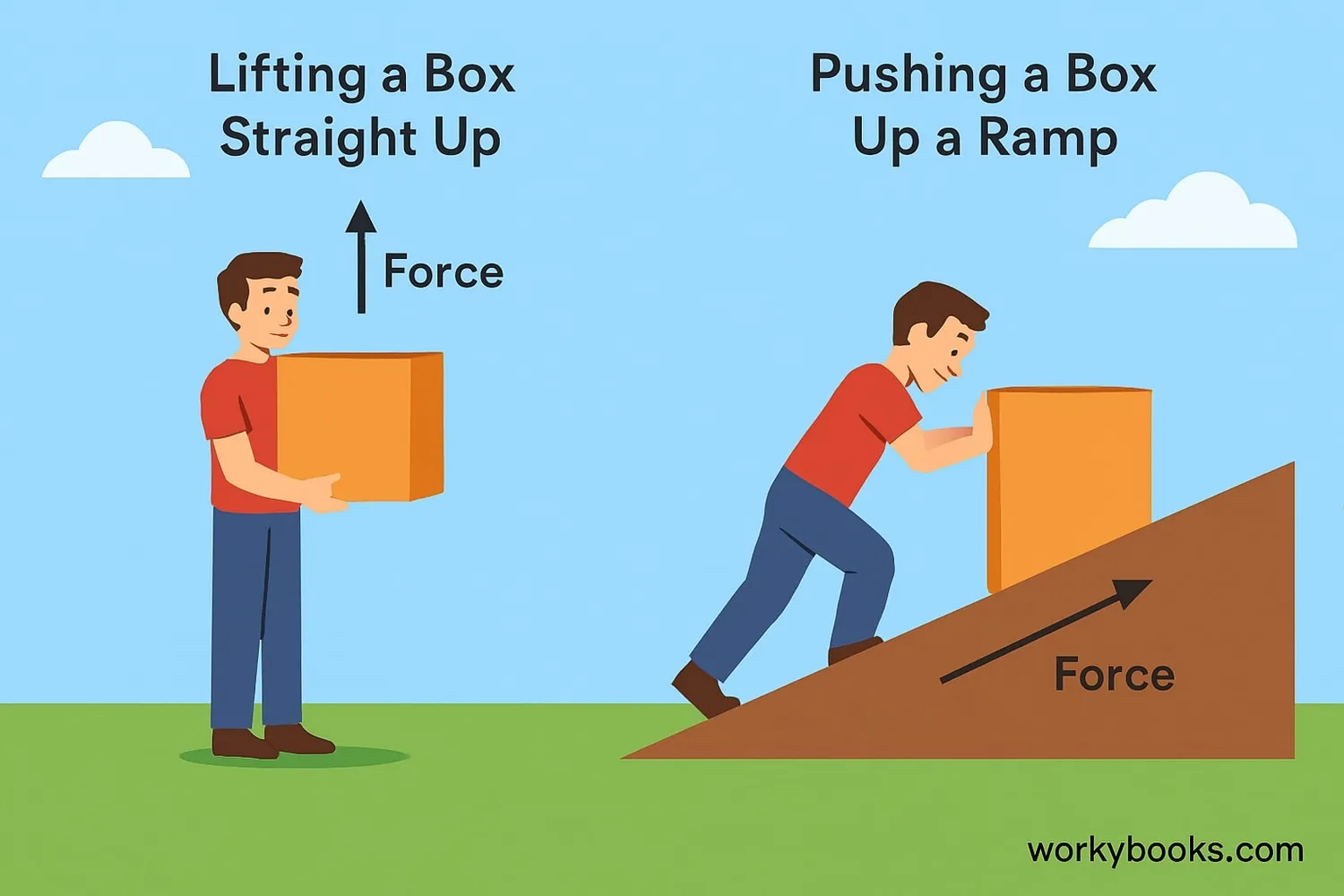
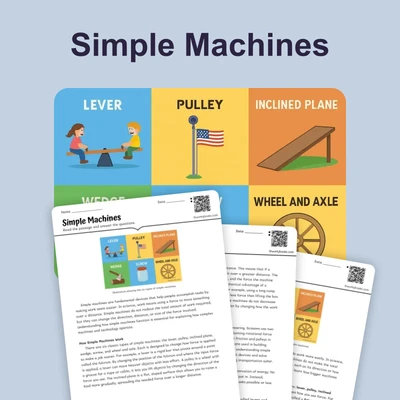
Inclined planes are flat surfaces set at an angle, or slope, that help people move objects upward or downward with less effort. Engineers and scientists classify inclined planes as one of the six basic simple machines. When a load is moved up a ramp rather than lifted straight up, the amount of force required is reduced, although the distance the object must travel increases. This trade-off between force and distance is a fundamental principle in physics and is used in many real-world situations.
How Inclined Planes Work
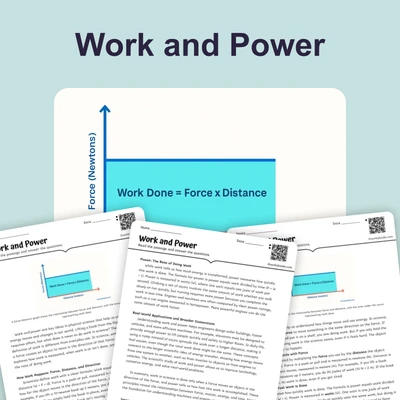
The main function of an inclined plane is to decrease the force needed to move an object by increasing the distance over which the force is applied. The relationship between force and distance is an example of the work equation: work = force × distance. By making the distance longer, the required force becomes less. The mechanical advantage of an inclined plane can be calculated by dividing the length of the slope by its height (Mechanical Advantage = Length / Height). For example, a ramp that is 6 meters long and 2 meters high has a mechanical advantage of 3. This means the force needed is three times less than lifting the object straight up. However, the object must travel a longer distance along the ramp.
Applications and Examples
Inclined planes are widely used in everyday life. Wheelchair ramps provide access for people who cannot use stairs. These ramps are designed with a gentle slope so that less force is needed to move up them, even though the user must travel a greater distance. Another example is a road winding up a mountain. Rather than building a steep, short road (which would require more force from vehicles), engineers design long, winding roads that gently ascend, making it easier for cars and trucks. Loading docks use ramps to help workers roll heavy carts or boxes up into trucks. Even playground slides are inclined planes; they use the principle in reverse, allowing gravity to assist movement downward.
Angles, Efficiency, and Scientific Thinking
The angle of the inclined plane affects how much force is needed. A steeper ramp (higher angle) requires more force but covers a shorter distance, while a gentler slope requires less force but a longer distance. Scientists and engineers use experiments and measurements to optimize these designs for safety and efficiency. For example, regulations often require wheelchair ramps to have a maximum slope to ensure they are usable by everyone. The study of inclined planes connects to broader scientific principles such as energy transfer, mechanical efficiency, and the conservation of energy. By analyzing inclined planes, students can understand how simple machines help people do work more easily and how they are designed for specific purposes.
Inclined planes remain essential in technology and society, demonstrating how understanding physical principles leads to better solutions for everyday problems.
Interesting Fact:
Some ancient monuments, like the Egyptian pyramids, are believed to have been built using enormous inclined planes to move massive stones into place.
Comprehension quiz (10 questions)
1. What is the main purpose of an inclined plane?
2. Which of the following is a real-world example of an inclined plane?
3. What does 'mechanical advantage' mean for an inclined plane?
4. If a ramp is longer but not as steep, what happens to the force needed to move an object up?
5. What is the formula for the mechanical advantage of an inclined plane?
6. Which word from the passage means 'a push or pull that can move an object'?
7. What is an effect of making a ramp steeper?
8. Why do engineers design mountain roads to wind up gently instead of going straight up?
9. True or False: The steeper the inclined plane, the less force is needed.
10. True or False: Playground slides use the principle of inclined planes in reverse.
Perfect for the way you teach
- Build comprehension skills
- Auto-graded quiz
- Differentiated reading
- Read together at home
- Improve fluency
- Quiet reading time
- Reading curriculum support
- Independent practice
- Track Lexile growth