This learning resource is available in interactive and printable formats. The interactive worksheet can be played online and assigned to students. The Printable PDF version can be downloaded and printed for completion by hand.
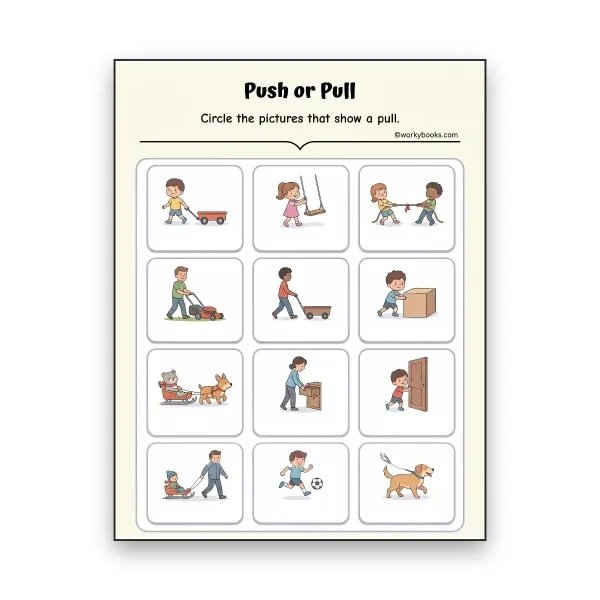
This engaging word sort helps students understand patterns in motion. Students classify 12 different movements based on whether they repeat or happen once. Using familiar examples like bouncing balls, swinging pendulums, and falling leaves, the activity helps students recognize predictable patterns in motion. This hands-on sorting exercise aligns with NGSS 3-PS2-2 and helps students develop skills in observing and predicting motion patterns.
Perfect For:
👩🏫 Teachers
• Interactive classroom activities
• Auto-graded game assignments
• Student engagement tools
👨👩👧👦 Parents
• Fun learning at home
• Educational screen time
• Progress tracking
🏠 Homeschoolers
• Interactive curriculum
• Self-paced gaming
• Engaging practice
Game Features:
🎮
Interactive Gameplay
Engaging educational game experience
📊
Auto-Grading
Instant feedback and scoring
📝
Assignable
Perfect for homework and classwork
📄
Printable Components
Additional offline materials
Reviews & Ratings
No reviews yet. Be the first to share your experience!
Related Resources
Forces and Motion
This audio integrated passage introduces the concept of forces and motion in simple, clear terms. A force is explained a...
Balanced and Unbalanced Forces
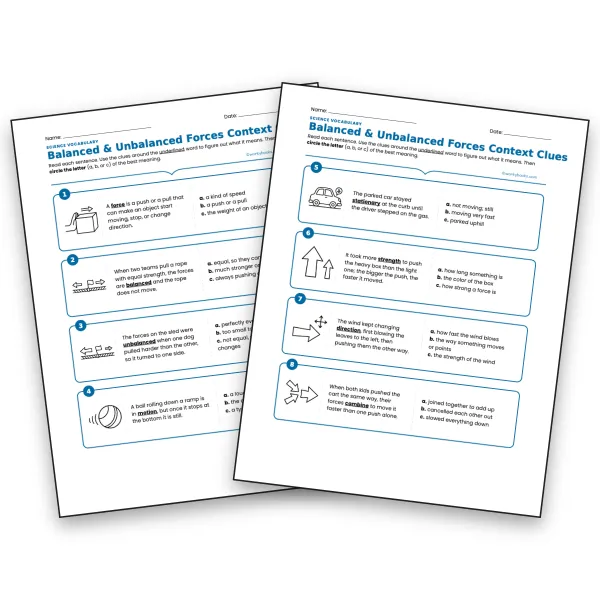
This informational science passage explores the core concepts of balanced and unbalanced forces as aligned with NGSS sta...
MS-PS2-1MS-PS2-2
Net Force
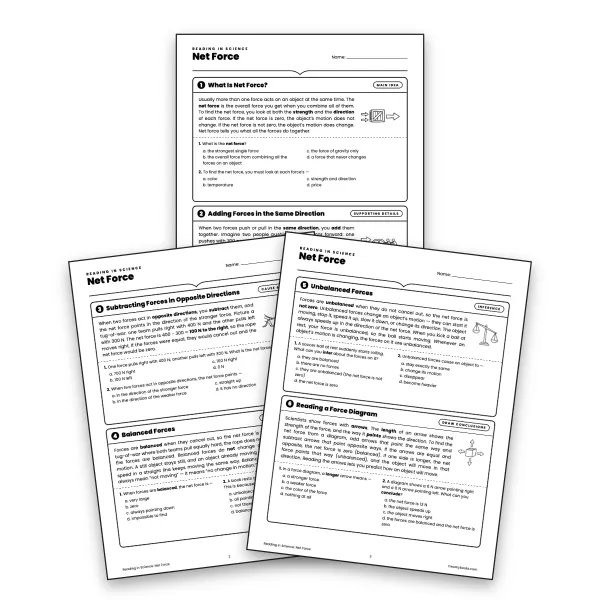
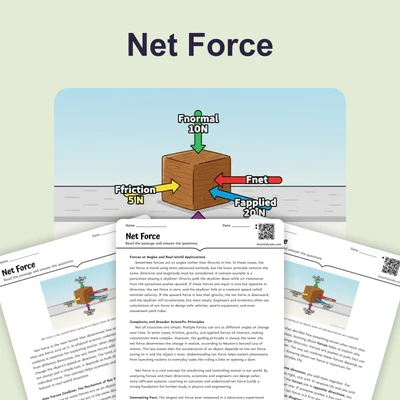
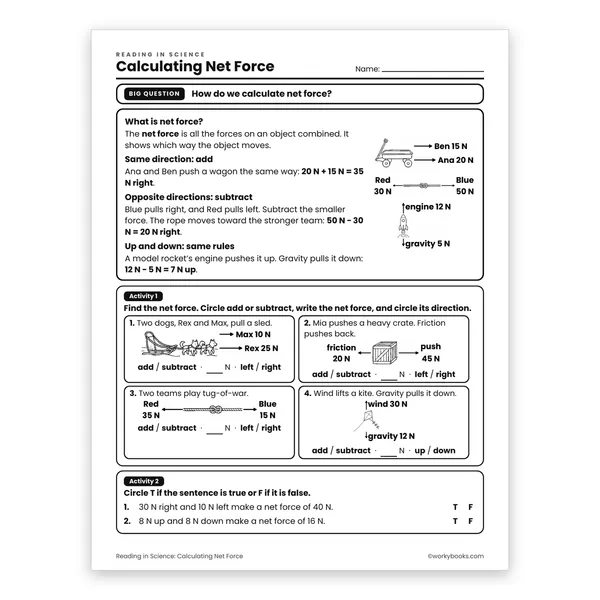
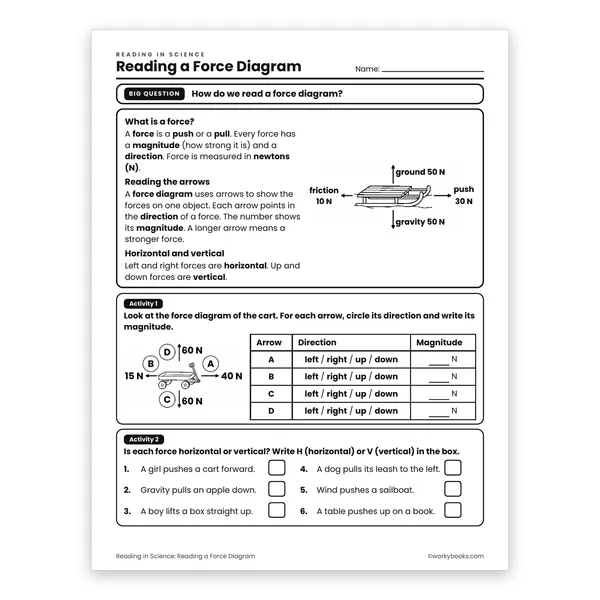
This comprehensive science reading passage for grades 6-8 explores the concept of net force, aligned with NGSS standard ...
MS-PS2-1
Strong Forces
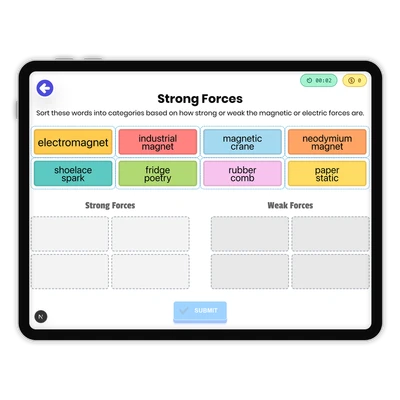
This NGSS-aligned word sort activity for K-3 students focuses on comparing the strength of different magnetic and electr...
What Is Force?
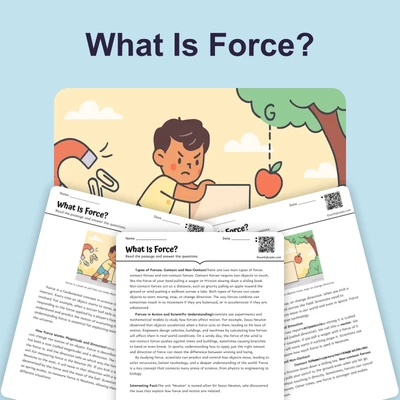
This passage, aligned to NGSS standards MS-PS2-1 and MS-PS2-2, provides a clear and age-appropriate explanation of force...
MS-PS2-1MS-PS2-2
Types of Forces
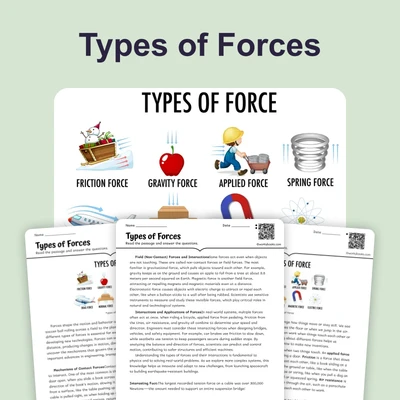
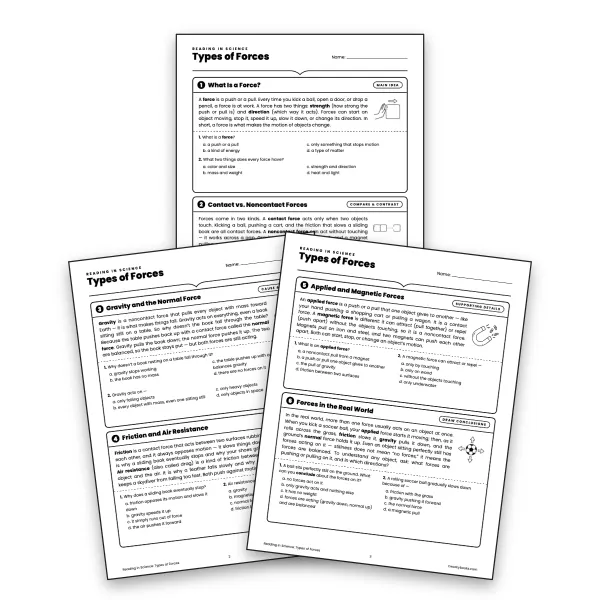
This comprehensive passage introduces middle school students to the types of forces that govern the motion of objects, a...
MS-PS2-1
Observing and Predicting Motion
Observing and Predicting Motion' encourages students to distinguish between predictable and non-predictable motions. By ...
Motion Actions Word Sort
This kindergarten-level word sort helps students understand basic motion concepts through familiar actions. Students sor...
K-PS2-2
What is Motion?
This NGSS-aligned passage explains 'What is Motion?' in clear and simple terms for elementary students. Motion is descri...
Motion Energy
This NGSS-aligned science passage for 4th graders focuses on the disciplinary core concept of Motion Energy (PS1.A). It'...
Graphing Motion
This passage introduces middle school students to the fundamental concepts of graphing motion, focusing on distance-time...
MS-PS2-2
Science Vocabulary
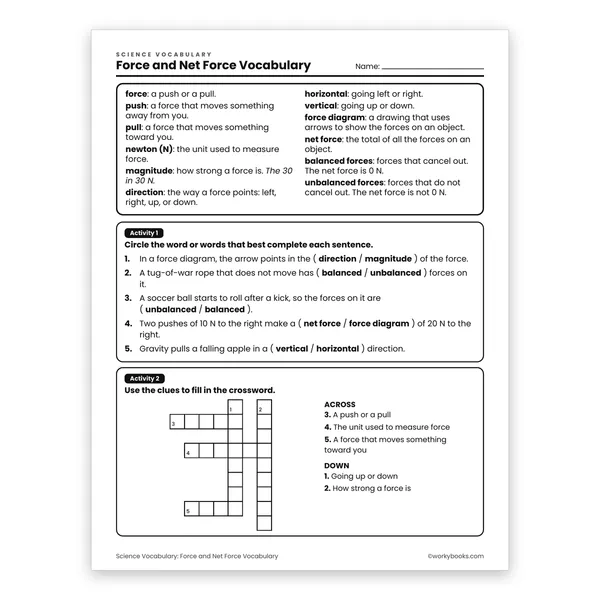
This worksheet on domain-specific words will help students learn some science vocabulary. Students will be asked to matc...
L.3.6L.3.4.A
What is Relative Motion?
This audio integrated passage introduces the idea of relative motion in simple, student-friendly language. Relative moti...
Newton (N) – The Unit of Force
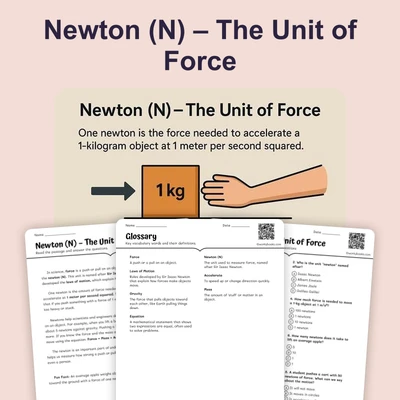
This NGSS-aligned passage introduces middle school students to the newton (N), the standard unit of force in the metric ...
MS-PS3-5
Newton's Third Law of Motion
This comprehensive science reading passage introduces middle school students to Newton's Third Law: for every action, th...
MS-PS2-1
Simple Machines Science Report
This science writing task requires students to clearly explain how three simple machines work using precise domain-speci...
W.5.4
Push or Pull Without Touch"
This engaging word sort activity helps K-3 students understand the fundamental concepts of magnetic and electric forces ...
Daily Movement Sort
This word sort explores forces through everyday actions. Students classify 12 common activities into push or pull moveme...
K-PS2-2
Magnetic Force
This comprehensive science passage for grades 6-8 explores the mechanisms behind magnetic force, including how magnet st...