This learning resource is available in interactive and printable formats. The interactive worksheet can be played online and assigned to students. The Printable PDF version can be downloaded and printed for completion by hand.
This comprehensive science passage for grades 6-8 explores the mechanisms behind magnetic force, including how magnet strength, distance, and material type interact to affect the strength of magnetic attraction or repulsion. Aligned with NGSS standards MS-PS2-3 and MS-PS2-5, the passage connects these concepts to real-world examples such as refrigerator magnets, industrial magnets, and magnetic levitation (maglev) trains. Students will gain a deeper understanding of the cause-and-effect relationships driving magnetic systems and learn how scientists use evidence to understand these phenomena. Audio integration supports diverse learners, while the included glossary, differentiated versions, Spanish translations, and interactive activities (quizzes, writing prompts, graphic organizers) ensure accessibility for all students. Key vocabulary and concepts are reinforced throughout, making this an ideal resource for middle school physical science classrooms.
CONTENT PREVIEW
Expand content preview
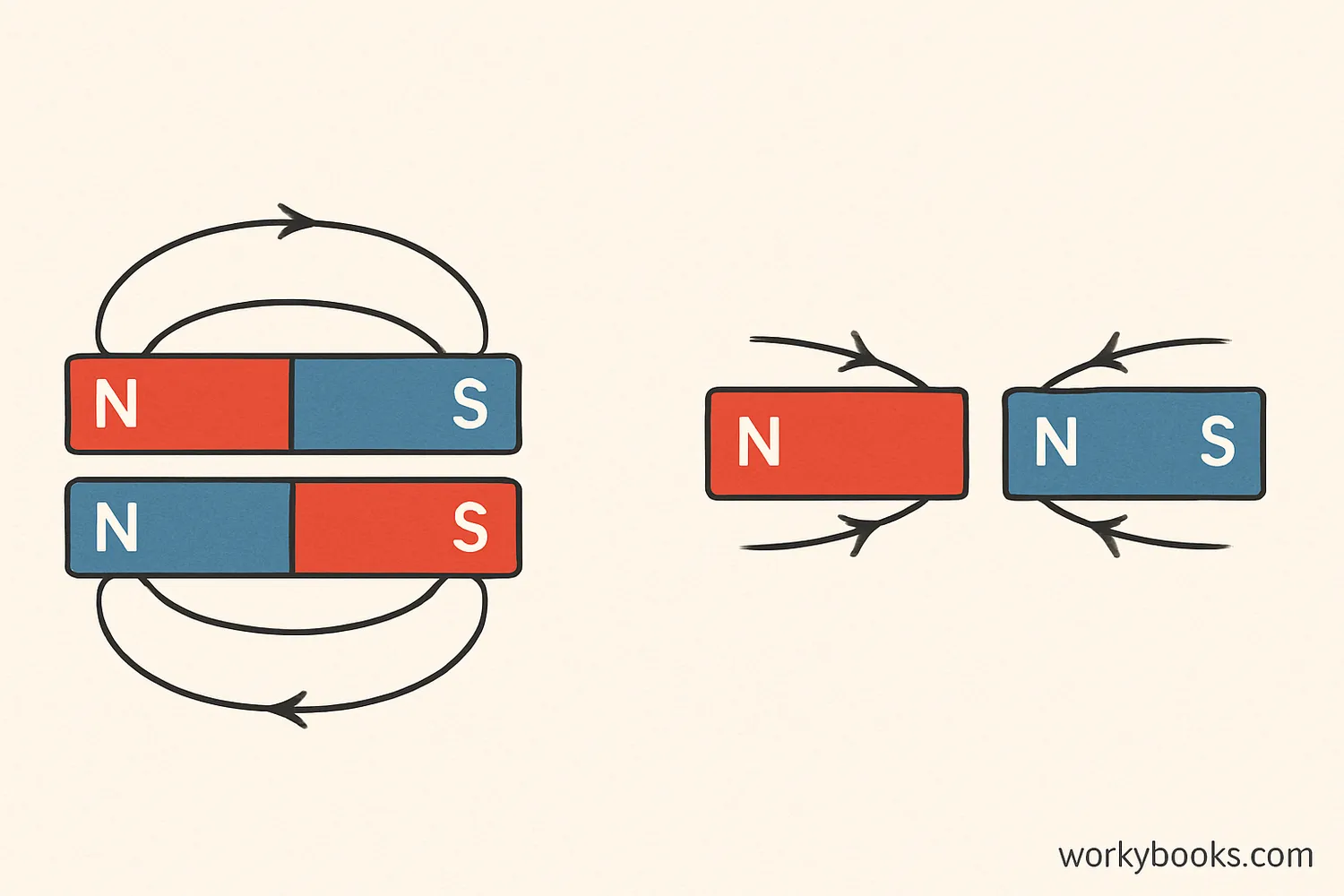
Magnetic force causes attraction between opposite poles and repulsion between like poles
Magnetic force is a fundamental force in nature that can attract or repel objects without direct contact. This force is responsible for many everyday phenomena, such as refrigerator magnets holding notes or powerful industrial magnets lifting cars in a scrapyard. At the core of this force are magnets, which create invisible regions called magnetic fields that interact with certain materials, especially those containing iron, nickel, or cobalt.
How Magnetic Force Works
The strength of magnetic force depends on several key factors. First, the strength of the magnet itself matters—a stronger magnet produces a more intense magnetic field. Second, the distance between the magnet and the object is crucial. Magnetic force decreases rapidly as distance increases; in fact, it follows an inverse relationship, meaning if the distance doubles, the magnetic force becomes about four times weaker. Finally, the material type of the object influences whether it will be attracted or repelled. Magnetic materials, like iron, are pulled strongly, while non-magnetic materials, like plastic, are not affected.
Comparing Different Magnets and Applications
Not all magnets are the same. For example, a small refrigerator magnet has a weak magnetic field, enough to hold a piece of paper but not much more. In contrast, industrial magnets, such as those used in recycling plants, can lift hundreds of kilograms. The shape and size of a magnet also affect its field—the larger the magnet, the greater its range and strength. Scientists measure magnetic force in newtons, and even small changes in distance or material can change the force significantly. This is why maglev trains, which use powerful electromagnets and precisely controlled distances, can levitate and travel smoothly without touching the tracks, reducing friction and allowing for high speeds.
Interactions and Broader Principles
Magnetic force is an example of a non-contact force, acting across space without physical touch. It is closely related to electricity—moving electric charges can create magnetic fields, and changing magnetic fields can generate electric currents. Understanding magnetic force helps scientists and engineers design new technologies, from simple magnetic latches in household appliances to complex medical devices like MRI machines. The study of magnetic force also supports the broader scientific principle that forces can act at a distance and that systems are interconnected in predictable ways.
Magnetic force demonstrates how invisible interactions shape the physical world. By analyzing the strength of magnets, distances, and materials, scientists can predict and control the effects of magnetism in technology and nature.
Interesting Fact: Some of the strongest magnets on Earth are made from rare-earth elements like neodymium, and they can be over 1,000 times stronger than ordinary refrigerator magnets!
What is magnetic force?
A push or pull that acts between magnets and magnetic materials without touchingA force that only happens with electricityThe strength of gravityA type of sound wave
Which factor does NOT affect the strength of magnetic force?
Material typeDistanceColor of the magnetMagnet strength
How does distance affect magnetic force?
Force increases as distance increasesForce stays the same at any distanceForce decreases rapidly as distance increasesDistance has no effect
What unit do scientists use to measure magnetic force?
JoulesWattsNewtonsVolts
Which material would be most attracted to a magnet?
IronPlasticWoodPaper
What is an inverse relationship in the context of magnetic force?
As one value increases, the other increasesAs distance increases, force increasesAs distance increases, force decreasesValues do not affect each other
Which is an example of magnetic force in technology?
A refrigerator magnet holding a noteA paperclip floating in waterA lamp turning onA ball rolling down a hill
What makes maglev trains able to levitate above their tracks?
Wheels spinning quicklyStrong magnetic force and controlled distancesWind blowing under the trainRubber tracks
True or False: Magnetic force can act through empty space without the objects touching.
TrueFalse
True or False: All materials are affected by magnetic force in the same way.
TrueFalse
Perfect For:
👩🏫 Teachers
• Reading comprehension practice
• Auto-graded assessments
• Literacy skill development
👨👩👧👦 Parents
• Reading practice at home
• Comprehension improvement
• Educational reading time
🏠 Homeschoolers
• Reading curriculum support
• Independent reading practice
• Progress monitoring
Reading Features:
📖
Reading Passage
Engaging fiction or nonfiction text
❓
Comprehension Quiz
Auto-graded questions
📊
Instant Feedback
Immediate results and scoring
📄
Printable Version
Download for offline reading
🔊
Read Aloud
Voice-over with word highlighting
Reviews & Ratings
No reviews yet. Be the first to share your experience!
Related Content
Types of Magnets
This science passage for grades 6-8 explains the types of magnets—permanent, temporary, natural, and briefly electromagn...
MS-PS2-3
Magnetic Materials
This passage, aligned to NGSS standard MS-PS2-3, explores the science behind magnetic materials and their importance in ...
MS-PS2-3
What Is Electricity?
This middle school science passage introduces the concept of electricity, aligned with NGSS standard MS-PS2-3. Students ...
MS-PS2-3
Electric Charge
This comprehensive middle school science passage introduces the concept of electric charge as a fundamental property of ...
MS-PS2-3
How Charges Interact
This standards-aligned passage for grades 6-8 introduces students to how electric charges interact, focusing on the fund...
MS-PS2-3MS-PS2-5
Electric Current
This comprehensive middle school science passage, aligned with NGSS standard MS-PS2-3, introduces students to the concep...
MS-PS2-3
Electric Circuits
This middle school science passage explores electric circuits in depth, aligning with NGSS standard MS-PS2-3. Students w...
MS-PS2-3
Series and Parallel Circuits
This informative passage for grades 6-8 explains the scientific mechanisms behind series and parallel electrical circuit...
MS-PS2-3
Electrical Safety
This comprehensive informational passage for grades 6-8 explores the science behind electrical safety, focusing on the m...
MS-PS2-3
Voltage
This comprehensive passage for grades 6-8 explores the concept of voltage, defined as the electrical potential differenc...
MS-PS2-3
Resistance
This engaging middle school science passage explores the concept of resistance, a fundamental idea in the study of elect...
MS-PS2-3
Static Electricity
This passage provides a comprehensive exploration of static electricity, aimed at students in grades 6-8 and aligned wit...
MS-PS2-3MS-PS2-5
Electricity and Magnetism Connection
This comprehensive science passage for grades 6-8 explores the deep connection between electricity and magnetism, beginn...
MS-PS2-3MS-PS2-5
Electromagnets
This middle school science passage introduces students to electromagnets, aligning with NGSS standard MS-PS2-3. It cover...
MS-PS2-3
Uses of Electromagnets
This engaging middle school science passage explores the uses of electromagnets, aligned with NGSS standard MS-PS2-3. St...
MS-PS2-3
Electromagnetic Induction
This middle school science reading passage explores the concept of electromagnetic induction, focusing on Faraday's grou...
MS-PS2-3MS-PS3-5
Electric Motor
This comprehensive middle school science passage explores the science of electric motors, aligning with NGSS standards M...
MS-PS2-3MS-PS3-5
How Transformers Work
This middle school science passage explores the science of transformers—devices that change the voltage of electricity u...
MS-PS2-3
Strength of Electromagnets
This middle school science passage explores the factors that affect the strength of electromagnets, including the number...