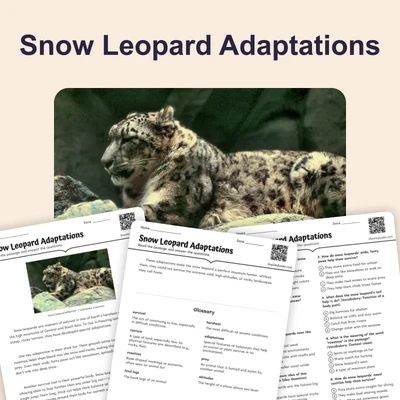
Amur Leopard Adaptations
Interactive passage with audio narration, comprehension questions, and printable PDF.
By completing this purchase you agree to our Terms of Use and Privacy Policy. Your subscription renews automatically until you cancel. You can cancel anytime from your account settings. All sales are final and non-refundable. Digital content is available for download in your account immediately upon purchase.
What's included
Amur Leopard Adaptations preview and details
About this printable Amur Leopard Adaptations science reading passage, NGSS-aligned (Grade 6)
Sample passage and quiz from Amur Leopard Adaptations
Reading passage and comprehension quiz preview
Amur Leopard Adaptations
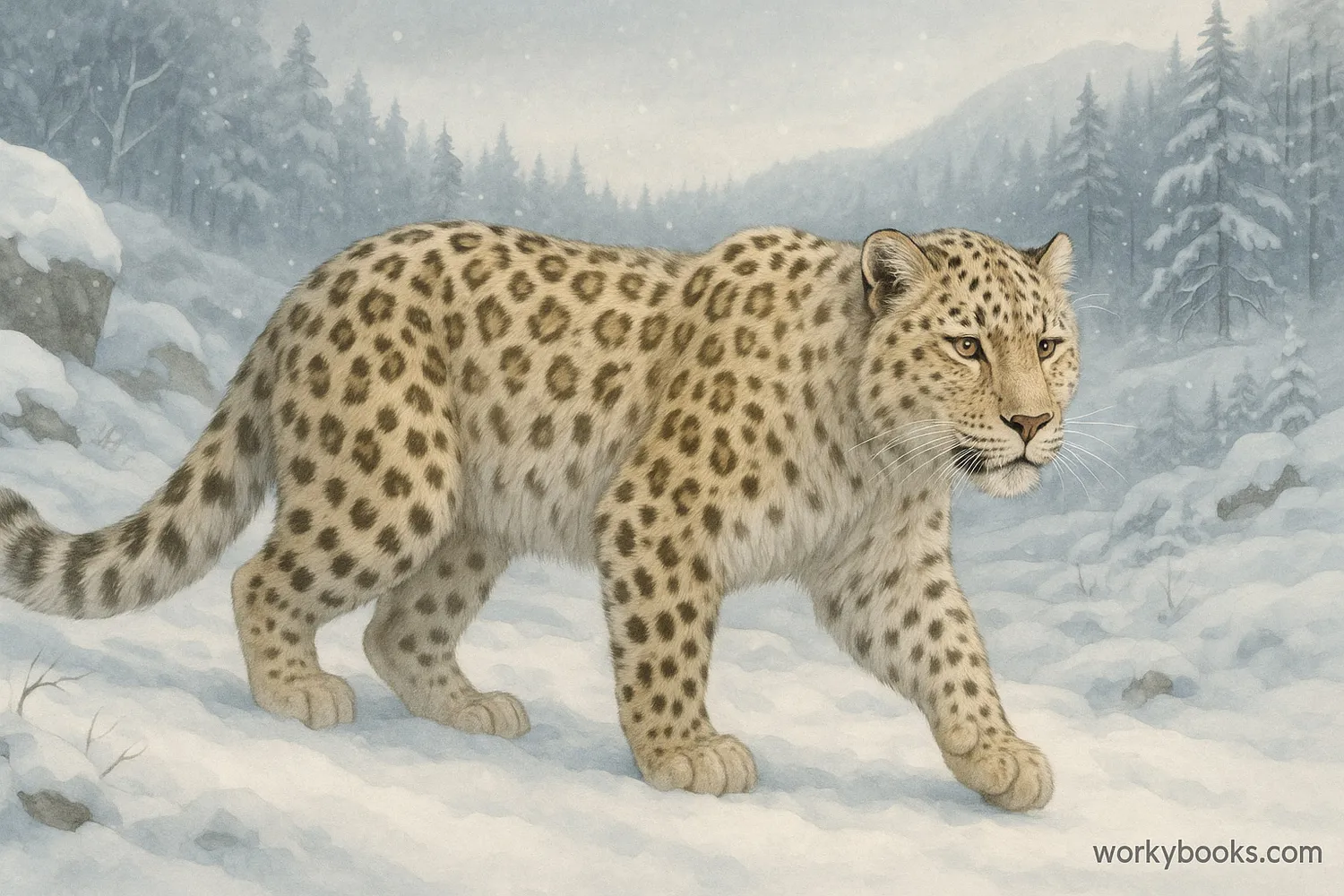
Imagine a world where temperatures drop far below freezing, and snow blankets the ground for months. In this challenging environment, a magnificent creature gracefully hunts, almost invisible against the frosty landscape. This is the world of the Amur leopard, one of the rarest big cats on Earth, found in the Far East of Russia and parts of China. Their ability to survive such harsh conditions is a remarkable example of adaptation.
Amur leopards possess several unique traits, or characteristics, that help them survive and reproduce. One of their most important adaptations is their incredibly thick, long fur. Unlike other leopards that live in warmer climates, the Amur leopard’s coat can grow up to 7 centimeters long in winter, providing excellent insulation against the brutal cold. This thick fur is a genetic variation that gives them a significant advantage in their specific habitat, increasing their probability of surviving frosty winters.
Another crucial adaptation is their stunning camouflage. Their fur is cream-colored with widely spaced rosettes – dark spots that help them blend seamlessly with the rocky, snowy, and forested terrain. This natural disguise is essential for hunting prey like roe deer, sika deer, and wild boar. Without effective camouflage, a leopard would struggle to sneak up on its prey, making it harder to find food and survive. Individuals with better camouflage are more likely to successfully hunt, eat, and reproduce, passing on these helpful traits to their offspring.
Amur leopards are also incredibly strong and agile. They can leap over 10 feet vertically and horizontally, and their powerful jaws and sharp claws are perfect for catching and holding prey. These physical traits are vital for their survival as apex predators. Their solitary nature also plays a role in their survival; they are very secretive and avoid humans, which helps them stay safe in their shrinking habitats.
Sadly, the Amur leopard is an endangered species, facing threats from poaching and habitat loss. Understanding their amazing adaptations helps us appreciate why it's so important to protect these incredible animals and their unique genetic variations that allow them to thrive in such a specialized ecosystem. Every adaptation, from thick fur to excellent camouflage, demonstrates how living things evolve to best fit their environment, increasing their chances of survival and reproduction.
Interesting Fact: An Amur leopard can run at speeds of up to 37 miles per hour, which helps them catch swift prey in their dense forest home.
Comprehension quiz (10 questions)
1. Where do Amur leopards primarily live?
2. What is one main threat to Amur leopards?
3. How does an Amur leopard's thick fur help it?
4. Why is camouflage important for Amur leopards?
5. Which trait is passed to offspring?
6. What effect does habitat loss have?
7. The Amur leopard is a solitary animal.
8. What does 'traits' mean in the passage?
9. How do adaptations help a species?
10. If a leopard had thin fur, how would it fare?
Perfect for the way you teach
- Build comprehension skills
- Auto-graded quiz
- Differentiated reading
- Read together at home
- Improve fluency
- Quiet reading time
- Reading curriculum support
- Independent practice
- Track Lexile growth