How Adaptation Works
Interactive passage with audio narration, comprehension questions, and printable PDF.
By completing this purchase you agree to our Terms of Use and Privacy Policy. Your subscription renews automatically until you cancel. You can cancel anytime from your account settings. All sales are final and non-refundable. Digital content is available for download in your account immediately upon purchase.
What's included
How Adaptation Works preview and details
About this printable How Adaptation Works science reading passage, NGSS-aligned (Grades 5-8)
Sample passage and quiz from How Adaptation Works
Reading passage and comprehension quiz preview
How Adaptation Works
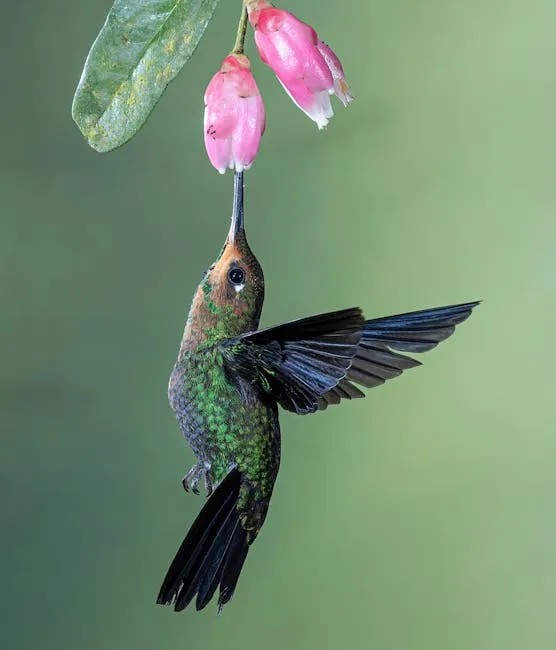
The hummingbird’s long, slender beak is an adaptation that allows it to reach deep into flowers for nectar.. Image by Arturo Cascante / Pexels.
Adaptation is a fundamental concept in biology that explains how living things develop traits to increase their chances of survival and reproduction. In every environment, from arid deserts to icy tundras, organisms face challenges. Some survive and thrive, while others do not. Scientists have discovered that the process of adaptation, driven by natural selection, is the main reason for these differences. Adaptation helps explain why some species are well-suited to specific habitats and how life on Earth has become so diverse.
How Adaptation Works: The Role of Inherited Traits
Adaptation occurs when an inherited trait—a characteristic passed from parent to offspring—improves an organism's ability to survive and reproduce. These traits develop over many generations through natural selection. Natural selection is the process where individuals with advantageous traits are more likely to survive and produce offspring, so their traits become more common in the population. For example, the structural adaptation of a giraffe’s long neck allows it to reach leaves high in trees, giving it access to more food. In the desert, the structural adaptation of cactus spines reduces water loss and protects the plant from herbivores. These traits are not chosen by individual organisms; instead, they arise gradually as those with helpful traits have more success over time.
Types of Adaptations: Structural, Behavioral, and Physiological
Adaptations can be grouped into three main types. Structural adaptations are physical features, like the thick fur of Arctic foxes, which insulates them against freezing temperatures. Behavioral adaptations involve actions, such as migration in birds or hibernation in bears, that help organisms avoid harsh conditions. Physiological adaptations are internal processes, like the production of venom in snakes or the ability to regulate body temperature in mammals. These adaptations work together, allowing organisms to cope with the specific challenges of their environments. For example, Arctic animals often combine thick fur (structural), seasonal migration (behavioral), and fat storage (physiological) to survive extreme cold.
Trade-Offs and Diversity of Adaptations
While adaptations improve survival in one environment, they may be disadvantageous in another. This is known as a trade-off. For example, the light color of Arctic animals provides camouflage in snow but would make them easy targets in a forest. Similarly, cactus spines help conserve water but would not be useful in a rainforest. Scientists use data, such as changes in population size or survival rates, to study how effective adaptations are. Over time, these processes contribute to the vast diversity of life on Earth.
Adaptation, as studied through natural selection, is a key principle of evolution. It helps explain both the differences and similarities among living things. Understanding adaptation informs fields like conservation biology, agriculture, and medicine, where knowledge of how organisms respond to environments is essential.
Interesting Fact: Some insects show mimicry, developing patterns that make them look like dangerous animals—even though they are harmless themselves!
Comprehension quiz (10 questions)
1. What is an adaptation?
2. Which is an example of a structural adaptation?
3. How does natural selection lead to adaptation?
4. What is a trade-off in adaptation?
5. Which is NOT a type of adaptation discussed in the passage?
6. What does mimicry mean?
7. Why might an Arctic fox's white fur be a disadvantage in a forest environment?
8. Which of the following is a physiological adaptation?
9. Adaptations happen because individual animals choose to change. True or False?
10. Natural selection works over many generations. True or False?
Perfect for the way you teach
- Build comprehension skills
- Auto-graded quiz
- Differentiated reading
- Read together at home
- Improve fluency
- Quiet reading time
- Reading curriculum support
- Independent practice
- Track Lexile growth