Binturong Adaptations
Interactive passage with audio narration, comprehension questions, and printable PDF.
By completing this purchase you agree to our Terms of Use and Privacy Policy. Your subscription renews automatically until you cancel. You can cancel anytime from your account settings. All sales are final and non-refundable. Digital content is available for download in your account immediately upon purchase.
What's included
Binturong Adaptations preview and details
About this printable Binturong Adaptations science reading passage, NGSS-aligned (Grade 6)
Sample passage and quiz from Binturong Adaptations
Reading passage and comprehension quiz preview
Binturong Adaptations
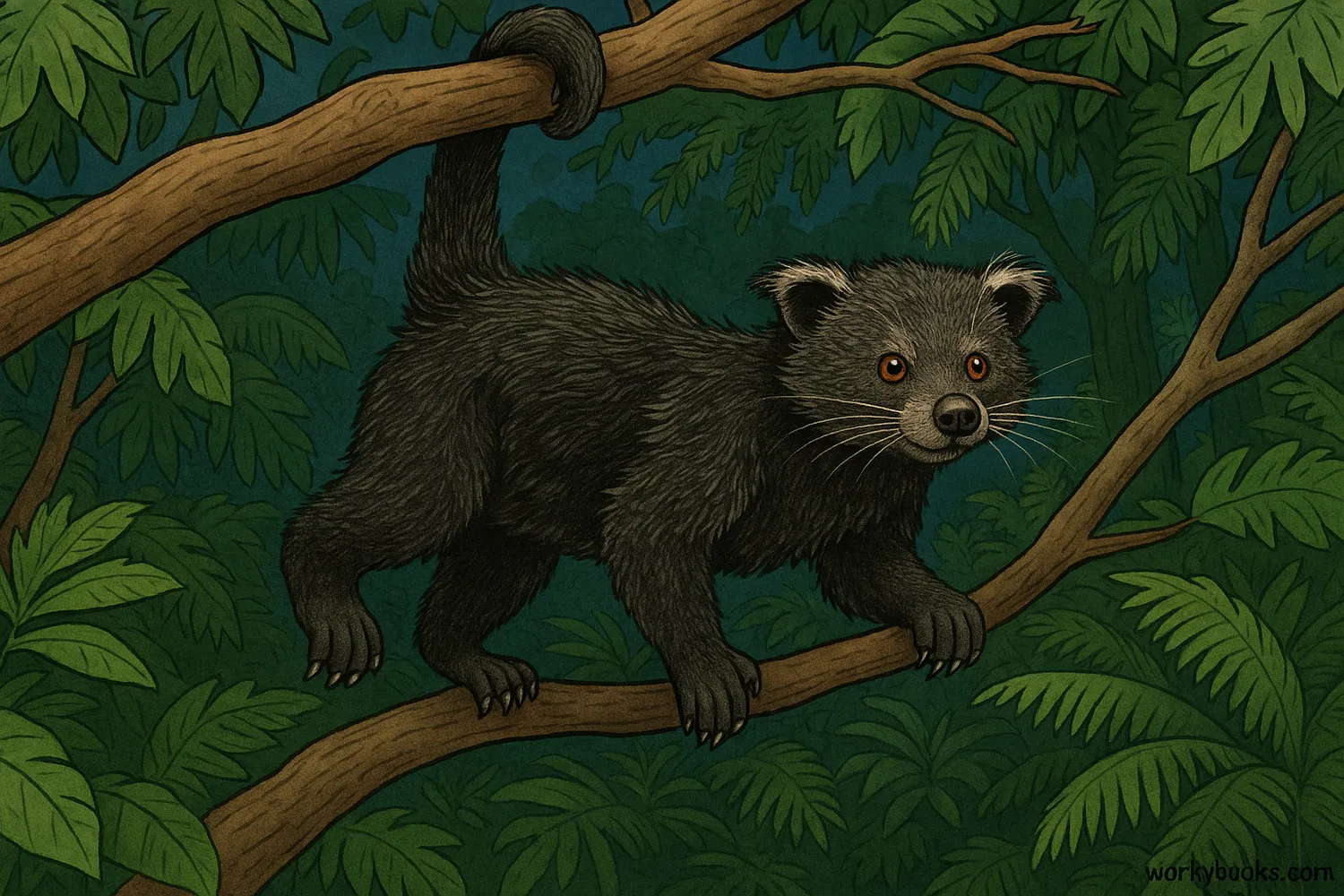
Imagine an animal that looks like a mix between a bear and a cat, smells like popcorn, and can hang by its tail! This incredible creature is the binturong, also known as a 'bearcat.' Binturongs are native to the rainforests of Southeast Asia, a challenging environment where only the most adaptable animals can thrive. Their unique features are perfect examples of adaptations – special characteristics that help living things survive and reproduce in their specific environment.
One of the binturong's most remarkable adaptations is its long, muscular prehensile tail. Unlike most animals, the binturong can use its tail like a fifth limb. It can grip branches, helping the binturong climb high into the canopy, gather food, and move safely through the trees. This strong tail is a huge advantage in the dense rainforest, preventing falls and allowing access to food sources that other animals can't reach. Think of it like a natural safety rope and an extra hand!
Binturongs are also nocturnal, meaning they are most active at night. Their large, forward-facing eyes are excellent for seeing in low light. This adaptation allows them to hunt and forage when many other predators are asleep, reducing competition for food and avoiding danger. They primarily eat fruits, especially figs, but also munch on small animals and eggs. Their sharp claws and powerful jaws also help them tear apart fruits and catch prey.
Another important adaptation is their fur. It's shaggy and coarse, helping them shed rainwater in the humid rainforest. Their scent glands produce a distinct smell, often compared to buttered popcorn, which they use to mark their territory and communicate with other binturongs. These genetic variations in traits, like tail strength or night vision, have developed over many generations. Individuals with traits that best fit their rainforest home are more likely to survive, find mates, and pass on those helpful genes to their offspring. This process is how populations increase their probability of surviving and reproducing in their unique environments.
Interesting Fact: Binturongs are one of only two carnivore species in the world with a prehensile tail, the other being the kinkajou.
Comprehension quiz (10 questions)
1. Where are binturongs native to?
2. What is another name for a binturong?
3. The binturong's prehensile tail helps it:
4. Being nocturnal is an adaptation that helps binturongs:
5. What does a binturong's scent glands smell like?
6. What do genetic variations lead to?
7. Why is a strong prehensile tail an advantage for binturongs?
8. Binturongs primarily eat fruit, like figs. True or False?
9. What does 'nocturnal' mean in the passage?
10. How do binturongs increase their survival probability?
Perfect for the way you teach
- Build comprehension skills
- Auto-graded quiz
- Differentiated reading
- Read together at home
- Improve fluency
- Quiet reading time
- Reading curriculum support
- Independent practice
- Track Lexile growth