This learning resource is available in interactive and printable formats. The interactive worksheet can be played online and assigned to students. The Printable PDF version can be downloaded and printed for completion by hand.
Dive into the fascinating world of the Desert Rain Frog and discover its incredible unique adaptations for survival in a harsh desert environment. This engaging reading passage, perfect for Grade 5 students, explores how these tiny frogs use specialized traits like burrowing, camouflage, and efficient water retention to thrive. Aligned with NGSS LS4.C: Adaptation, it highlights how different organisms survive well due to their adaptive traits. This content is audio integrated, making learning accessible and fun while introducing key scientific vocabulary and concepts relevant to animal survival and ecosystems.
CONTENT PREVIEW
Expand content preview
Meet the Desert Rain Frog
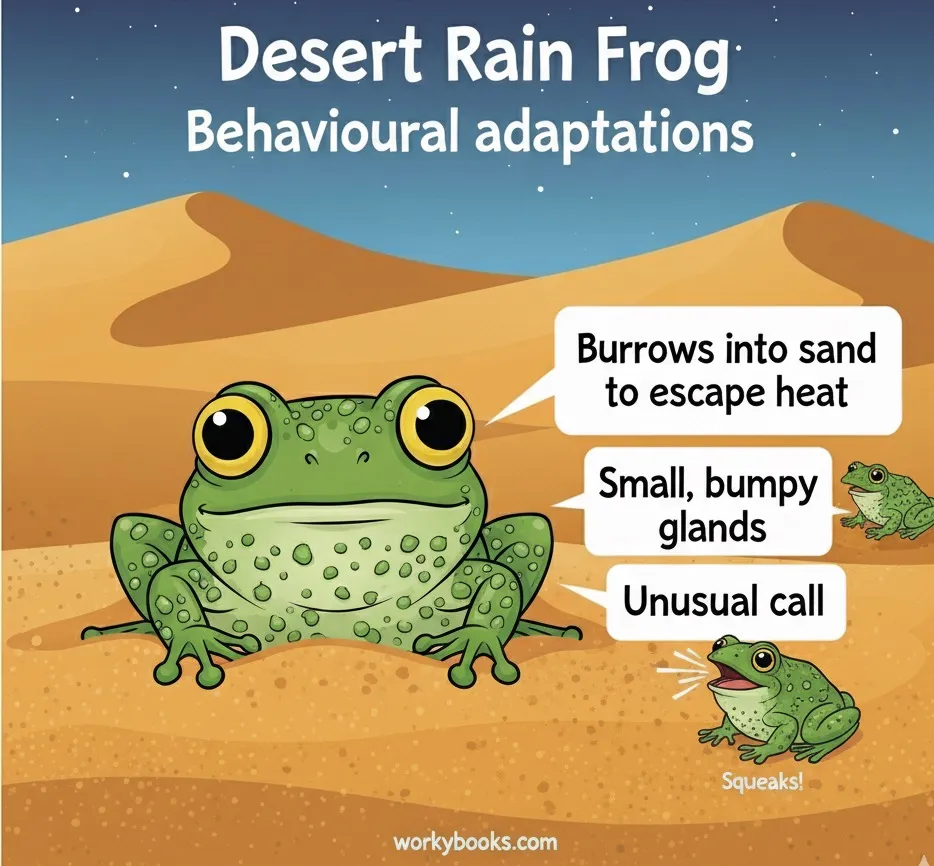
The desert rain frog is a tiny, round frog that lives in sandy deserts along the coast of southern Africa. Although the desert is a tough place for most animals, the desert rain frog survives by using clever behavioral adaptations.
Burrowing Behavior
During the hot daytime, this frog digs into the sand using its back legs, which work like little shovels. It can burrow up to 6 inches deep, finding cooler and moist sand below the surface. Once underground, the frog creates a small chamber to rest in and waits out the heat. This burrowing keeps the frog from drying out under the scorching sun.
Nocturnal Lifestyle
The desert rain frog is nocturnal. It hides underground during the day to avoid the heat and comes out only at night, when the air gets cooler. At night, fog rolls in from the ocean, bringing moisture. Then, the frog hunts for insects in the darkness, using the night as its safe time to be active.
Fog-Basking Behavior
Unlike many frogs, the desert rain frog doesn’t need puddles or rain to get water. It has a special skill called fog-basking. The frog sits still and lets droplets of fog collect on its skin. Its skin can absorb this moisture, acting like a sponge. For the desert rain frog, the morning fog is like a drinking fountain!
Defensive “War Cry”
Even though the frog is small and looks cute, it has a famous defense. If a predator threatens it, the frog puffs up its body to look bigger and lets out a loud, squeaky scream—it sounds just like a squeaky toy! This “war cry” startles predators and gives the frog time to escape.
Mating Behavior
At night, male frogs call out through the fog to attract females. Their voices travel far in the damp air, helping them find a mate even in the wide desert.
Survival Expert
The desert rain frog is like a tiny survival expert—it plans its life around the fog and darkness, turning one of Earth’s driest places into a perfect home!
Interesting Fact: The desert rain frog’s loud squeaky call is so unique that it became famous on the internet as the “squeaky toy frog.”
What does the desert rain frog do during hot days?
Burrows into the sandStays in water puddlesClimbs treesFlies away
How does the frog get water?
Absorbs fog through skinDrinks from riversEats wet leavesLicks rocks
When is the frog active?
At nightIn the morningAt noonAll day
Why does the frog puff up and squeak?
To scare predatorsTo find foodTo dig fasterTo sleep
What would happen if the frog did not burrow?
It could dry outIt would be colderIt could flyIt would grow larger
How does fog help the frog survive?
Provides water to absorbMakes sand softerBrings insects undergroundMakes it easier to jump
The desert rain frog is nocturnal. True or false?
TrueFalse
What does 'burrowing' mean?
Digging into the groundJumping highDrinking fogMaking loud sounds
Perfect For:
👩🏫 Teachers
• Reading comprehension practice
• Auto-graded assessments
• Literacy skill development
👨👩👧👦 Parents
• Reading practice at home
• Comprehension improvement
• Educational reading time
🏠 Homeschoolers
• Reading curriculum support
• Independent reading practice
• Progress monitoring
Reading Features:
📖
Reading Passage
Engaging fiction or nonfiction text
❓
Comprehension Quiz
Auto-graded questions
📊
Instant Feedback
Immediate results and scoring
📄
Printable Version
Download for offline reading
🔊
Read Aloud
Voice-over with word highlighting
Reviews & Ratings
No reviews yet. Be the first to share your experience!
Related Content
The Nature of Life Science
This passage, aligned with NGSS MS-LS1-1, introduces students in grades 6-8 to the foundational concepts of life science...
MS-LS1-1
Science Vocabulary
This worksheet on domain-specific words will help students learn some science vocabulary. Students will be asked to matc...
L.3.6L.3.4.A
The Science of Hibernation
This educational module, featuring an audio-integrated reading passage titled 'The Science of Hibernation,' is designed ...
Simple Machines Science Report
This science writing task requires students to clearly explain how three simple machines work using precise domain-speci...
W.5.4
Adaptation
This engaging middle school science passage explores adaptation, focusing on how inherited traits enable organisms to su...
MS-LS4-4MS-LS4-6
Animal Adaptations Word Sort
This engaging word sort activity helps students understand the difference between physical and behavioral adaptations in...
Herbivore Adaptations
This engaging reading passage, integrated with audio, delves into the fascinating world of herbivore adaptations. Studen...
Ocean Animal Adaptations
Students will read a passage that provides information about various adaptations that marine animals have developed to t...
W.4.9.B
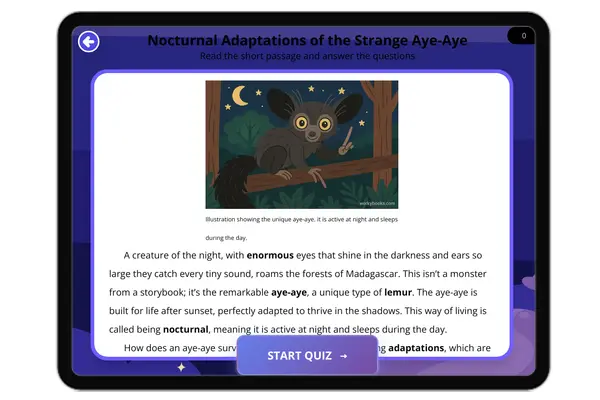
Nocturnal Adaptations of the Strange Aye-Aye
This engaging reading passage, integrated with audio, takes grade 5 students on a journey to discover the fascinating no...
Early Life Forms and Their Adaptations
This educational passage focuses on early life forms and their basic adaptations, supporting NGSS standard 3-LS4-2 for e...
RI.3.3RI.4.3RI.5.33-LS4-2
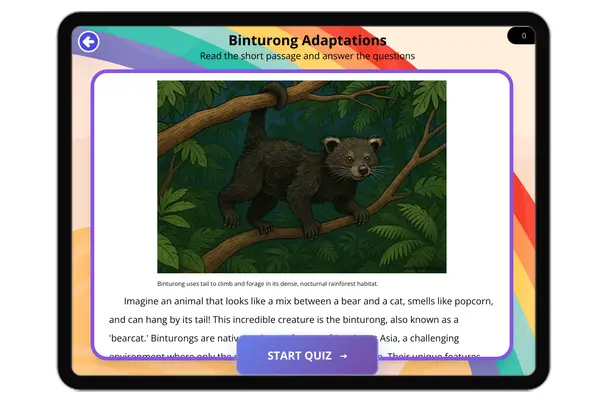
Binturong Adaptations
This engaging, audio-integrated reading passage, 'Binturong Adaptations,' for Grade 6 students delves into the fascinati...
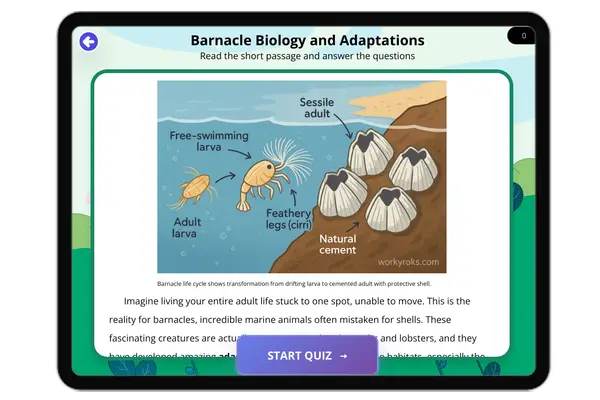
Barnacle Biology and Adaptations
Dive into the intriguing world of barnacles with this engaging Grade 6 reading passage. Students will learn about these ...
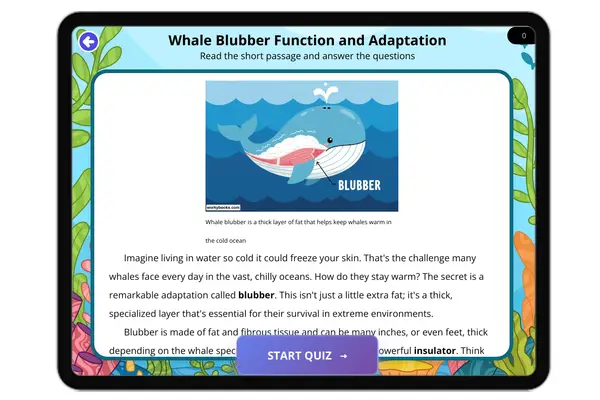
Whale Blubber: Function and Adaptation
This engaging, audio-integrated reading passage, 'Whale Blubber Function and Adaptation,' introduces young learners to t...
Mountain Animal Adaptations
This reading comprehension worksheet focuses on the topic of animal adaptations for survival in mountainous environments...
W.4.9.B
Amur Leopard Adaptations
This engaging, audio-integrated reading passage, 'Amur Leopard Adaptations,' is designed for Grade 6 science students. I...
Climate Zone Adaptations Word Sort
This word sort activity examines how plants and animals adapt to different climate conditions. Students sort 12 differen...
Plant Adaptations for Survival
This NGSS-aligned word sort activity, suitable for kindergarten, focuses on plant survival adaptations, helping students...
K-LS1-1
The Pumpkin Life Cycle
This informational worksheet explores the pumpkin lifecycle, guiding students through procedural steps in a scientific t...
RI.2.3RI.2.10
What Is Earth Science?
This engaging middle school science passage introduces students to the field of Earth science, aligning with NGSS standa...