Herbivore Adaptations
Interactive passage with audio narration, comprehension questions, and printable PDF.
By completing this purchase you agree to our Terms of Use and Privacy Policy. Your subscription renews automatically until you cancel. You can cancel anytime from your account settings. All sales are final and non-refundable. Digital content is available for download in your account immediately upon purchase.
What's included
Herbivore Adaptations preview and details
About this printable Herbivore Adaptations science reading passage, NGSS-aligned (Grade 6)
Sample passage and quiz from Herbivore Adaptations
Reading passage and comprehension quiz preview
Herbivore Adaptations
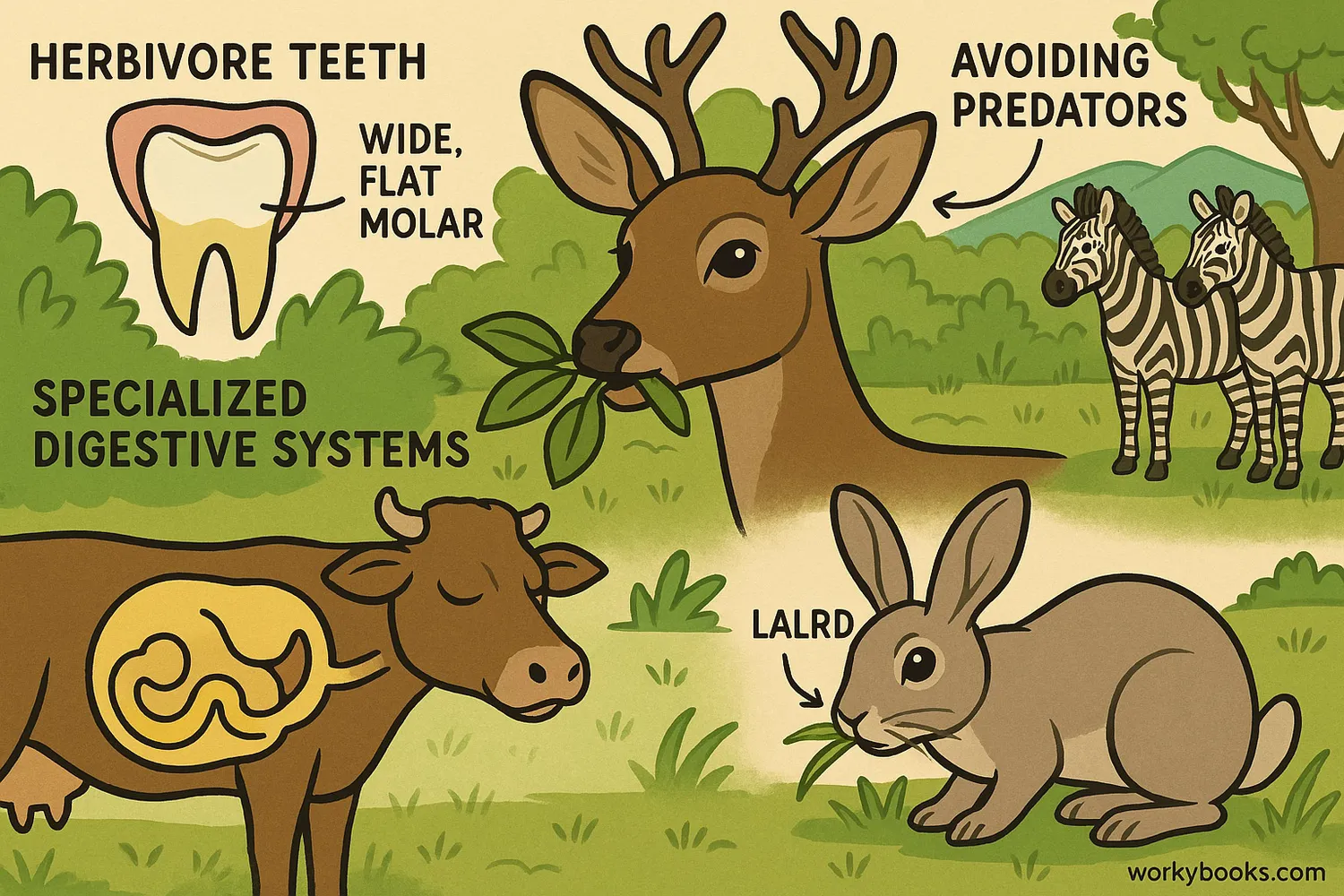
Imagine a world where your dinner is always green and growing. For many animals, this is their reality! These amazing creatures are called herbivores, meaning they eat only plants. Think of a deer munching on leaves or a rabbit nibbling on grass. To survive and thrive on this kind of diet, herbivores have developed incredible adaptations – special features or behaviors that help them live in their environment.
One of the most important adaptations for herbivores is their teeth. Unlike carnivores (meat-eaters) with sharp, pointed teeth for tearing, herbivores have wide, flat molars. These strong teeth act like grinders, perfect for mashing tough plant material. For example, cows have multiple stomachs and spend hours ruminating, or re-chewing their food, to break down plant fibers. This extra chewing helps them get all the nutrients from their leafy meals. Different herbivores have different types of teeth depending on what kind of plants they eat. Some, like horses, have very long front teeth for clipping grass.
Beyond teeth, herbivores often have specialized digestive systems. Plants, especially grasses, contain cellulose, a tough material that's hard to break down. Many herbivores have longer digestive tracts than carnivores, giving their bodies more time to extract nutrients. Some, like rabbits, even eat their own droppings to get a second chance at digesting nutrients! This might sound strange, but it's a clever way to make sure they don't waste any valuable energy from their plant-based meals.
Another crucial adaptation for herbivores is how they protect themselves from predators. Since they spend a lot of time grazing and don't hunt, they need ways to avoid becoming prey. Many herbivores have excellent hearing, keen eyesight, and a strong sense of smell to detect danger early. Deer, for instance, have large ears that can swivel to pick up faint sounds. They also have powerful legs for quick escapes. Some herbivores, like zebras, live in large herds. There is safety in numbers; many eyes and ears are better than one, and a large group can confuse a predator. These genetic variations – differences in traits passed down through generations – help certain individuals survive and reproduce, ensuring their species continues.
These amazing adaptations are a result of natural selection, where individuals with traits best suited to their environment are more likely to survive and pass on those traits. Herbivores play a vital role in ecosystems, converting plant energy into food for carnivores, and showing us how diverse and clever life can be.
Interesting Fact: Koalas have a very specialized diet, eating only eucalyptus leaves, which are actually quite toxic to most other animals.
Comprehension quiz (10 questions)
1. What do herbivores eat?
2. What kind of teeth do herbivores usually have?
3. Why do herbivores often have long digestive tracts?
4. How do some herbivores, like deer, detect danger?
5. Why do some herbivores live in herds?
6. What is the meaning of 'ruminating'?
7. A rabbit eating its own droppings is an adaptation.
8. What does a longer digestive tract help herbivores do?
9. How might a new plant-eating animal with very small, sharp teeth struggle to survive compared to a cow?
10. Imagine a herbivore develops a new genetic trait allowing it to digest a previously toxic plant. How would this likely affect its survival?
Perfect for the way you teach
- Build comprehension skills
- Auto-graded quiz
- Differentiated reading
- Read together at home
- Improve fluency
- Quiet reading time
- Reading curriculum support
- Independent practice
- Track Lexile growth