Whale Blubber Adaptations
Interactive passage with audio narration, comprehension questions, and printable PDF.
By completing this purchase you agree to our Terms of Use and Privacy Policy. Your subscription renews automatically until you cancel. You can cancel anytime from your account settings. All sales are final and non-refundable. Digital content is available for download in your account immediately upon purchase.
What's included
Whale Blubber Adaptations preview and details
About this printable Whale Blubber Adaptations science reading passage, NGSS-aligned (Grade 6)
Sample passage and quiz from Whale Blubber Adaptations
Reading passage and comprehension quiz preview
Whale Blubber: Function and Adaptation
Whale Blubber: Function and Adaptation
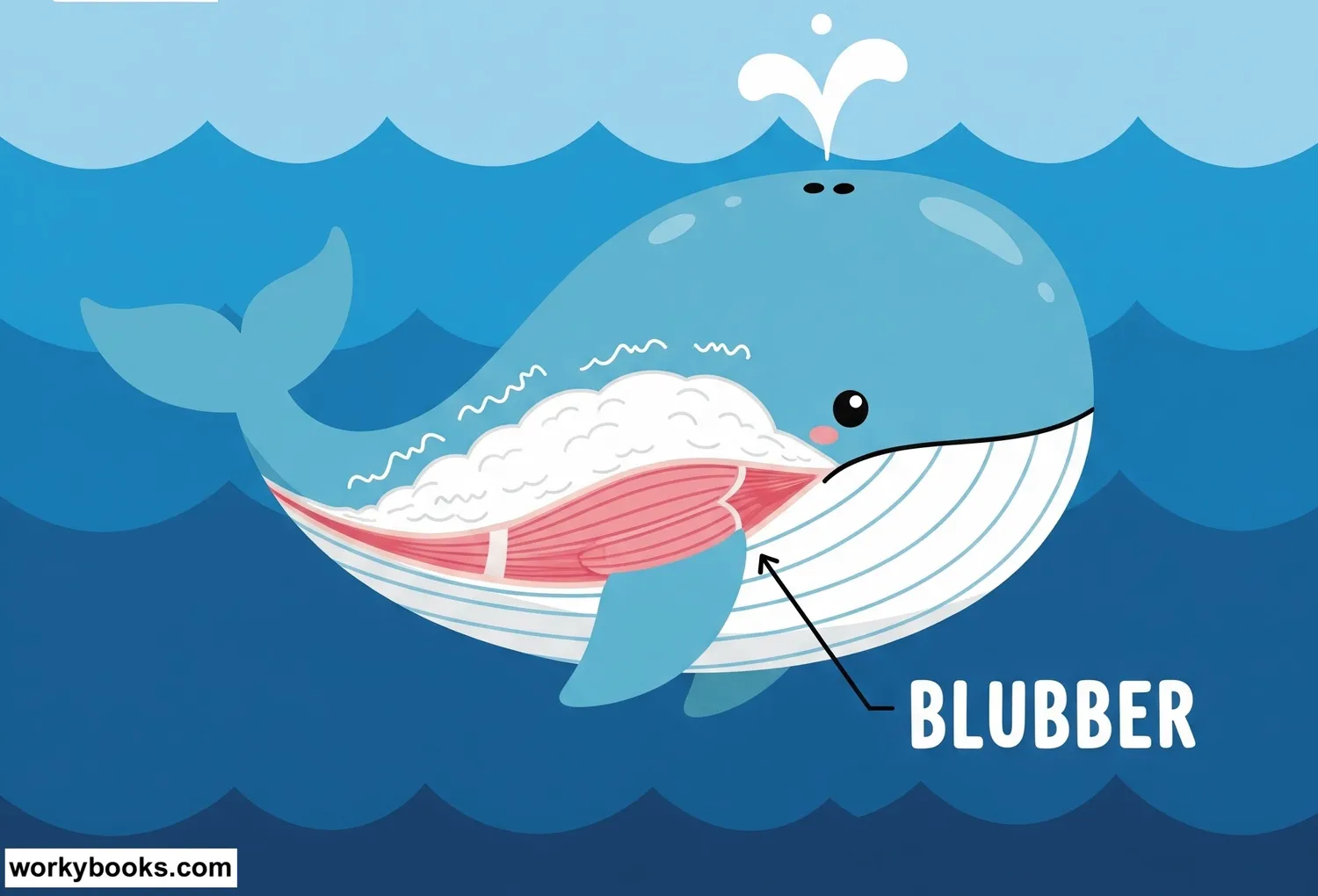
Whale blubber is a thick, dense layer of fat found just under the skin of whales. In some large whales, this blubber can be over a foot thick! It covers most of their bodies and is much more than just fat – it is a special adaptation that helps whales live in the coldest oceans on Earth.
One main job of blubber is insulation. Blubber acts like a built-in wetsuit, keeping a whale’s body heat inside and the freezing water out. This is important because water takes away heat 25 times faster than air. Without blubber, whales would lose heat quickly and could not survive in icy oceans.
Blubber also works as an energy storage. When whales travel long distances or fast, they may not eat for weeks. During this time, they “live off” their blubber. The fat inside provides the energy they need until they find food again.
Another important job of blubber is buoyancy. Blubber is lighter than water, so it helps whales float. It also gives whales a smooth, round shape which helps them swim faster and more easily. This is called streamlining.
Blubber is more than just fat. It has blood vessels that can open or close. When a whale needs to stay warm, the blood vessels close to keep heat inside. When it gets too hot, the vessels open to let heat out.
Different whales have different amounts of blubber. Bowhead whales have blubber up to 20 inches thick to survive in Arctic waters. A blue whale’s blubber can weigh as much as a car! Baby whales, called calves, get their blubber quickly by drinking their mother’s milk, which is about 50% fat – the richest milk of any mammal.
Blubber is a special adaptation for whales. Whales are warm-blooded mammals, which means their bodies make their own heat. Blubber helps them keep that heat so they can live in cold, deep oceans.
Interesting Fact: Some whales can swim for thousands of miles during migration using energy stored in their blubber!
Comprehension quiz (8 questions)
1. What is blubber?
2. What does insulation do?
3. How do baby whales build blubber?
4. Why is blubber important for energy?
5. Blubber helps whales float. Why?
6. What might happen if a whale had no blubber?
7. Whales are warm-blooded mammals. True or false?
8. What does 'adaptation' mean?
Perfect for the way you teach
- Build comprehension skills
- Auto-graded quiz
- Differentiated reading
- Read together at home
- Improve fluency
- Quiet reading time
- Reading curriculum support
- Independent practice
- Track Lexile growth