This learning resource is available in interactive and printable formats. The interactive worksheet can be played online and assigned to students. The Printable PDF version can be downloaded and printed for completion by hand.
This engaging science passage for Grade 4-5 students explores animal internal structure and how organs work together to keep animals alive and healthy. Students learn about the circulatory system with the heart pumping blood, the respiratory system with lungs breathing air, the digestive system with the stomach breaking down food, and the nervous system with the brain controlling the body. The passage connects these concepts to students' own internal organs, helping them understand the hidden structures that keep them alive. Audio-integrated content supports diverse learners. Aligned with NGSS science standards 4-LS1-1, this passage includes vocabulary support, Spanish translation, differentiated text, comprehension questions, writing activities, and graphic organizers to help students describe how internal structures perform functions essential for animal survival.
CONTENT PREVIEW
Expand content preview
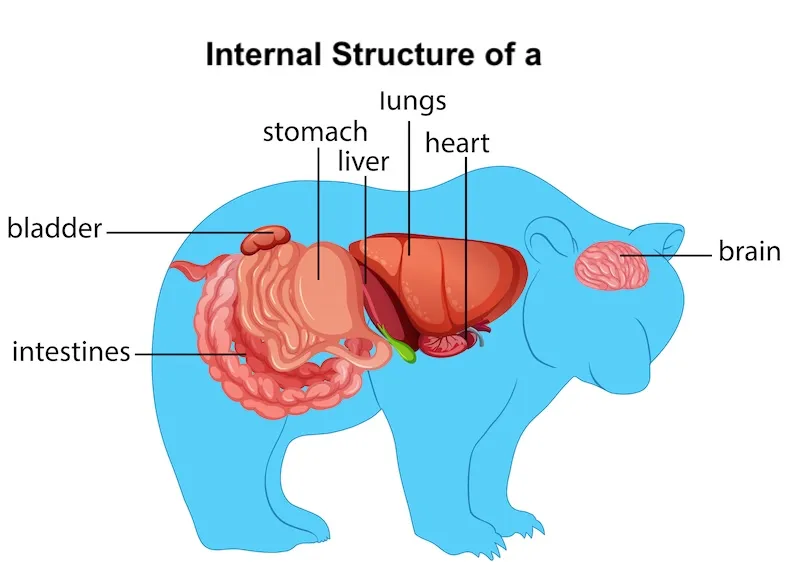
Animals have internal structures inside their bodies that keep them alive. Internal structures are parts you cannot see from the outside, like bones, a heart, lungs, a brain, and a stomach. Each of these structures has an important job to do.
Your bones are hard structures that give your body shape and protect soft parts inside. Think of bones like the frame of a building that holds everything in place. Your heart is a muscle that pumps blood through your body, delivering oxygen and nutrients to all your cells. Your lungs are organs that help you breathe by taking in oxygen from the air and removing carbon dioxide.
Your brain is the control center that tells your body what to do. It helps you think, remember, and move. Your stomach is an organ that breaks down food so your body can use it for energy. Without a stomach, you could not get nutrients from the food you eat.
Plants also have internal structures, but they are very different from animal structures. Plants have roots, stems, and tubes that carry water, but they do not have hearts or brains. Animals need different structures because they move around, eat other living things, and breathe in different ways than plants.
Interesting Fact: Your heart beats about 100,000 times every single day, pumping around 2,000 gallons of blood through your body!
What are internal structures?
Parts you can see outside the bodyParts inside the body you cannot seeOnly bones and musclesParts only plants have
What job does the heart do?
It helps you think and rememberIt breaks down food for energyIt pumps blood through the bodyIt gives the body shape
What do bones do for the body?
They pump blood to cellsThey help you breathe oxygenThey break down foodThey give shape and protect organs
Why do animals need different structures than plants?
Animals are bigger than plantsAnimals move, eat, and breathe differentlyPlants do not need any structuresAnimals live longer than plants
What would happen without a stomach?
You could not get nutrients from foodYou could not breathe oxygenYour bones would be softYour heart would stop pumping
Which organ is the control center?
HeartLungsBrainStomach
Plants have hearts and brains like animals.
TrueFalse
What does the word organ mean?
A type of bone in animalsA body part with a special jobFood that gives you energyAir that you breathe in
Perfect For:
๐ฉโ๐ซ Teachers
โข Reading comprehension practice
โข Auto-graded assessments
โข Literacy skill development
๐จโ๐ฉโ๐งโ๐ฆ Parents
โข Reading practice at home
โข Comprehension improvement
โข Educational reading time
๐ Homeschoolers
โข Reading curriculum support
โข Independent reading practice
โข Progress monitoring
Reading Features:
๐
Reading Passage
Engaging fiction or nonfiction text
โ
Comprehension Quiz
Auto-graded questions
๐
Instant Feedback
Immediate results and scoring
๐
Printable Version
Download for offline reading
๐
Read Aloud
Voice-over with word highlighting
Reviews & Ratings
No reviews yet. Be the first to share your experience!
Related Content
How Animals See Differently
This engaging 250-word reading passage introduces fourth-grade students to the fascinating world of animal vision and ey...
NGSS 4-LS1-1LS1.D
What Are Bones Made Of
This engaging 250-word reading passage introduces Grade 4 students to the structure and function of bones, aligned with ...
NGSS 4-LS1-1LS1.A
How Bones Protect Organs
This engaging 250-word reading passage helps Grade 4 students understand how bones protect organs, aligned with NGSS sta...
NGSS 4-LS1-1LS1.A
How Joints Connect Bones
This 250-word reading passage teaches fourth-grade students about joints and their role in the human skeletal system. Al...
NGSS 4-LS1-1LS1.A
How Muscles Move Bones
This comprehensive 250-word reading passage introduces fourth-grade students to the fundamental concept of how muscles a...
NGSS 4-LS1-1
Two Types of Muscles
This 250-word reading passage introduces fourth-grade students to the two main types of muscles in the human body: volun...
NGSS 4-LS1-1
What Are Muscles
This engaging 250-word reading passage introduces fourth-grade students to the essential concept of muscles and how they...
NGSS 4-LS1-1
How Skin Protects Body
This audio-integrated reading passage introduces fourth-grade students to the protective functions of skin, aligned with...
NGSS 4-LS1-1
Layers of the Skin
This engaging 250-word reading passage introduces fourth-grade students to the three layers of skin and their functions....
NGSS 4-LS1-1LS1.A
What Are Plant Structures
This engaging 250-word reading passage introduces fourth-grade students to the fundamental concept of plant structures a...
NGSS 4-LS1-1
Parts of Plant Stems
This engaging 250-word reading passage introduces fourth-grade students to the internal structure and function of plant ...
NGSS 4-LS1-1LS1.A
How Water Moves Inside Plants
This 250-word reading passage introduces fourth-grade students to the concept of water transport in plants, aligned with...
NGSS 4-LS1-1
Parts of a Flower
This comprehensive 250-word reading passage introduces fourth-grade students to the essential parts of a flower and thei...